Aurora Innovation used a July 23rd livestream to provide a closer look at its second-generation autonomous trucking platform, outlining the hardware, fleet-management tools and operating assumptions behind trucks entering commercial service across the U.S. Sun Belt.
The presentation followed Aurora’s deployment of second-generation driverless trucks built on the International LT Series platform. The trucks are expected to join a commercial network that currently includes 10 driverless routes. As of the end of June, the Aurora Driver had completed nearly 440,000 miles on public roads without a driver.
Chris Urmson, Co-Founder and CEO of Aurora, framed the new platform around the ability to operate longer routes without the rest periods required for human drivers. As an example, Urmson broke down the details of 1,000-mile haul between Fort Worth, Texas, and Phoenix, with the assumption that a solo driver would need to take a mandatory 10-hour rest period before completing the trip.
“The Aurora Driver doesn’t need to rest. It’s never tired,” said Urmson, adding, “That makes delivery times on this route up to 40% faster than a solo driver, matching or even beating the performance of premium expedited teams.”
There were other financial benefits, according to Urmson, who pointed out that by operating a truck for more hours each day, twice as much revenue per vehicle could be generated without the staffing challenges associated with team drivers. Add to that improved fuel economy and lower insurance expenses, and the technology provided a sound case for ROI from the tech.
The improvements continued, as the second-generation hardware was upgraded to withstand vibration, abrasive dust, rain and extreme temperatures. They were also designed for a one-million-mile commercial service life. An updated cleaning system keeps the vehicle’s sensors clear of rain, road film and other buildup that could interfere with their performance. The sensor suite is connected to a new, fully redundant computer powered by NVIDIA chips.
According to Aurora, the computer can process millions of data points and make safety-related decisions within milliseconds. Its chassis is 40% smaller than the previous version, a change intended to lower costs and make the hardware easier to integrate into different vehicle platforms.
The International LT is the first truck to operate without a driver using the new hardware. This turnkey system adds autonomous capacity without forcing fleets to develop their own autonomous driving technology. Roush is installing the Aurora hardware and redundant vehicle systems at a dedicated upfit operation. The facility has the capacity to produce at least 1,000 trucks annually, with the goal to reach the first production run of 1,000 trucks by the end of 2026.
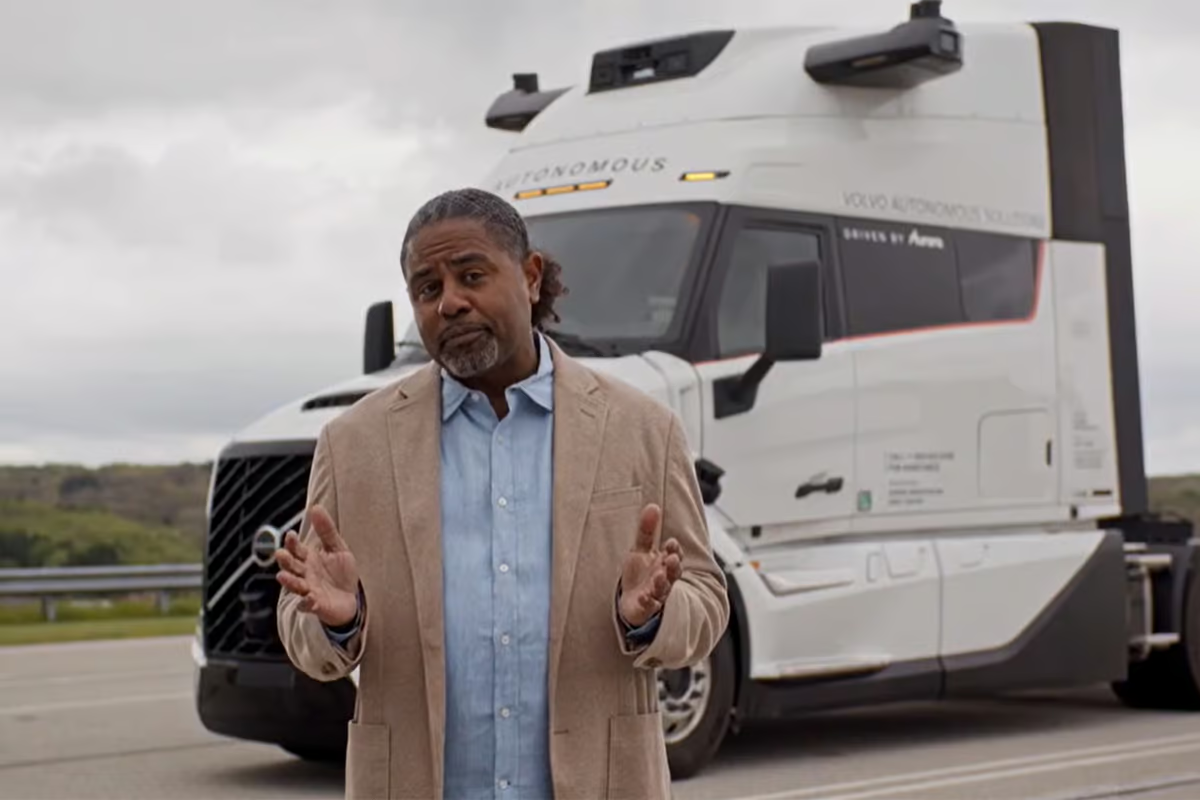
Driver 2 is also available on the Volvo VNL Autonomous, with installation directly on the production line at Volvo Trucks’ New River Valley manufacturing plant in Virginia, and serving fleets through its partnership with Volvo Autonomous Solutions.
“Same hardware kit, multiple vehicle platforms,” said Kenny Quinn, VP of vehicle product development at Aurora. “The Aurora Driver is adaptable to meet the needs and preferences of our customers.”
Aurora also introduced a software suite intended to incorporate the driverless trucks into existing dispatch, maintenance and terminal operations.
The primary app provides fleet personnel with vehicle locations, routes, destination information, mileage, truck condition and operating status. It can connect with existing transportation management and fleet management platforms through software interfaces.
“It doesn’t replace the systems you use today. It works alongside them and integrates with them through our APIs,” said Urmson.
A separate mobile app is designed for employees managing autonomous trucks at terminals and in yards. Workers can use the application to launch and receive trucks, check the health of the Aurora Driver, schedule service, and request technical support.
The mobile app operates on familiar hardware and requires no previous experience with autonomous trucks. The tools were developed around the responsibilities of the dispatchers, technicians and terminal personnel expected to interact with the vehicles.
Safety was another focus of the event. It’s no secret that human error is a factor in motor vehicle crashes. With human behaviors like fatigue, speeding, and increasing the numbers of distraction, drivers are 10 times more likely to result in a crash than other things like bad weather or mechanical issues, according to Nat Beuse, chief safety officer at Aurora.
“The Aurora Driver, it removes human error from the equation,” said Beuse. “And before we put one piece of code on the road, we have to close our safety case, and that safety case includes rigorous validation and millions of passing tests. We go the extra mile by maintaining a high level of transparency with our customers, regulators, and the public.”
Driver 2 uses Aurora’s FirstLight lidar system, which is capable of detecting objects more than half a mile away in bright glare and nighttime conditions. At highway speeds, that detection range could give the truck a 34-second advantage when responding to a roadway hazard, based on Aurora’s calculations.
The platform was also developed to work with freight equipment already moving through customer networks, including intermodal equipment and refrigerated trailers.
But that technical capability alone would not be sufficient if the trucks could not fit into existing fleet operations, pointed out Ossa Fisher, president of Aurora, adding, “otherwise, it’s just a shiny piece of tech searching for a purpose.”
Some of Aurora’s earliest commercial customers are beginning to transition toward owning and operating Aurora Driver-powered trucks. The company will provide technical and operational support as customers assume responsibility for the vehicles.
That transition would move the technology beyond an Aurora-operated transportation service and place autonomous trucks directly into customer fleets.