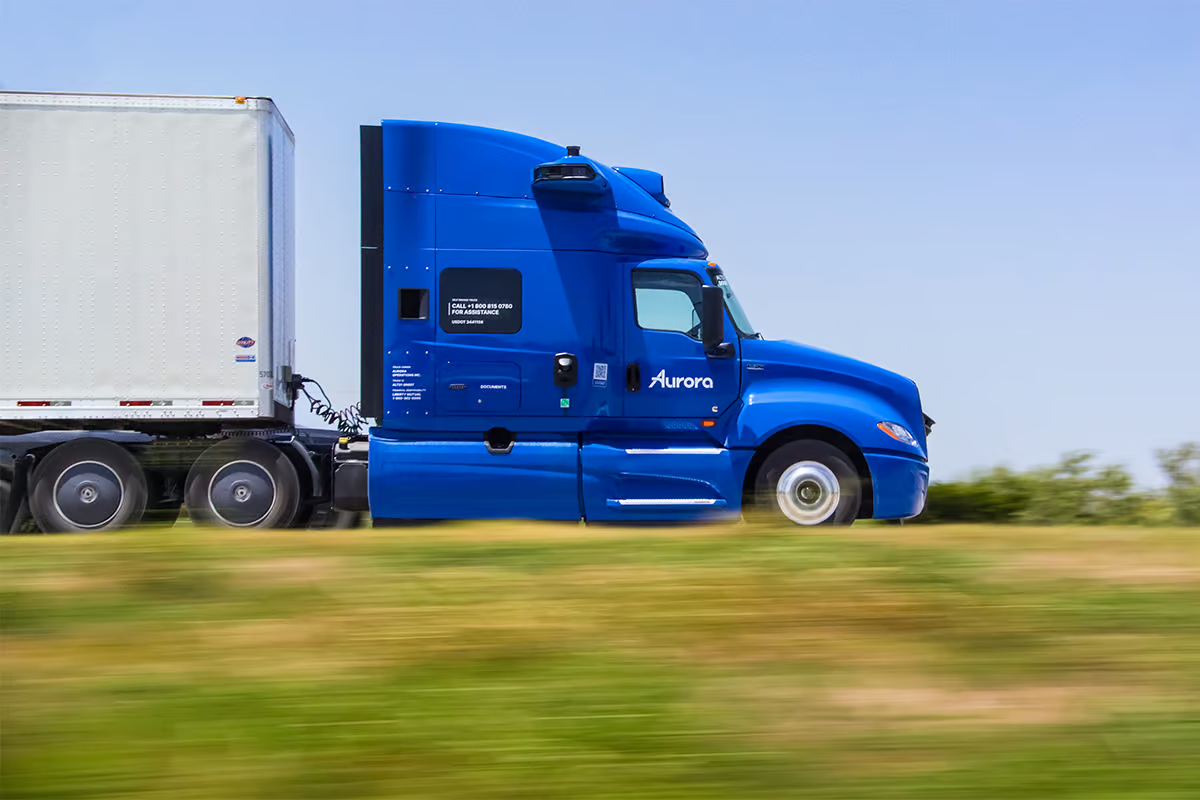
Aurora Innovation has begun deploying the second generation of its driverless Class 8 trucks, with plans to add the new trucks to its commercial network across the U.S. Sun Belt to serve additional customers.
The network currently includes 10 driverless routes. Aurora first deployed self-driving trucks without a person behind the wheel on public roads last year. As of the end of June, the Aurora Driver system has logged nearly 440,000 driverless miles.
The new trucks are built on the International LT Series platform and use Aurora’s next-generation hardware, which the company says is more powerful and designed to last one million miles. Aurora said it closed its Safety Case, the internal framework the company uses to evaluate readiness for driverless operation on public roads, for the new truck and hardware ahead of launch.
“Last year’s driverless launch proved our technology could operate safely on public roads. Our new platform now provides the foundation to deliver at scale,” said Chris Urmson, Aurora’s CEO and co-founder. “Deploying our second-generation truck allows us to put hundreds of autonomous trucks on the road and ultimately into the hands of more customers.”
Roush is handling integration of the new hardware and installation of redundant systems at a production facility dedicated to Aurora. The two companies have formalized an upfit process, and Roush is targeting an annual production run-rate of 1,000 Aurora trucks by the end of the year.
“By working with a manufacturing partner like Roush, we can meet our customer demand and continue to make the movement of goods safer and more efficient across the country,” Urmson said.
The expansion follows a carrier’s recent plan to purchase 500 Aurora Driver-powered trucks, part of what the company describes as growing commercial demand for its routes.
Aurora Innovation has begun deploying the second generation of its driverless Class 8 trucks, the company said, with plans to add the new trucks to its commercial network across the U.S. Sun Belt to serve additional customers.
The network currently includes 10 driverless routes. Aurora first deployed self-driving trucks without a person behind the wheel on public roads last year. As of the end of June, the Aurora Driver system had logged nearly 440,000 driverless miles, according to the company.
The new trucks are built on the International LT Series platform and use Aurora’s next-generation hardware, which the company says is more powerful and designed to last one million miles. Aurora said it closed its Safety Case, the internal framework the company uses to evaluate readiness for driverless operation on public roads, for the new truck and hardware ahead of launch.
“Last year’s driverless launch proved our technology could operate safely on public roads. Our new platform now provides the foundation to deliver at scale,” said Chris Urmson, Aurora’s CEO and co-founder. “Deploying our second-generation truck allows us to put hundreds of autonomous trucks on the road and ultimately into the hands of more customers.”
Roush, a product development supplier, is handling integration of the new hardware and installation of redundant systems at a production facility dedicated to Aurora. The two companies have formalized an upfit process, and Roush is targeting an annual production run-rate of 1,000 Aurora trucks by the end of the year.
“By working with a manufacturing partner like Roush, we can meet our customer demand and continue to make the movement of goods safer and more efficient across the country,” Urmson said.
The expansion follows a carrier’s recent plan to purchase 500 Aurora Driver-powered trucks, part of what the company describes as growing commercial demand for its routes.
Aurora will hold a livestream debut of the second-generation trucks on Thursday, July 23, at 3:30 p.m. ET. Registration is available through the company’s website.