Range Energy has released a new financial analysis suggesting that electrifying semi-trailers could offer commercial fleets returns comparable to purchasing battery-electric tractors, while requiring less upfront investment and charging infrastructure.
The company’s whitepaper, Trucking Needs More Than a Choice Between Diesel and EV Trucks: Electrify the Trailer, examines the economics of reducing diesel consumption in refrigerated trucking operations. The analysis compares conventional diesel equipment, a Tesla Semi, and Range Energy’s eTrailer system, which adds electric propulsion and battery power to existing trailers.
Range modeled 1,000 potential financial scenarios over seven years, accounting for variations in diesel and electricity prices, charging infrastructure costs, insurance, resale values, and fuel savings. The study focuses on refrigerated grocery and foodservice fleets operating regional routes, with a baseline diesel price of $5.07 per gallon and no vehicle purchase incentives.
The findings show that Range’s eTrailer produced better financial returns than a Tesla Semi using its own depot Basecharger in 61% of the simulated scenarios. Both technologies achieved payback in less than six years under the study’s baseline assumptions.
Range estimates the eTrailer would deliver a net present value of $7,200 and a payback period of 5.6 years, compared with $4,500 and 5.7 years for the Tesla Semi with a dedicated Basecharger.
“Fleets need to see the most fuel savings for every dollar they invest, with equipment that fits how they already operate,” said Kyle Foley, CEO of Range Energy.
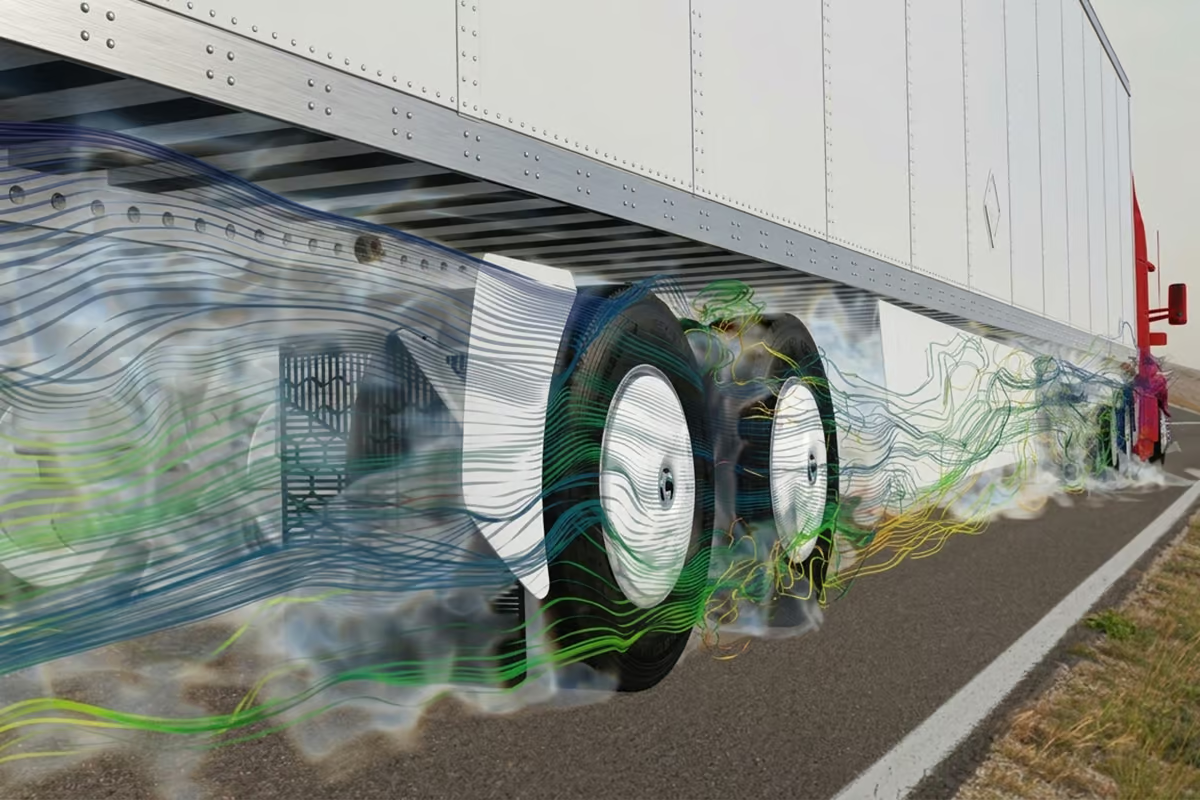
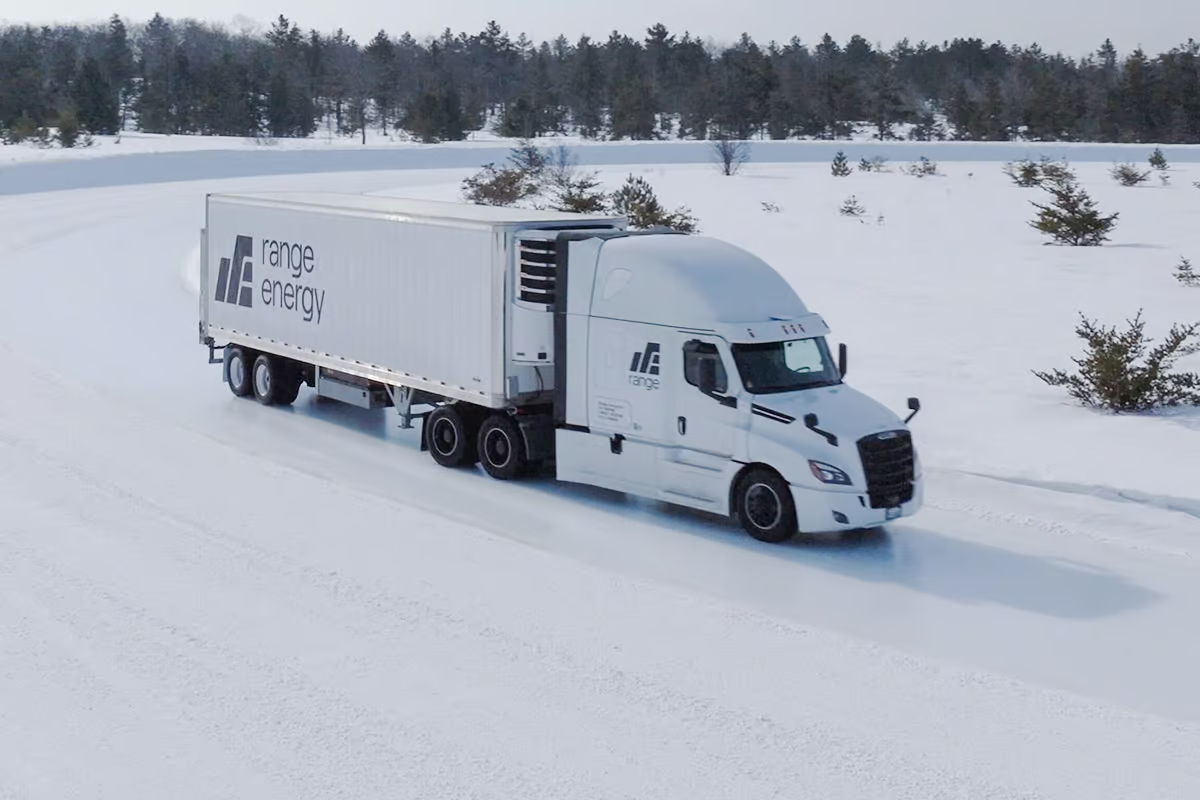
The eTrailer system combines a battery pack, electric axle, and regenerative braking to provide propulsion assistance to the tractor while supplying electricity to trailer refrigeration equipment. Available with 200- or 300-kWh battery packs, the system is designed to work with existing tractors without modifications or specialized driver training.
According to Range, the system reduces tractor diesel consumption by 36.5% on miles when electric propulsion assistance is available, equivalent to approximately 57% better fuel economy. The battery also powers the refrigeration unit, reducing reliance on its diesel engine. Range estimates the system can provide propulsion assistance for approximately 200 to 250 miles, depending on operating conditions.
The company reports that the 300-kWh eTrailer will have an introductory price of approximately $100,000, including its 44-kW AC charging equipment.
Charging infrastructure represents another significant difference in the financial comparison. Range estimates a typical eTrailer charging circuit costs approximately $5,200 to install at an existing dock, compared with $51,500 for a Tesla Semi Basecharger and its installation.
The eTrailer uses a standard 480-volt, three-phase electrical connection. Range’s analysis estimates that the available electrical capacity at a typical depot could support approximately eight eTrailers or three Tesla Semis before requiring additional utility infrastructure.
The whitepaper also examines operating costs. Under its baseline assumptions, Range estimates costs of approximately $0.87 per mile for the eTrailer configuration and $0.83 per mile for a Tesla Semi with its own Basecharger, compared with $1.00 per mile for the conventional diesel configuration.
The results vary with charging arrangements. Range’s analysis found that two Tesla Semis sharing one Basecharger outperformed the eTrailer in 87% of simulated scenarios, although the report identifies tight overnight charging schedules as a potential operational constraint.
The report also acknowledges several limitations. Its fuel-savings comparison uses 43 pilot operating days from six fleets, based on prototype equipment and fleet-reported baseline fuel consumption. The financial model excludes emissions, specific financing arrangements, and other electric and natural gas tractors.
Range maintains that its approach offers additional operating flexibility because a diesel tractor can continue its route after the eTrailer battery’s propulsion assistance is depleted. The refrigeration unit can also revert to diesel operation when necessary.
The company also sees opportunities to pair the technology with battery-electric tractors, estimating that an eTrailer could extend an electric truck’s driving range by at least 100 miles while independently powering refrigeration equipment.
Range Energy expects production deliveries of its eTrailer system to begin in late 2027.