The National Highway Traffic Safety Administration (NHTSA) has proposed changes to federal vehicle lighting standards that would allow autonomous vehicles to use distinctive cyan-colored lights to indicate when they are operating without a human monitoring the roadway. The proposal would also eliminate certain manual lighting control requirements for vehicles designed to operate without human drivers.
Published in the Federal Register on October 26, the proposed rule would amend Federal Motor Vehicle Safety Standard (FMVSS) No. 108, which establishes requirements for lamps, reflective devices and associated vehicle equipment. The changes would apply to multiple vehicle categories, including trucks and buses, as manufacturers develop vehicles that rely entirely on automated driving systems (ADS).
One of the central provisions would establish standardized requirements for optional exterior marker lamps that indicate when a vehicle is operating autonomously without the expectation that a human occupant is monitoring the roadway.
The proposed lamps would emit a cyan, or blue-green, light intended to distinguish autonomous operation from conventional vehicle lighting. NHTSA would establish requirements governing their placement, visibility, brightness and activation.
Under the proposal, vehicles equipped with these lights would have between four and eight marker lamps, with at least one visible from the front, each side and the rear. The lights would remain steadily illuminated during qualifying autonomous operation and automatically turn off when an occupant is expected to monitor the roadway.
The marker lamps would be optional. Manufacturers choosing to install them would have to comply with the proposed specifications, but NHTSA would not require every autonomous vehicle to use them.
NHTSA explained that standardizing these lights could help law enforcement and other road users recognize when an automated driving system is operating a vehicle. The agency also identified the need to prevent supplemental lighting from interfering with existing turn signals, brake lights and other required equipment.
The proposal addresses another challenge for autonomous vehicle manufacturers: lighting requirements originally developed around vehicles equipped with steering wheels, pedals and human-operated controls.
Under the proposed changes, vehicles without manually operated driving controls would no longer have to satisfy certain requirements involving steering-wheel-activated turn signal cancellation, manually operated headlight beam switching and hazard warning controls.
The vehicles would still be required to have functioning turn signals, headlights and other applicable lighting equipment. The changes would address how those systems are controlled rather than eliminate their required lighting functions.
NHTSA would also remove certain requirements for dashboard indicators, known as telltales, that communicate lighting system status to a human driver. The agency explained that these indicators do not serve the same purpose in vehicles where an automated driving system controls and monitors the equipment.
“These proposed updates address unnecessary regulatory burdens for vehicles built without traditional manual controls,” said NHTSA Administrator Jonathan Morrison.
Beyond autonomous vehicles, the proposal includes changes to headlamp testing and vehicle design requirements.
Manufacturers of integral beam headlamps would receive greater flexibility to certify their products at appropriate design voltages rather than the current standardized 12.8-volt test requirement. NHTSA would also eliminate restrictions governing the vertical arrangement of upper and lower headlamp beams while retaining existing mounting-height requirements.
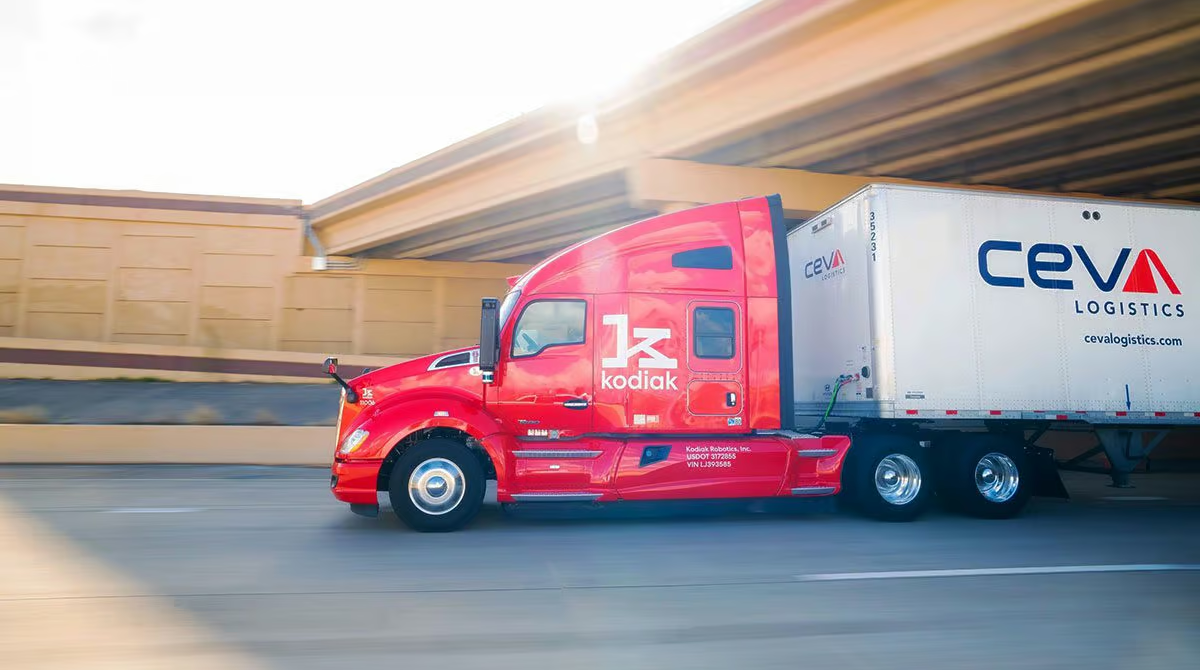
For commercial vehicle manufacturers developing purpose-built autonomous trucks, the proposed amendments would provide a regulatory framework for lighting systems that do not depend on conventional driver controls. However, the changes would not establish new performance standards for autonomous driving itself.
NHTSA has not quantified the potential financial or safety benefits of the changes, citing uncertainty surrounding the developing autonomous vehicle market.
The proposal remains subject to public comment and further agency review. Comments are due November 25, 2026.