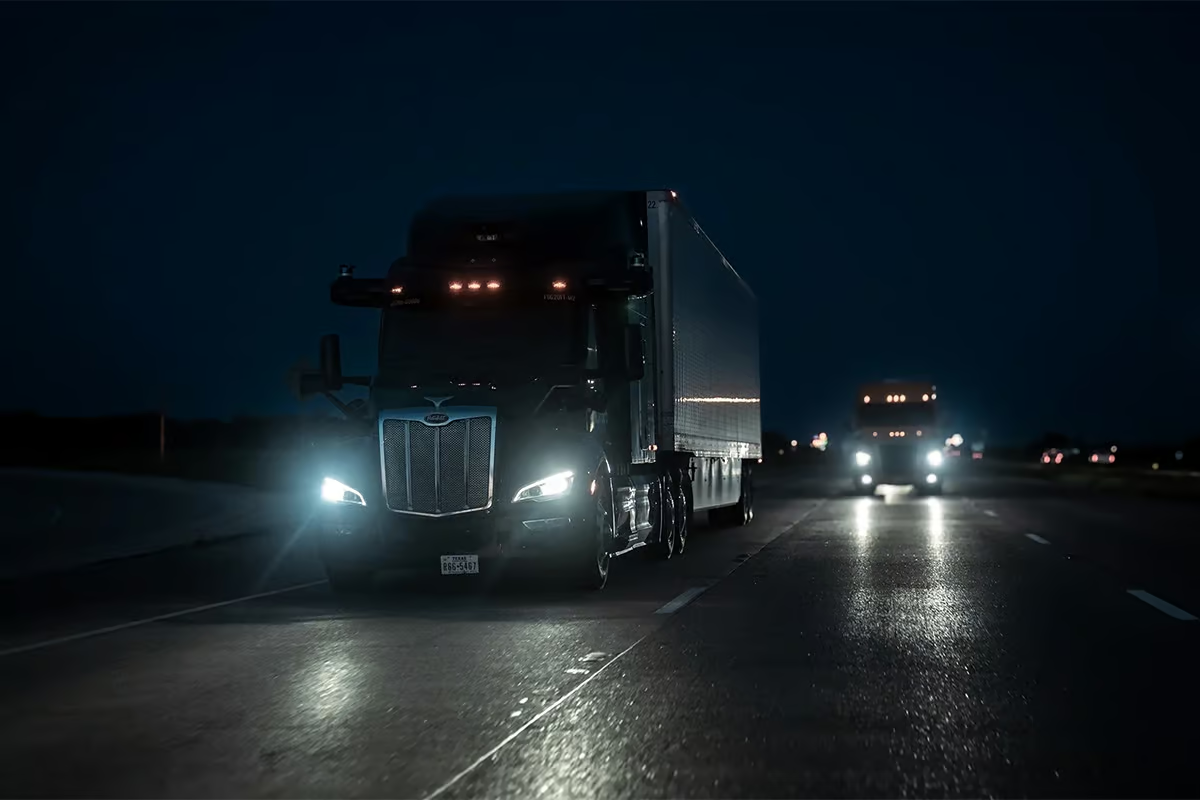
Teamsters California is suing the California Department of Motor Vehicles, alleging the agency skipped a legally required economic impact study before adopting regulations that allow autonomous heavy-duty trucks on public roads.
The lawsuit asks the court to rescind the regulations, which the DMV finalized on April 28. Those rules removed a longstanding prohibition on autonomous operation of vehicles weighing more than 10,001 pounds, creating the state’s first permitting pathway for heavy-duty AV testing and deployment. The framework requires manufacturers to progress from safety-driver testing to driverless testing, complete 500,000 miles of testing at each phase, and submit a structured safety case before applying for commercial deployment.
Teamsters California contends the DMV used an abbreviated rulemaking process intended for regulations with less than $50 million in first-year costs or benefits, bypassing the more detailed Standardized Regulatory Impact Assessment that state law requires for a change of this scale.
“Every day brings new evidence that Waymo robotaxis are putting public safety at risk, and those dangers scale up exponentially with trucks that are up to 16 times heavier and moving at highway speeds,” said Peter Finn, co-chair of Teamsters California, in a statement announcing the suit. “Such a critical decision with life-and-death consequences must involve public input and transparency.”
The union also argues the DMV’s rulemaking record understated the regulations’ economic impact, including its conclusion that the changes would not eliminate any trucking jobs. Teamsters California places the potential exposure at more than 200,000 employee semi-truck driver positions in the state, plus a comparable number of independent owner-operators.
The DMV’s April rules also added oversight measures that apply across AV classes, including a process for law enforcement to issue noncompliance notices for moving violations, a 30-second response window for AV companies during first-responder interactions, and authority for local officials to geofence AVs out of active emergency zones.
The litigation follows a 2023 veto by Governor Gavin Newsom that would have required a human safety operator in autonomous heavy-duty trucks. Newsom said existing law already provided sufficient authority to build an appropriate regulatory framework.