Illinois is moving forward with a $104 million investment in zero-emission port equipment and supporting infrastructure, with procurement now underway at four locations across the state. Administered by the Illinois Environmental Protection Agency, the Illinois Clean Ports Program will support the replacement of aging equipment while expanding the electrical infrastructure needed to operate battery-electric technology.
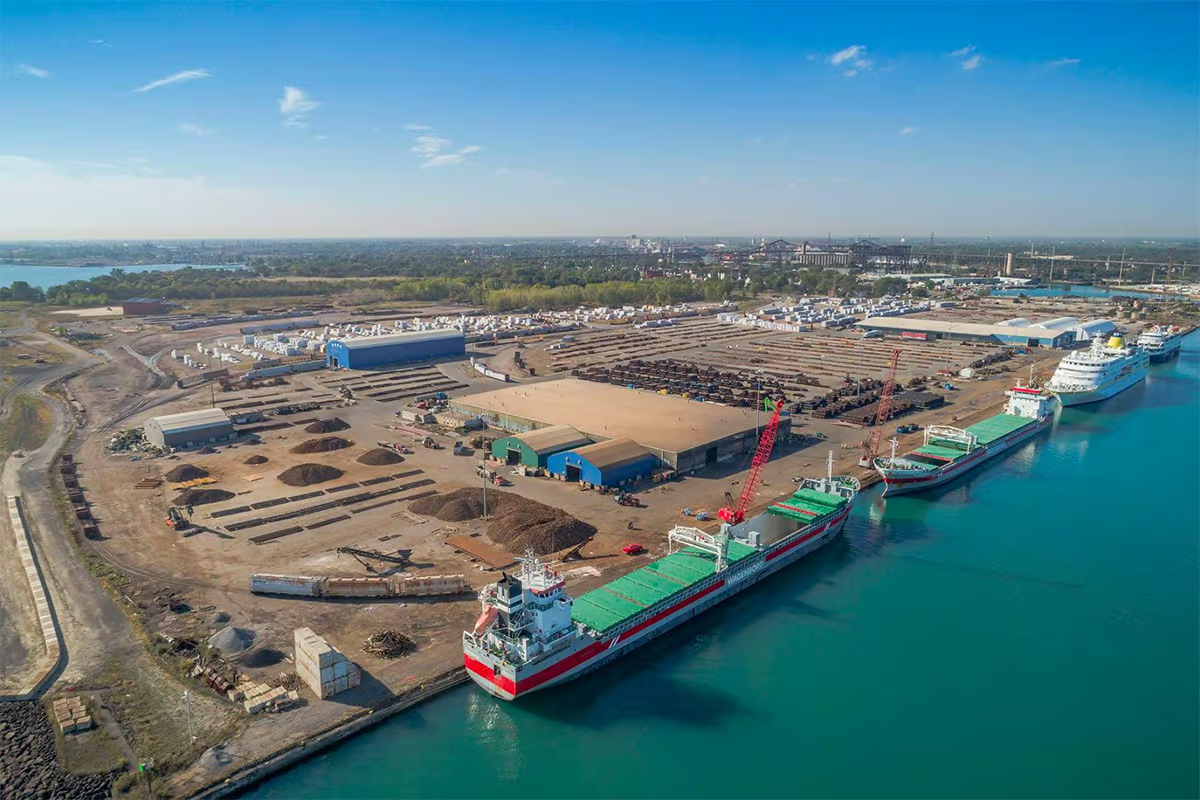
The investment covers port and waterfront facilities in Chicago, the Quad Cities, and southern Illinois, bringing electrification projects to facilities that play a role in the state’s freight network.
Four locations will participate in the program: the Illinois International Port District (IIPD) in Chicago, Rock Island County Metropolitan Mass Transit District (MetroLINK), Kaskaskia Regional Port District (KRPD), and Shawneetown Regional Port District (SRPD).
The program will support the acquisition of battery-electric cargo-handling equipment, including forklifts, reach stackers, and material handlers. It also includes battery-electric switcher locomotives, a passenger ferry, and fleet vehicles.
The range of equipment reflects the different operations being addressed through the program, extending beyond cargo handling to rail movements, passenger transportation, and fleet activities at port facilities.
“Illinois’ waterways are a competitive advantage for the state. By modernizing port infrastructure, advancing zero-emission technology, and improving air quality, we are strengthening our economy while building a cleaner future for Illinois,” said Governor JB Pritzker.
Alongside the equipment purchases, the program includes investments in charging systems and electrical infrastructure. Planned improvements include Level 2 and DC fast charging, shoreside charging, and upgrades to the electrical grid.
At the Illinois International Port District, the project will also incorporate on-site solar generation and battery storage, which will allow the facility to retain electricity generated by its solar installation for use later. This includes during peak periods when electricity from the grid may be more expensive. The technology can also reduce demand on the local grid and contribute to resilience.
For port and fleet operators, the combination of equipment replacement and infrastructure installation is a significant component of the investment. Battery-electric cargo-handling equipment, locomotives, and fleet vehicles require supporting charging infrastructure, making electrical upgrades part of the overall modernization effort.
The inclusion of on-site solar and battery storage at IIPD also extends the project beyond vehicle charging to how electricity is generated, stored, and used at the facility.
The Illinois Clean Ports Program also addresses financial challenges associated with modernizing smaller public port districts.
Replacing cargo-handling equipment and upgrading electrical systems can require substantial capital investments, particularly for regional facilities with limited resources. The $104 million program is intended to make improvements possible that might otherwise be difficult for those districts to finance.
Beyond replacing aging equipment, Illinois EPA is positioning the projects as investments in the long-term competitiveness of the state’s freight network and its ability to meet future business demands.
“Illinois’ ports are economic powerhouses, moving billions of dollars in goods and supporting thousands of jobs across the state,” said James Jennings, Illinois EPA director. “Through the Illinois Clean Ports Program, we’re moving the future forward by advancing electrification, deploying zero-emission technologies, and modernizing the infrastructure that keeps our economy moving.”
With procurement now underway, the program is entering the equipment acquisition phase. The announcement does not specify the number of vehicles or pieces of equipment to be purchased at each location, individual project budgets, or expected deployment dates.
The projects will bring zero-emission cargo-handling, rail, fleet, and passenger transportation equipment into a broader modernization effort that also includes the infrastructure required to support those technologies.