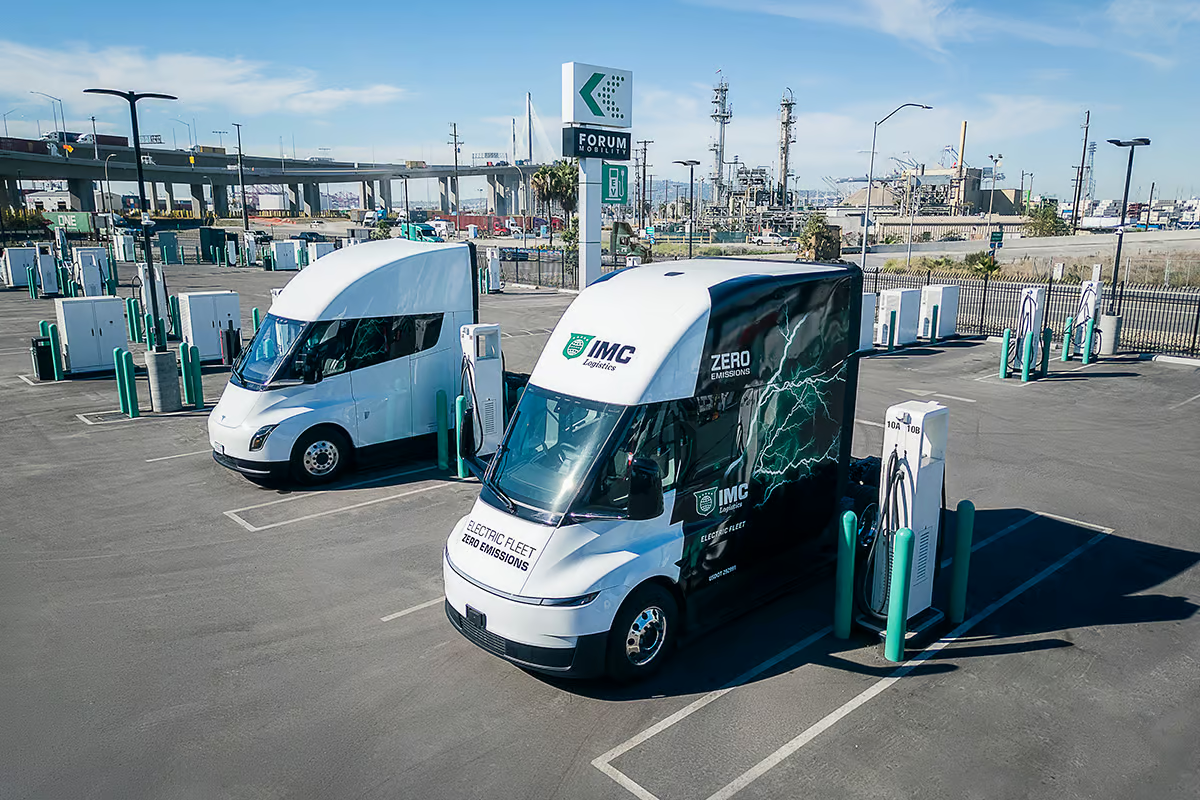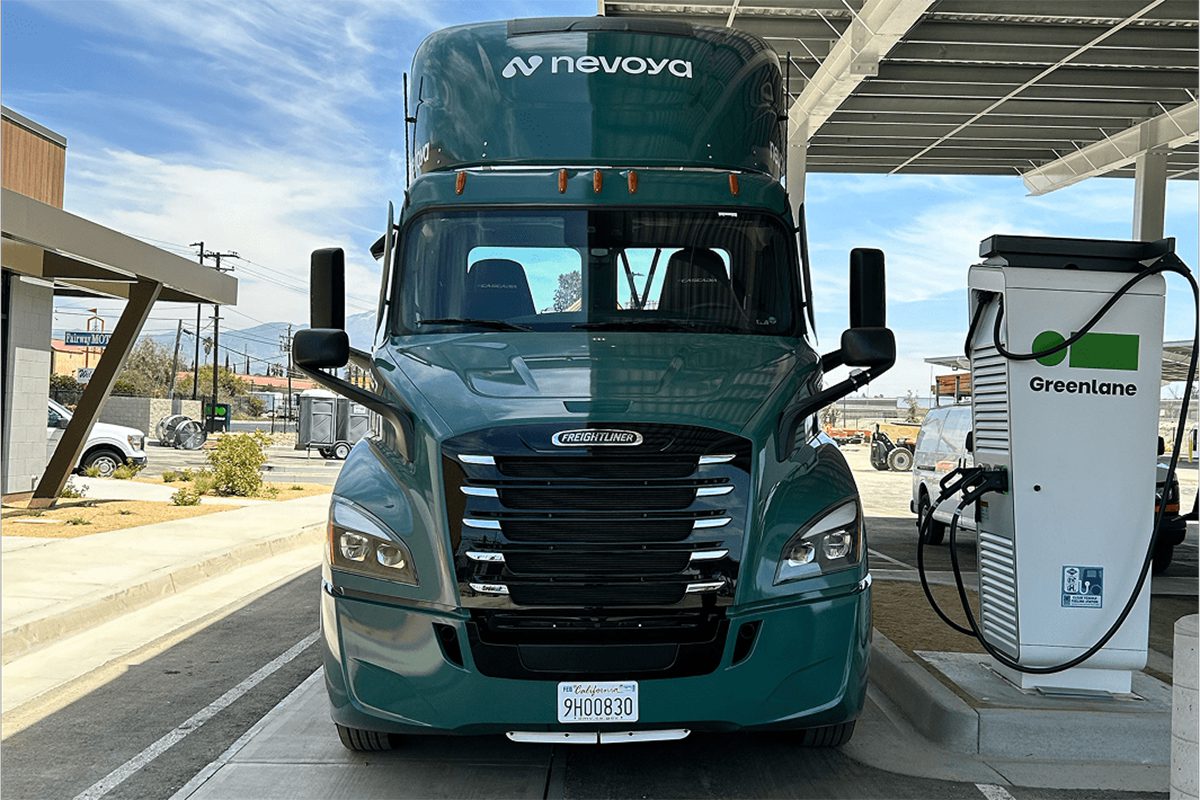
Electric truckload carrier Nevoya plans to deploy 25 Class 8 battery-electric trucks between San Bernardino, California, and Phoenix, Arizona, under a new multi-year agreement with Meta. The trucks are expected to begin operating in 2027 and travel approximately 4 million freight miles annually along Interstate 10.
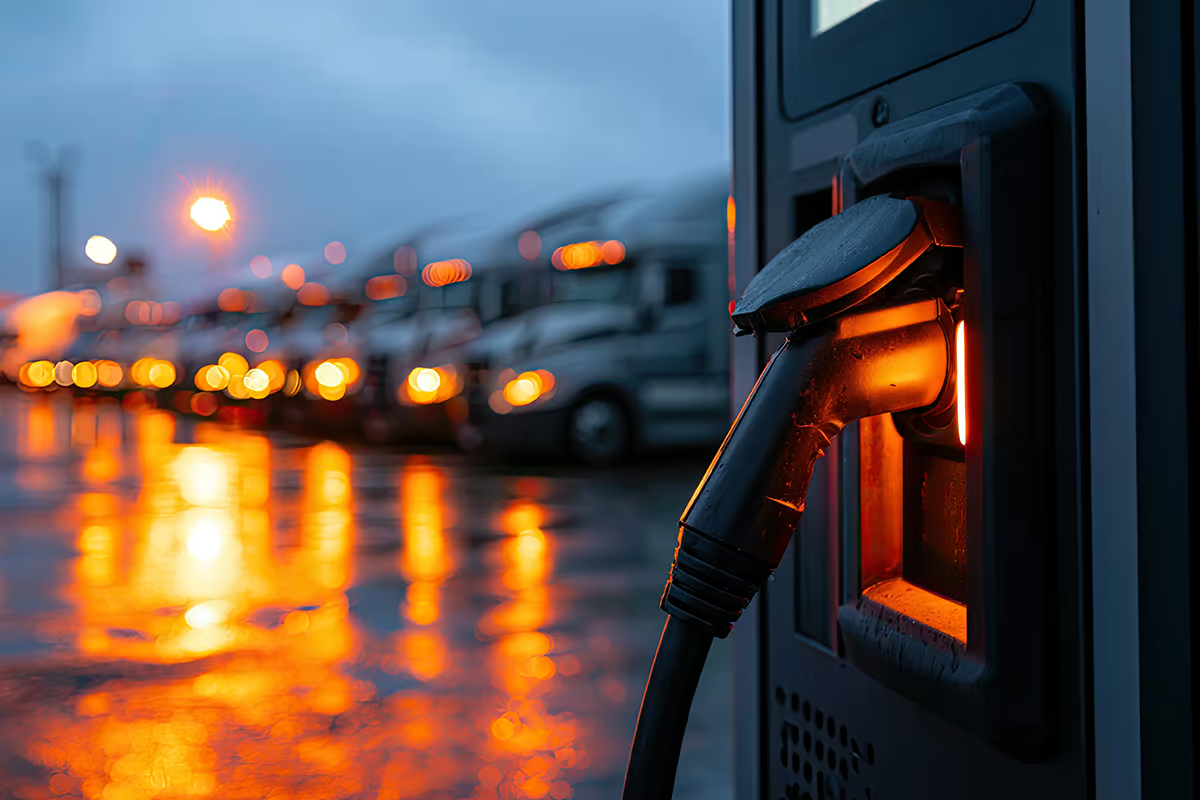
The agreement also supports new charging infrastructure along the corridor, with electricity used by the trucks to be matched 100% with renewable energy certificates. Nevoya expects the infrastructure to be available to other freight operators.
Rather than contracting Nevoya to transport its own goods, Meta is purchasing environmental attribute certificates (EACs) representing the environmental benefits of Nevoya’s battery-electric freight service. The arrangement allows Meta to address emissions associated with its value chain, including logistics, without requiring its freight to move on the trucks.
The structure is designed to support electric truck deployments through multi-year demand for their environmental attributes. For Nevoya, the agreement provides another opportunity to expand its electric freight operations beyond California while establishing charging access along a major transportation corridor.
John Verdon, co-founder and chief commercial officer of Nevoya, emphasized the role of long-term commitments in expanding electric trucking, explaining that “what unlocks them at scale is multi-year demand.”
The California–Arizona route is part of the broader I-10 freight corridor, which connects the ports of Los Angeles and Long Beach with Phoenix, El Paso, Houston, and the Gulf region. Nevoya identified the corridor as an important route for transporting materials used in data center construction, an activity connected to Meta’s infrastructure development.
Meta’s interest in the project is also tied to emissions associated with its data center operations. The company is using the agreement to address Scope 3 emissions, which include emissions generated across its value chain.
Devon Lake, head of net zero strategy at Meta, highlighted that connection, explaining that “freight is part of the emissions footprint of building and operating our data centers.”
The agreement is the second between Nevoya and Meta, following an earlier electric trucking initiative in Texas.
In that project, Meta participated alongside other companies in a buyers’ alliance organized by the Center for Green Market Activation. The group’s collective purchases of environmental attribute certificates support Nevoya’s planned deployment of 63 Class 8 battery-electric trucks on the Houston–Dallas corridor.
The new I-10 agreement differs from the Texas initiative because it is a standalone arrangement between Nevoya and Meta rather than a collective procurement involving multiple buyers. It also establishes a framework that could support additional corridors in the future.
Charging infrastructure is another component of the California–Arizona deployment. Along with supporting Nevoya’s 25 trucks, the planned facilities are expected to be available to other freight operators using the corridor.
The availability of charging infrastructure is particularly relevant along I-10, where the route connects major freight markets across the southwestern United States. Although Nevoya has not disclosed the specific charging locations or their capacities, the company’s stated intention is to make the infrastructure available beyond its own fleet.