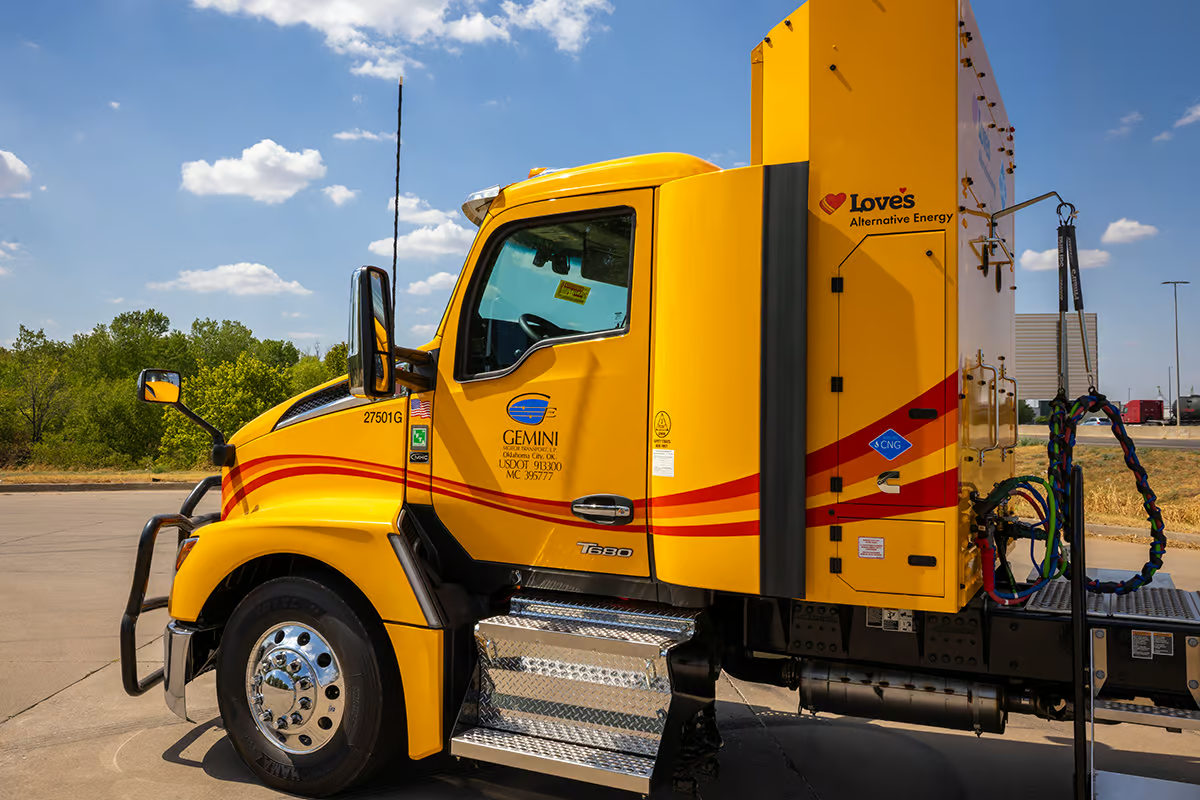
Paper Transport is operating eight renewable natural gas (RNG) trucks for Graphic Packaging International, using Cummins X15N natural gas engines to move freight along dedicated routes between Chicago, Illinois, and Kalamazoo, Michigan. After a year of service, the partnership is providing operating experience on how RNG can support daily freight operations while helping shippers address transportation-related emissions.
The trucks transport paperboard and recovered fiber through Graphic Packaging’s supply chain, with Clean Energy supplying the renewable natural gas. The operation is part of Graphic Packaging’s broader effort to improve logistics efficiency and address Scope 3 emissions through carrier partnerships, alternative fuels, network optimization, and improvements to freight movement.
For Graphic Packaging, the project provides an opportunity to evaluate alternative-fuel transportation under regular operating conditions.
Domingo Amunategui, vice president of logistics at Graphic Packaging, said the partnership has provided insights into incorporating alternative fuels into freight operations while maintaining “the service and reliability our business and customers expect.”
The company is using the experience to inform its efforts to address emissions across its value chain while continuing to meet freight transportation requirements.
The deployment comes as fuel prices remain a significant consideration for commercial fleets. According to the U.S. Energy Information Administration, the national average retail price for on-highway diesel reached $6.35 per gallon during the week of October 26, 2026. Although prices have since declined, diesel averaged $6.13 per gallon during the week of November 9, still $2.29 higher than the same period a year earlier.
For fleets evaluating natural gas, that pricing environment places greater attention on fuel costs, long-term price stability, and the economics of alternative-fuel equipment.
Clean Energy, which supplies RNG for the Paper Transport operation, identifies fuel-price stability as an advantage compared with diesel. Tom Driscoll, senior vice president at Clean Energy, described the combination of RNG and the Cummins X15N engine as offering diesel-comparable performance and range while operating on “a fuel that costs less than diesel.”
Beyond fuel economics, the partnership is focused on reducing the environmental impact of Graphic Packaging’s transportation activities.
RNG can deliver up to 90% lower lifecycle greenhouse gas emissions compared with diesel, with some production pathways capable of achieving negative carbon intensity. Those figures describe the potential benefits of RNG rather than measured emissions results from this particular fleet.
For Graphic Packaging, the project supports its larger supply chain strategy, which includes working with transportation providers to identify opportunities for emissions reductions while maintaining operational performance.
Paper Transport brings considerable experience with natural gas trucking to the partnership. The company introduced its first natural gas fleet in 2010 and has since accumulated more than 87 million natural gas miles. Its natural gas operations support customers in paper and packaging, consumer packaged goods, manufacturing, and logistics.
Tyler Ellison, CEO of Paper Transport, said the collaboration supports Graphic Packaging’s sustainability objectives “without sacrificing performance or reliability.”
The year of operating experience gives both organizations a practical example of RNG use in dedicated freight transportation. While the companies have not released detailed operating-cost or fleet-specific emissions data, the deployment demonstrates how an established carrier, fuel supplier, and shipper are incorporating RNG into ongoing freight service.
For fleet operators evaluating similar investments, fuel economics remain central to the decision.
ACT News will examine those considerations during its upcoming webinar, The Diesel Premium: Making the Business Case for CNG and RNG, on December 8, 2026, at 10 a.m. PT / 1 p.m. ET. The one-hour program will explore natural gas and diesel fuel prices, operating range, fuel system technology, fueling infrastructure, and supply agreements, with speakers from Hexagon Agility and Love’s Alternative Energy.