Kodiak AI’s plan to put trucks on a public highway with no one in the cab before the end of 2026 comes down to three numbers: three truck platforms, five trucks, and one 219-mile lane.
The company filled in all three recently on its third quarter earnings call. IKEA Supply was named as Kodiak’s first unsupervised autonomous long-haul customer, with plans for regular daily commercial service on a segment of Interstate 45 between Dallas and Houston using an initial fleet of five trucks. The segment is part of an established delivery route connecting IKEA’s distribution center in Baytown with its store in Frisco.
The launch lane is not new ground for either company. Burnette said Kodiak and IKEA have moved more than 1,370 loads and more than 800,000 autonomous miles of IKEA freight across four years of working together, which means the route has been run repeatedly with a safety driver aboard before anyone proposes removing one.
Kodiak is targeting the launch by the end of 2026. Burnette said the company’s Autonomy Readiness Measure, an internal metric tracking completion of its safety case, now stands at 99%, up from 91% at the end of the second quarter. What remains, he said, is final validation testing, safety controller verification, and documentation. The measure is Kodiak’s own and is not independently verified.
Five trucks on a single lane is a modest opening, and deliberately so. It is the scale most fleet managers would recognize from their own first deployment of any unfamiliar technology: one route, a known shipper, a countable number of units. Kodiak said additional customer deployments are expected to follow, with expansion beginning in 2027 across more trucks, more customers, and new routes.
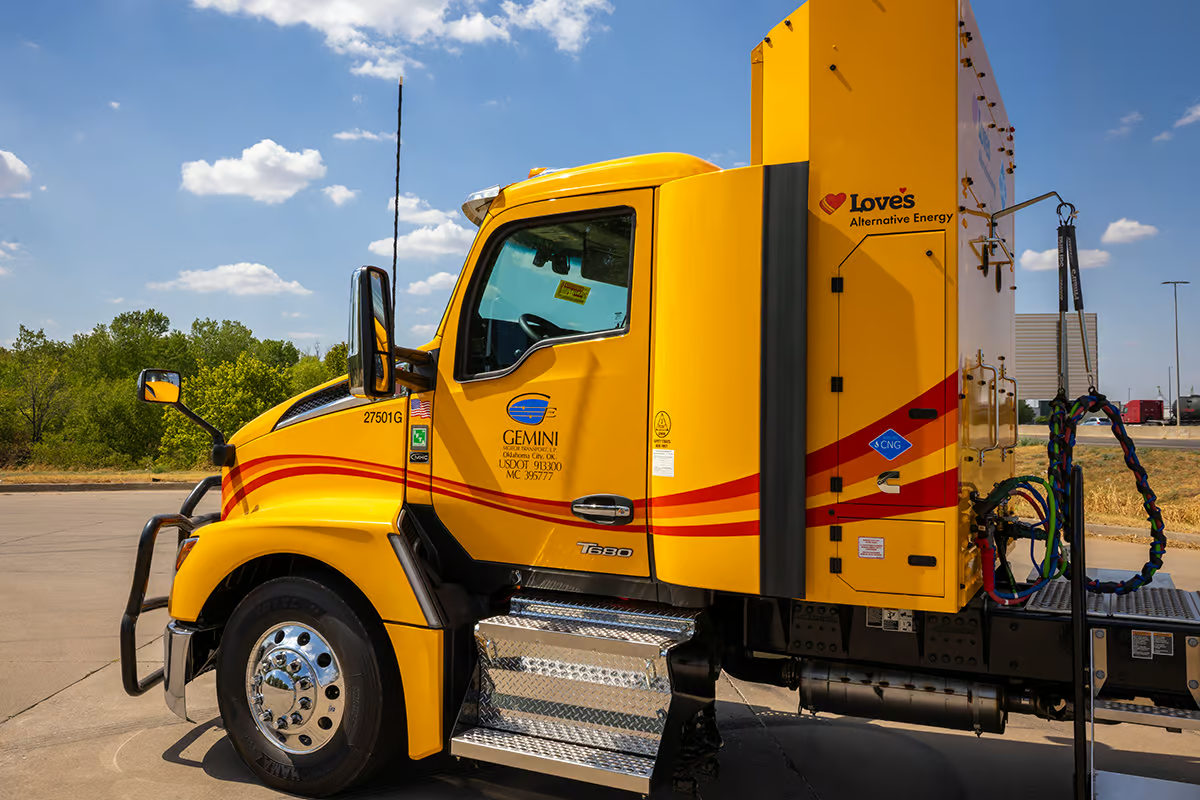
The third platform arrived in the same announcement. Kodiak has selected the International LT as its third truck, joining PACCAR and Peterbilt models and Daimler’s Western Star. Engineering integration is underway, with unsupervised deployments targeted for the second half of 2027. Asked whether International trucks would come off the assembly line with autonomy hardware installed, Burnette said the initial deployment will use the same retrofit upfit model Kodiak applies to its existing platforms, with Roush performing the work.
That multi-platform approach produced the quarter’s clearest operational milestone. Kodiak delivered its first two Kodiak-powered Western Star 49X trucks to Atlas Energy Solutions, which Burnette said created what the company believes is the world’s first multi-platform fleet operating without a person in the cab. By quarter end, Atlas had taken delivery of 37 cumulative Kodiak Driver-powered trucks.
Deployments moved at a measured pace during the quarter as Kodiak transitioned to the Western Star platform and completed the validation that transition required. The company expects the Atlas fleet to reach the mid-40s by the end of 2026 and to complete its initial 100-truck commitment by the end of the first half of 2027.
The Atlas work is also where Kodiak’s reliability record comes from. One Atlas truck ran 64 consecutive days without powering off or restarting, and five additional trucks each passed 45 consecutive days. Burnette said the system remained running and available through refueling, idling, and waiting for the next load, and framed that uptime as the credential the company carries from oilfield work onto the highway. During the quarter, Atlas served a record three well sites exclusively with Kodiak-powered trucks, and Burnette said Atlas customers began specifically requesting Kodiak-powered trucks for their routes.
A less visible change may determine how quickly the one lane becomes several. Kodiak said it has brought simulation fully in-house using BreakPoint, its own AI-powered simulation technology, replacing third-party tools. Burnette said the in-house system returns results up to 16 times faster at less than 2% of the cost, running more than 2 million simulations an hour at a fraction of a cent per simulation, and that it lets engineers build new test scenarios far more quickly. Because the Kodiak Driver does not rely on high-definition maps, he said bringing new routes online should become a fast process once Dallas to Houston is running, with expansion planned across Texas and then the Sunbelt.
Kodiak attached numbers to that expansion for the first time. The company is targeting 200 Kodiak-powered unsupervised autonomous trucks in commercial operation by the end of 2027, generating over $50 million in annualized run rate revenue exiting that year, with most long-haul growth coming from customer-owned trucks under its Driver-as-a-Service model. Looking further out, Kodiak is targeting 5,000 trucks exiting 2029, over $1 billion in annualized run rate revenue, and free cash flow breakeven the same year. Burnette set those figures against roughly 4 million commercial trucks operating in the United States.
Analysts pressed on whether the upfit channel can support that ramp. Ryan Sigdahl of Craig-Hallum noted that a competitor has publicly discussed roughly 1,000-truck capacity with Roush and asked how Kodiak reaches about 2,500 trucks in each of 2028 and 2029. Burnette declined to comment on other companies and said manufacturing is not the constraint, citing Roush’s repeatable upfit process and technical development work with Tier 1 suppliers including Bosch aimed at a production-grade platform at lower unit cost.
Financially, Kodiak reported third quarter revenue of $3 million, up 286% year over year, driven by recurring Driver-as-a-Service revenue plus a one-time $500,000 defense contribution. Operating loss was $50.4 million. The company ended the quarter with $113.6 million in cash, cash equivalents, and marketable securities, and narrowed its full year free cash flow burn guidance to a range of negative $153 million to negative $155 million.
Two other commercial developments landed during the quarter. Kodiak launched freight service on a Dallas to Laredo lane with Charger Logistics and a Fresno to Los Angeles lane with DTL Transport, the latter marking the first autonomous delivery in California following receipt of a state testing permit. The DTL relationship has since expanded into a binding definitive agreement, announced October 28, to deploy the Kodiak Driver in 75 customer-owned and operated trucks.
Kodiak expects to begin unsupervised long-haul operations before the end of 2026.