
Battery-electric vehicle deployment is moving through several different policy and infrastructure channels this month, as California, Illinois, and Connecticut each advance programs aimed at putting more zero-emission vehicles on the road or making charging easier to access.
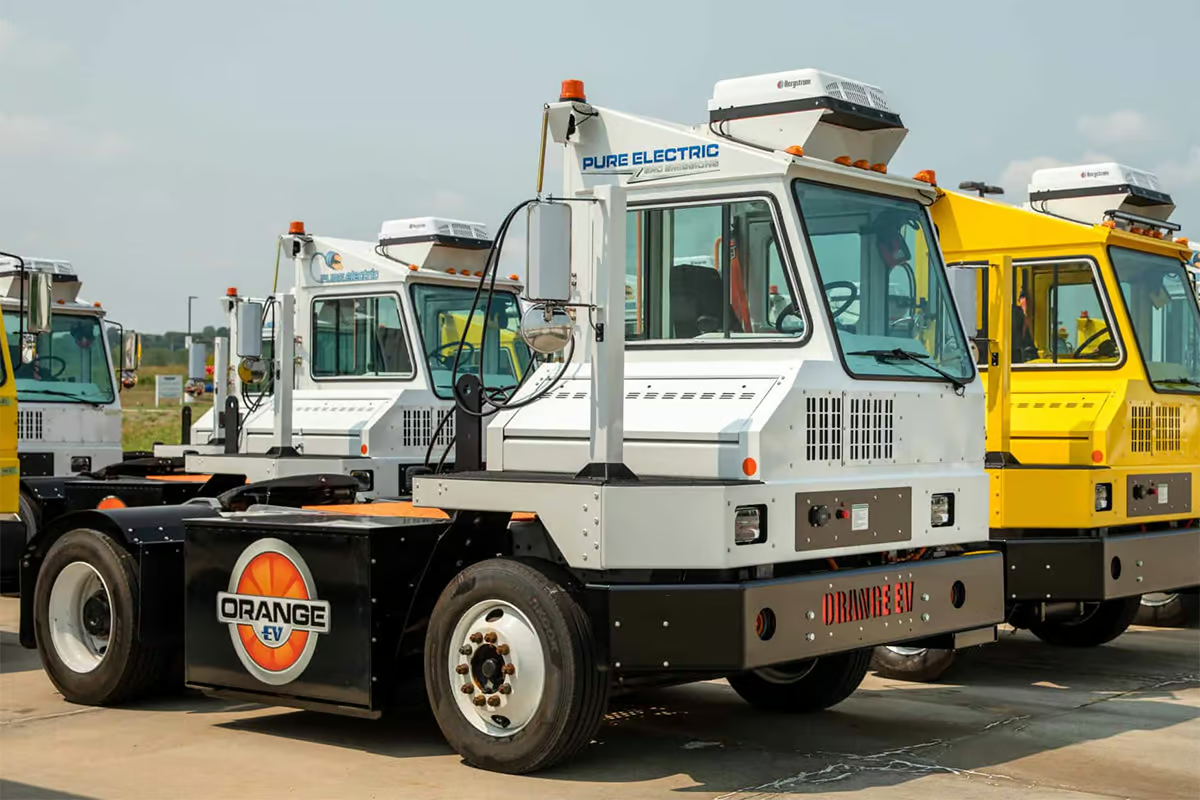
The Port of Los Angeles opened applications for a $75 million Zero-Emission Truck Purchasing Incentive Project on July 13, targeting Licensed Motor Carriers registered in the Port Drayage Truck Registry. The program is designed to support the purchase of battery-electric Class 8 drayage trucks, with eligible applicants required to purchase at least 10 trucks.
The purchasing incentive will provide up to $300,000 per battery-electric truck, with a maximum award of $24 million per licensed motor carrier. The funding includes $50 million from the EPA’s Clean Ports Program and $25 million from the Port of Los Angeles Clean Truck Fund Rate.
The Los Angeles program is directly tied to freight movement, with a focus on one of the most visible early markets for heavy-duty truck electrification: port drayage. Drayage operations can be a strong fit for battery-electric trucks because routes are often regional, freight moves between known facilities, and vehicles may return to base or operate near charging infrastructure.
Illinois is taking a different approach, opening a fourth round of funding through the Illinois National Electric Vehicle Infrastructure Program. The Illinois Department of Transportation said approximately $30 million is available through the latest funding round for EV charging station projects.
The Illinois funding round is notable because eligible projects can support passenger, medium-duty, and heavy-duty vehicles. Applications are open through July 20, 2026, and awards are expected by the end of August.
That broader eligibility matters because public charging programs are often built first around passenger vehicles, even as fleets begin evaluating electric step vans, box trucks, school buses, service vehicles, and Class 8 trucks. For medium- and heavy-duty fleets, the value of public or corridor charging depends on whether sites are designed with enough space, power capacity, connector access, and operating flexibility for commercial vehicles.
Connecticut’s new charging pilot focuses on another piece of the infrastructure challenge — access. Voltpost plans to convert 40 to 60 municipally owned light poles into EV charging stations, creating about 100 charging ports.
The Connecticut pilot is not a commercial truck program, but it highlights the broader search for lower-cost and faster-to-deploy charging models. By using existing light poles, the project is intended to expand Level 2 charging access in locations where conventional charging stations may be harder or more expensive to build. The first units are expected to be installed and deployed by August 2026.