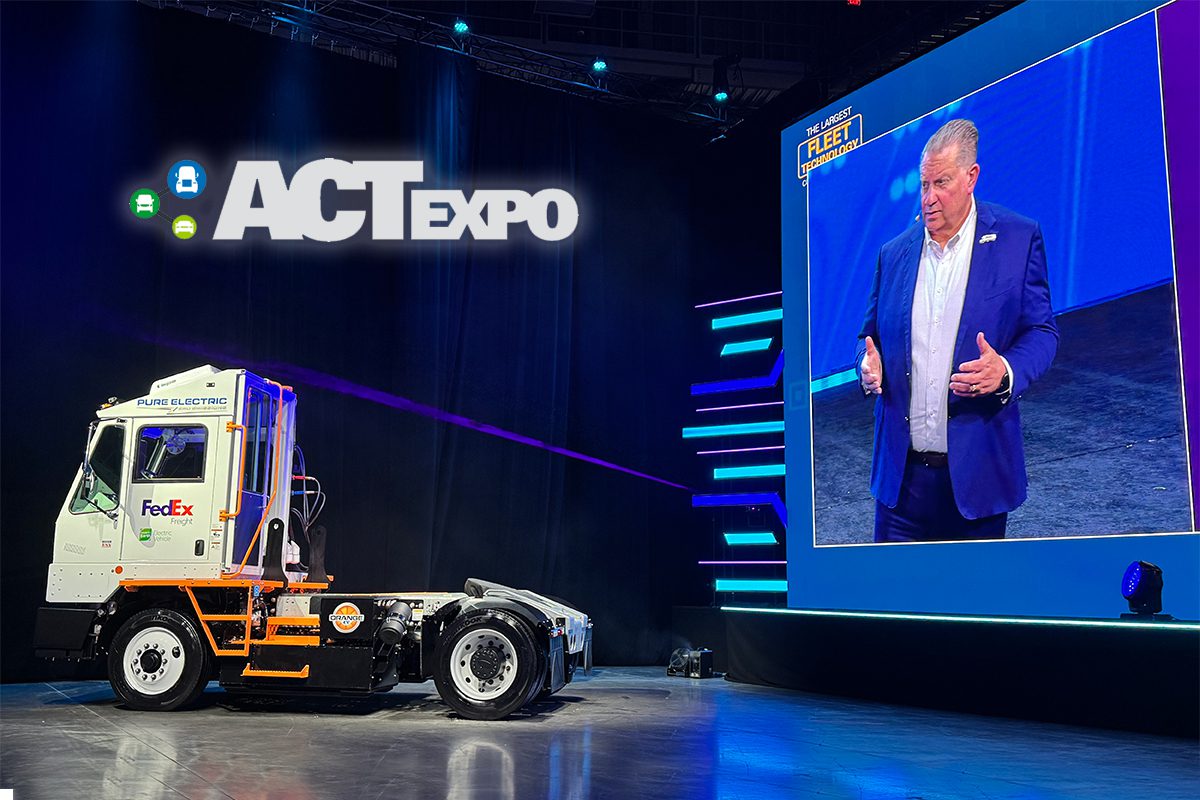
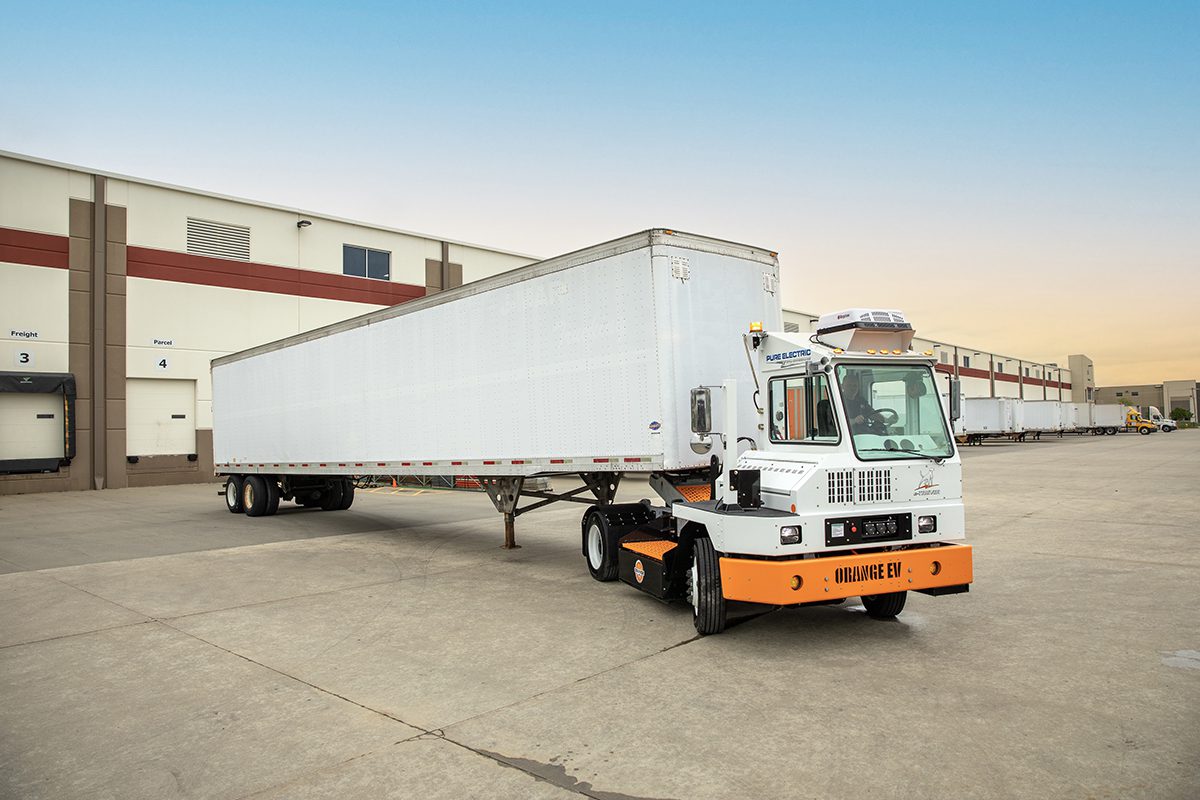
Orange EV has announced record order volume for its electric terminal trucks, including a 600-truck order that marks the largest single order in the company’s history. The scale of the order signals a shift in the electric yard truck market, as fleets move beyond site-level pilots and begin planning network-wide deployments.
Deployment of the 600 trucks is already underway, with full deployment expected in 2026. The order is backed by Orange EV’s uptime guarantees, extended warranties, and end-to-end service model, reflecting the operational requirements that come with scaling electric trucks across large logistics networks.
“The pilots have done their job,” said Zack Ruderman, Orange EV’s Vice President of Sales and Marketing. “Fleets spent years validating the technology, and now they’re acting on the data. When you can point to millions of operating hours, trucks surpassing 30,000 hours on their original battery packs, and a proven track record of lower operating costs, the decision to go from 10 trucks to 600 isn’t a leap of faith. It’s math.”
Orange EV created the electric terminal truck market more than a decade ago. The company now has more than 1,900 trucks in service, including its first deployment with DHL in 2015. According to Orange EV, the market initially grew as operators tested electric “yard dogs” in real-world operations. The company now says large organizations with sophisticated supply chains are moving to scale following successful trials of Orange EV yard hostlers, chargers, and battery energy storage systems.
That shift is changing the nature of customer conversations.
“We’re not having conversations about whether electric yard trucks can handle the work anymore,” Ruderman said. “We’re talking about rollout sequencing and fleet standardization across entire networks. That’s a fundamentally different conversation.”
Orange EV said it is now on track to capture more than 25% of all new terminal truck orders and deliveries by year end. The company also reported that multiple early adopters that began with limited tests have placed incremental orders to grow their yard fleets to more than 100 Orange EV trucks.
The move from pilot projects to fleet-scale deployments is being driven by a combination of operational data, service support, warranty coverage, and purchasing models that can reduce the upfront capital burden of electrification. Orange EV said leasing deals have increased 272% over the last 12 months, a trend the company says can help accelerate EV standardization across fleet networks.
“We’ve seen leasing more than triple over the last year,” Ruderman said. “The economics of electrification are already compelling. Fleets shouldn’t have to fight their own balance sheet to act on them. Leasing allows customers to scale faster while preserving capital for other priorities.”
Orange EV’s trucks have accumulated 33.8 million operational miles, with many surpassing 30,000 hours of usage with their first owners while remaining on their original battery packs. The company said deployments span distribution centers, ports, manufacturing plants, agricultural facilities, and other site types, where electrification has demonstrated improvements in uptime, maintenance schedules, and energy costs compared with diesel alternatives.
As fleets scale electric yard trucks across more facilities, uptime and support become central to the purchasing decision. In yard operations, terminal trucks are tied directly to throughput, making reliability a business-critical requirement.
“In yard operations, a truck that isn’t running is a throughput problem that cascades through the whole facility,” Ruderman said. “Fleets committing to hundreds of units need to know what happens when something goes wrong, not just when everything goes right. That’s why uptime guarantees, direct service support, and long-term warranty coverage become so important as deployments scale.”
Orange EV said its factory-backed, direct service model is supported by a nationwide team of Orange EV-trained technicians, providing rapid on-site response and same-day support for most maintenance needs.
The company has also expanded production and service capabilities to support growing demand. Orange EV’s Kansas City manufacturing facility is designed to produce 2,400 trucks per year in a single shift, with capacity to produce more than 1,000 terminal trucks beyond current orders. The company said capacity can expand further with the addition of a second or third shift.
Charging and infrastructure readiness remain key considerations for fleets planning larger deployments. Orange EV said a new enhanced CCS1 option, e-CCS1™, is now available on all Orange EV trucks, enabling compatibility with CCS1 charging standards and broader integration with existing and third-party charging infrastructure.
For sites facing grid or infrastructure constraints, Orange EV has also developed the Orange Juicer™, a battery-integrated DC fast charger designed to reduce or eliminate the need for costly permitting and time-consuming infrastructure upgrades. The company said the system can compress deployment timelines from months or years to days.
Taken together, the record order volume, increased leasing activity, service model, charging compatibility, and infrastructure solutions reflect a more mature phase of yard electrification. For fleets, the decision is increasingly less about proving whether electric terminal trucks can work and more about how quickly they can be standardized across operations.