The North American Council for Freight Efficiency has merged its tractor and trailer aerodynamics studies into a single Confidence Report, and its central finding is that aerodynamic technology is proven, increasingly durable, and still sitting unused at a large share of fleets.
An In-depth Look at Tractor & Trailer Aerodynamics, released Oct. 29, updates and combines the 2016 Tractor Aerodynamics Confidence Report and the 2020 Trailer Aerodynamics Confidence Report. NACFE consolidated the two because the gap between the tractor and the trailer emerged as the area holding the most remaining savings, and because the industry has shifted to evaluating the two as a single unit.
“Our second report on aerodynamics in 2020 told fleets that good aero was worth doing,” said Mike Roeth, NACFE executive director. “Six years of data did not change that conclusion. It strengthened it. What changed is that the devices got more durable and the business case got better.”
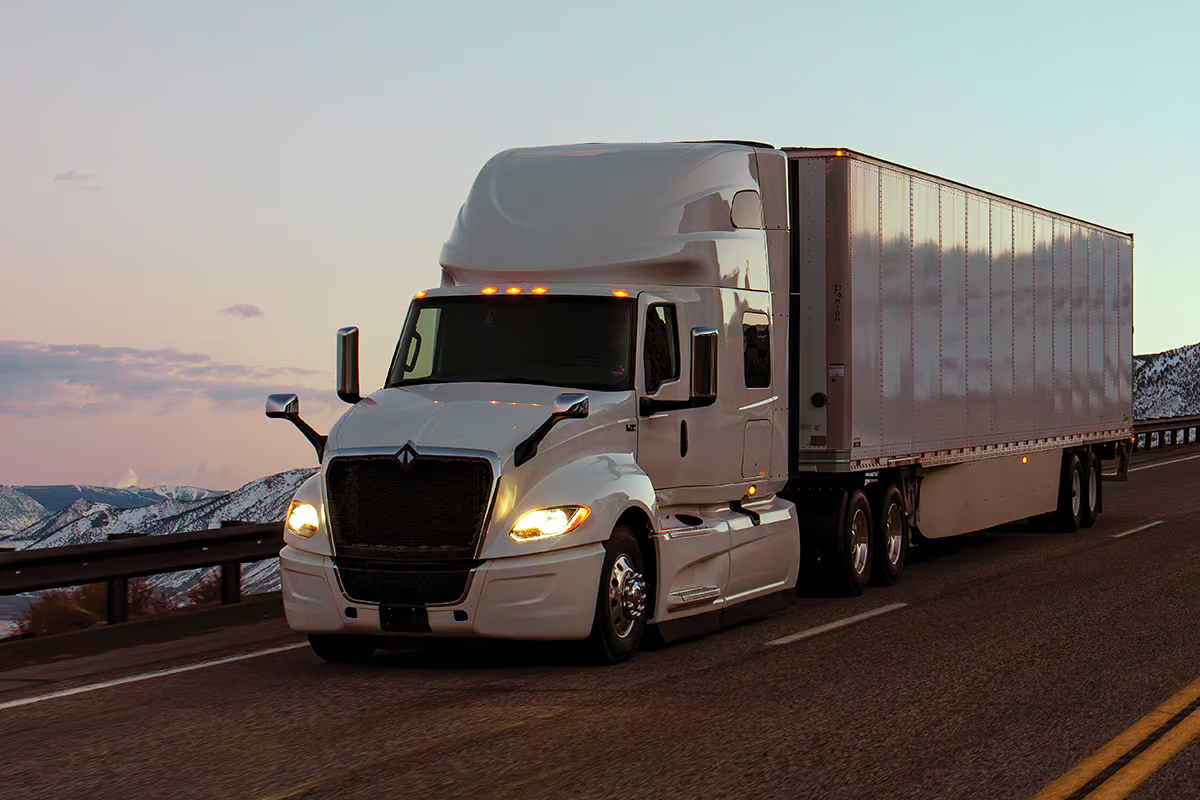
The report takes direct aim at what it calls a persistent industry view that the work on aerodynamics finished a decade ago. About 65% of a Class 8 tractor-trailer’s tractive energy goes into overcoming aerodynamic drag at highway speed, and the trailer carries roughly half of that drag. Volvo found that about two-thirds of the drag reduction in SuperTruck 1 came from the trailer rather than the tractor. All five SuperTruck 2 teams beat the Department of Energy’s goal of doubling freight efficiency against a 2009 baseline, with results ranging from 105% for PACCAR to 170% for International.
The case now rests on fuel rather than regulation. A 5% fuel economy improvement on a long-haul tractor running 105,000 miles a year at 7.0 MPG saves 714 gallons, according to the report. At the Oct. 5 weekly retail diesel average of $6.199 a gallon cited in the study, that is $4,426 a year. A bundle of skirts, a rear device and wheel covers costing $6,000 to $7,500 installed pays back in 19 to 30 months at that rate. For a regional tractor running 50,000 to 70,000 miles a year at 8.3 MPG, where a 4% realized improvement is the more realistic expectation and bundles run $4,000 to $6,000 because rear devices are often left off, payback stretches to 33 to 51 months.
One tax change may now move adoption as much as fuel price. The One Big Beautiful Bill Act, signed in July 2025, permanently restored 100% bonus depreciation for equipment placed in service after Jan. 19, 2025, which the report calls one of the biggest near-term levers for adoption and arguably bigger than fuel price itself.
NACFE rates technologies on how quickly they pay back and how much confidence the supporting data gives the organization in that payback figure. Payback bands run fast, under one year; moderate, one to three years; and long, more than three years. Confidence runs high, medium and low. A separate flag, erodes, marks devices where maintenance and damage consume the payback rather than deliver it. The report cautions that most of the third-party test results behind the ratings come from MVT Solutions, a commercial service whose tests are commissioned by the vendors whose products it certifies, and that NACFE treats those results as a maturing commercial test service rather than a reference standard.
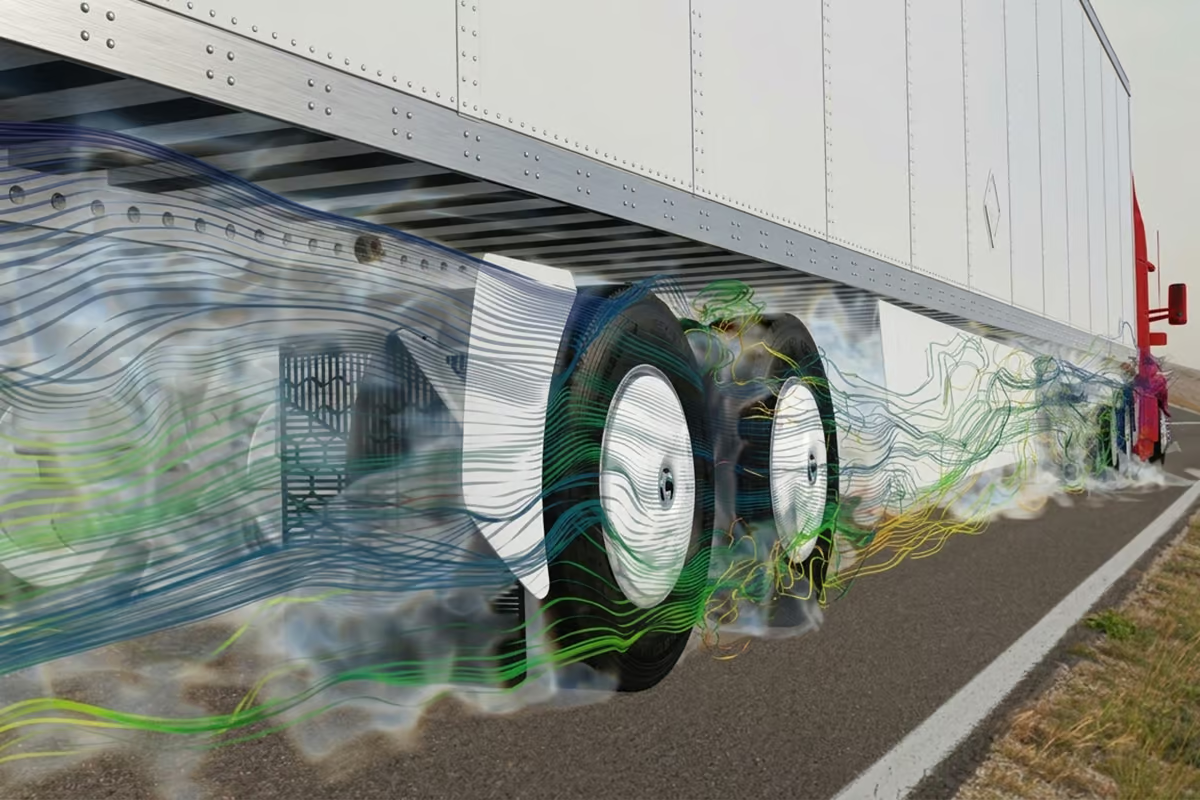
Side skirts carry the highest confidence rating of any device in the report. The rated figure runs up to 7.3%. Schneider field-measured about 5% on its skirts, TRANSTEX preliminary testing put skirts alone at 3.99% to 4.19%, and Covenant’s 2022 paired-truck test returned 10.2% for a full bundle. TRANSTEX reports a 6.4-month payback on a baseline skirt costing $2,170 installed in long-haul service. Skirt adoption stands at 67% among Fleet Fuel Study participants, down from a 79% peak in 2015, and skirts remain the most widely adopted trailer aerodynamic device.
The sharpest change falls at the rear of the trailer. The 2020 report identified boat tails as a device to consider. The 2026 evidence moves the category to erodes. Penske told NACFE that tails are “a real maintenance issue, big time,” and noted that drivers never deployed the manual versions. Schneider said “maintenance kills most of the payback for tail treatments.” STEMCO’s TrailerTail, TRANSTEX’s Edge Tail and ATS’s SmartTail have all been discontinued or withdrawn from the market. Adoption has fallen to 12% from a 25% peak in 2015. Vendors have responded with flex brackets, bonded panels, and 10-year and lifetime warranties that shift durability risk back to the supplier, which the report says is worth watching but has not yet reversed the fleet finding.
Aerodynamic mud flaps entered the recognized device tier for the first time. Eco Flaps tested at one gallon per 1,000 miles against standard flaps and has sold more than 40,000 units, and TRANSTEX EDGE FLAPS claim up to 1.1 gallons per 1,000 miles. The category earned its place because it serves tank, flatbed, bulk, dump and chassis trailers, where side skirts usually cannot be mounted and payload weight carries a premium. On those weight-sensitive trailers, the report notes, added hardware competes with revenue payload, so a device that pays on a van can cost a bulk hauler money.
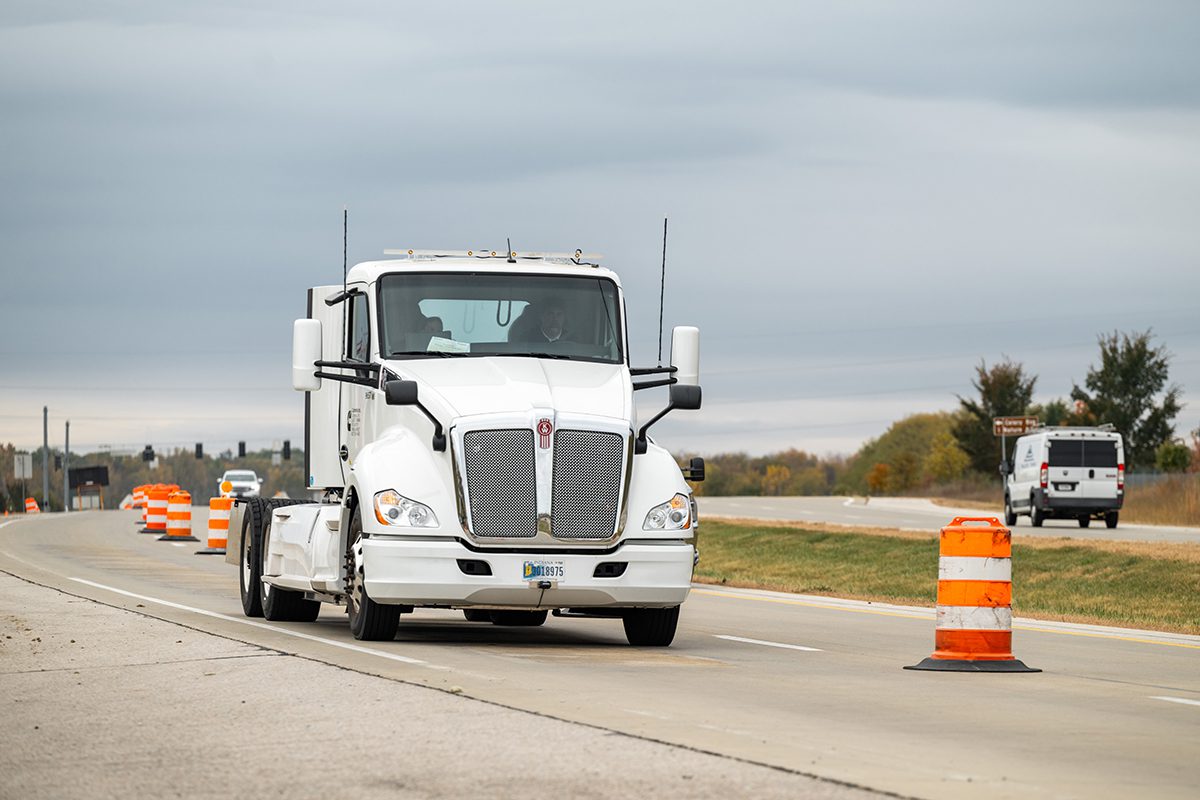
Day cabs represent what the report calls the largest underserved aerodynamic opportunity in the 2026 Class 8 market. Sleeper aerodynamics were remade between 2021 and 2026, with OEM design refreshes delivering fuel economy improvements of about 7%, while day cab aerodynamics were not. Day cabs run slower, log fewer annual highway miles and burn less fuel per tractor, but a regional day cab running 50,000 miles a year at 55 mph still clears the return-on-investment threshold for standard skirts and automated gap closers.
Gap closure changed more than any other tractor-side category since 2016. National Research Council of Canada wind tunnel testing conducted for Transport Canada’s heavy-vehicle program reported a wind-averaged drag reduction of 2.6% for every foot the gap is reduced, with meaningful impact beginning above about 18 inches. Active gap closure now carries a third-party number: 6.2% on a diesel Volvo day cab with a 45.9-inch baseline gap, MVTS Certified in 2024.
Alternative fuel powertrains add a constraint that is structural rather than operational. Compressed natural gas tanks, hydrogen tanks and battery packs all consume back-of-cab packaging volume that diesel tractors use differently, which widens the gap. NACFE recommends that natural gas fleets spec from the top of the aerodynamic menu to offset the penalty. An MVTS certified track test of active gap closure on a 2022 Volvo VNL CNG day cab with a 54-inch baseline gap returned 5.25%, or 8.7 gallons per 1,000 miles. For battery electric and fuel cell trucks, the report notes that trailer aerodynamic improvements can feed into battery sizing, letting fleets reduce the size of the battery a truck needs.
“The report found that aerodynamic technology is both proven and under-adopted,” said Dean Bushey, NACFE director of programs and the report’s lead author. “One thing we do know is that aerodynamics is not a finished subject. There is more to come.”
For fleets sizing a purchase, the report narrows a long-standing expectation gap. The 2020 trailer report framed realized savings as one-half to one-third of rated savings. The 2026 evidence puts realized savings at roughly 55% to 90% of the rated number a manufacturer states, depending on duty cycle, install discipline and device category, and NACFE advises fleets to size purchases off the conservative end of that range.