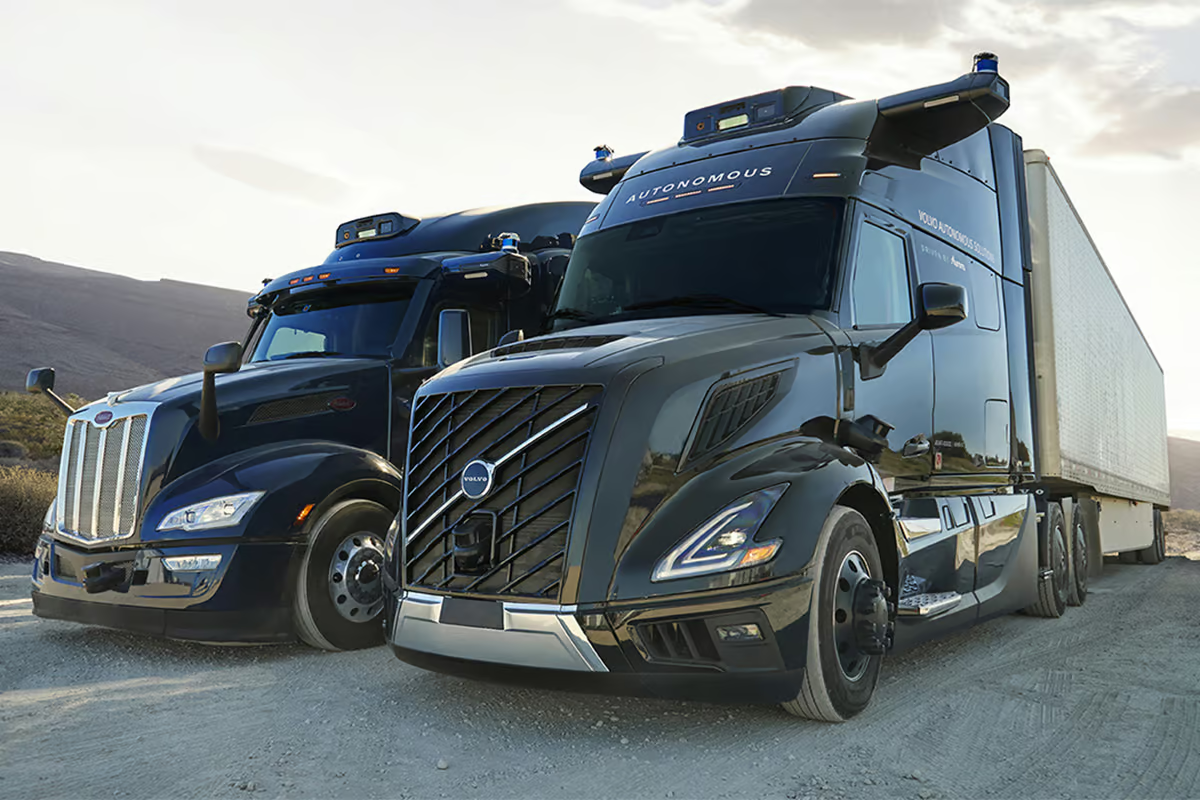
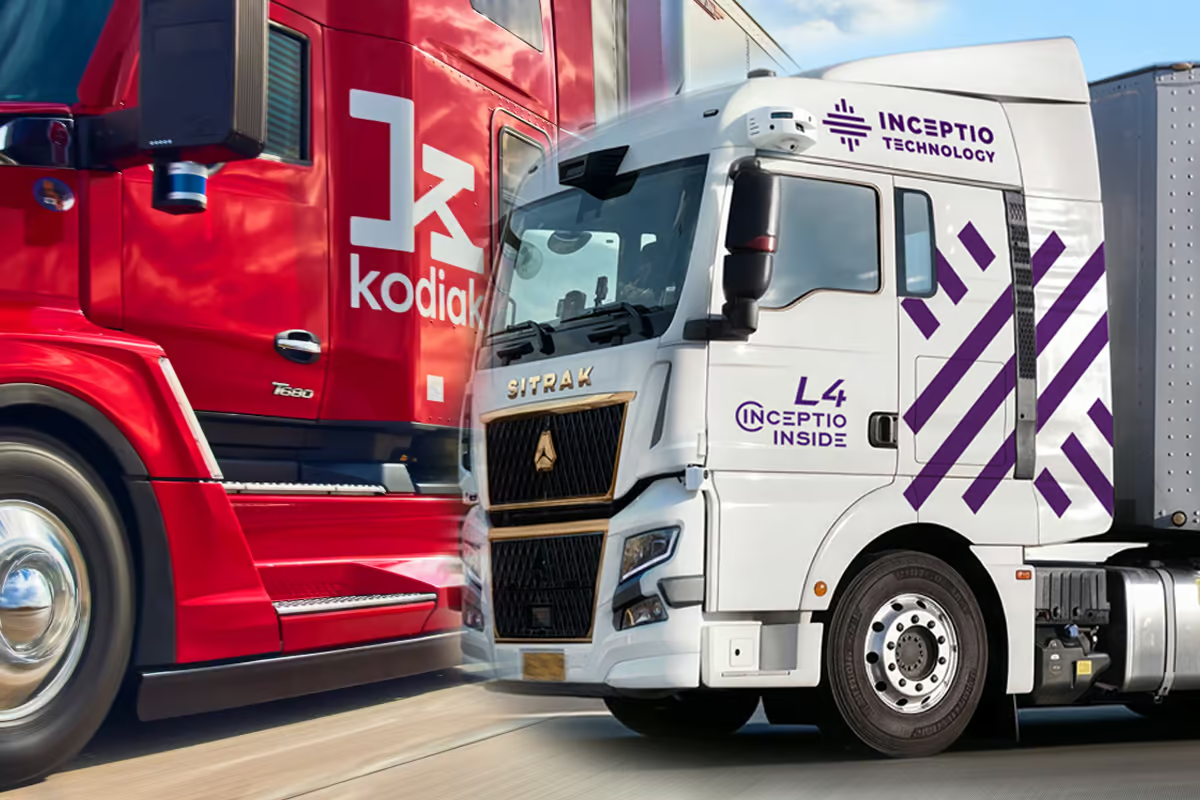
Kodiak AI’s safety case supporting its planned driverless long-haul service is 93% complete, with it on track to launch commercially by the end of 2026.
The autonomous vehicle company reported the figure using an internal metric called the Autonomy Readiness Measure, or ARM, which tracks the share of the safety claims behind driverless operation, and the evidence supporting them, that Kodiak considers finished.
A safety case is a structured argument, backed by evidence, that an autonomous system can operate safely inside a defined operating environment. Kodiak said the long-haul safety case builds on the one it completed for its industrial deployment in the Permian Basin, and that the Kodiak Driver “uses a single AI architecture across use cases, with a distinct safety case for each operating environment.”
That distinction is the part fleets should read closely, because Kodiak is already running driverless trucks. In its second quarter results, the company reported 35 customer-owned driverless trucks operating commercially with no human in the cab as of the end of the quarter, up seven from the first quarter. Those trucks surpassed 40,000 cumulative hours of paid driverless operations through the second quarter, a 71% increase over the first quarter, and delivered more than 300,000 tons of freight during the quarter against more than 20,000 cumulative loads.
The year-end target announced last week covers a different operating environment: long-haul service on public highways, with a separate safety case that Kodiak said it expects to complete before the end of the year.
“What makes this measure powerful is that we know exactly what stands between us and driver-out long-haul operations, and that list continues to get shorter month after month,” said Don Burnette, founder and chief executive officer.
A second autonomous trucking milestone landed recently, from a different market and on a different metric. Inceptio Technology, based in Shanghai, said it has passed more than 620 million miles of commercial autonomous driving mileage. The company also Freight Physical AI, a system built around freight-native intelligence, scenario intelligence drawn from a scenario library of several hundred thousand cases, and an Operational Brain cloud platform covering risk identification, energy optimization, route planning and cost management.
The system covers roughly 97% of China’s highway network and that it holds more than 90% share of China’s autonomous trucking market, according to Inceptio, citing a Level 4 heavy-duty demonstration with JD Logistics carrying commercial cargo on open roads, driverless light-duty operations with an SF Express joint venture that began on public roads in May 2026, testing permits in Zhejiang, Beijing and Hainan, and selection for a Level 4 heavy-duty pilot at the Port of Antwerp-Bruges.