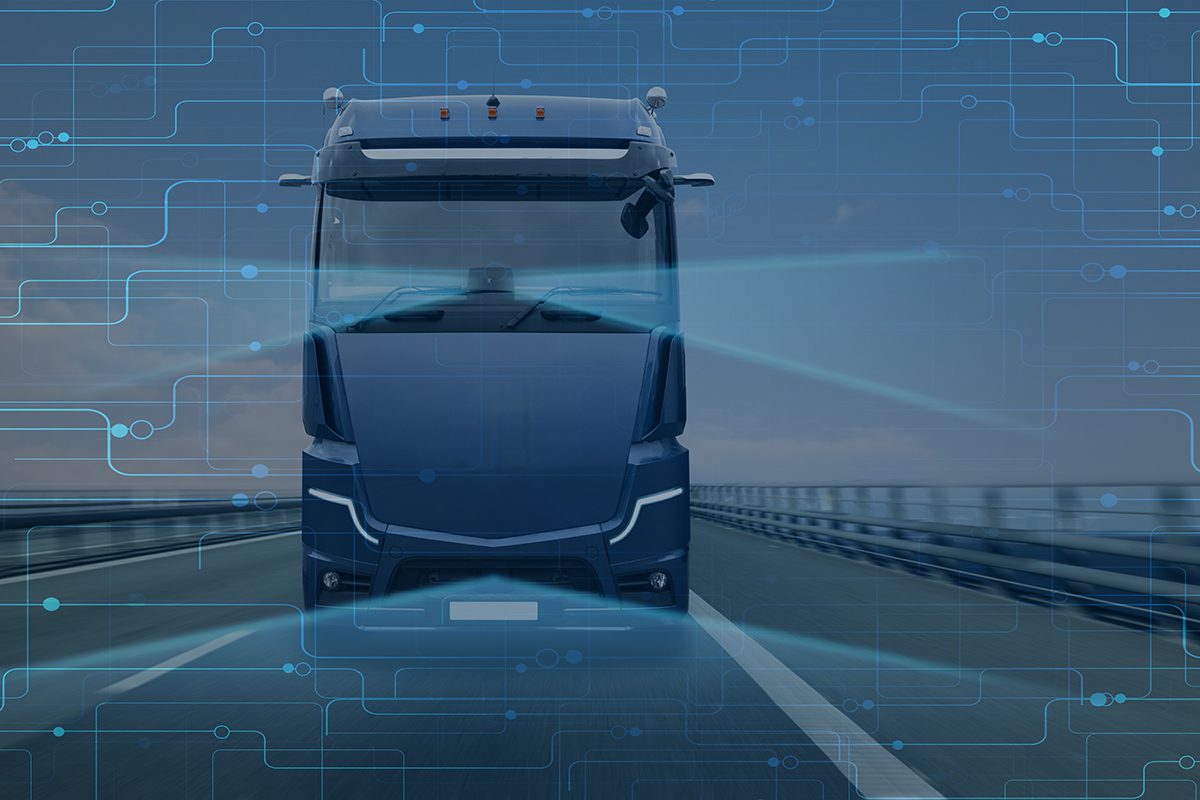
As heavy-duty trucking continues its steady progression toward automation, one technology has quietly shaped every milestone along the way: LiDAR. Once a supplement to basic safety systems, LiDAR has evolved into a cornerstone of driverless truck hardware, powering the leap from assisted driving to fully autonomous freight operations.
LiDAR, or light detection and ranging, uses rapid laser pulses to measure distance and create a precise 3D map of a vehicle’s surroundings. When early collision-avoidance systems and adaptive cruise controls emerged, LiDAR worked alongside radar and cameras to provide an extra layer of safety that supported drivers. As the industry advanced through the SAE levels of autonomy, LiDAR became more than just a complement; it became essential.
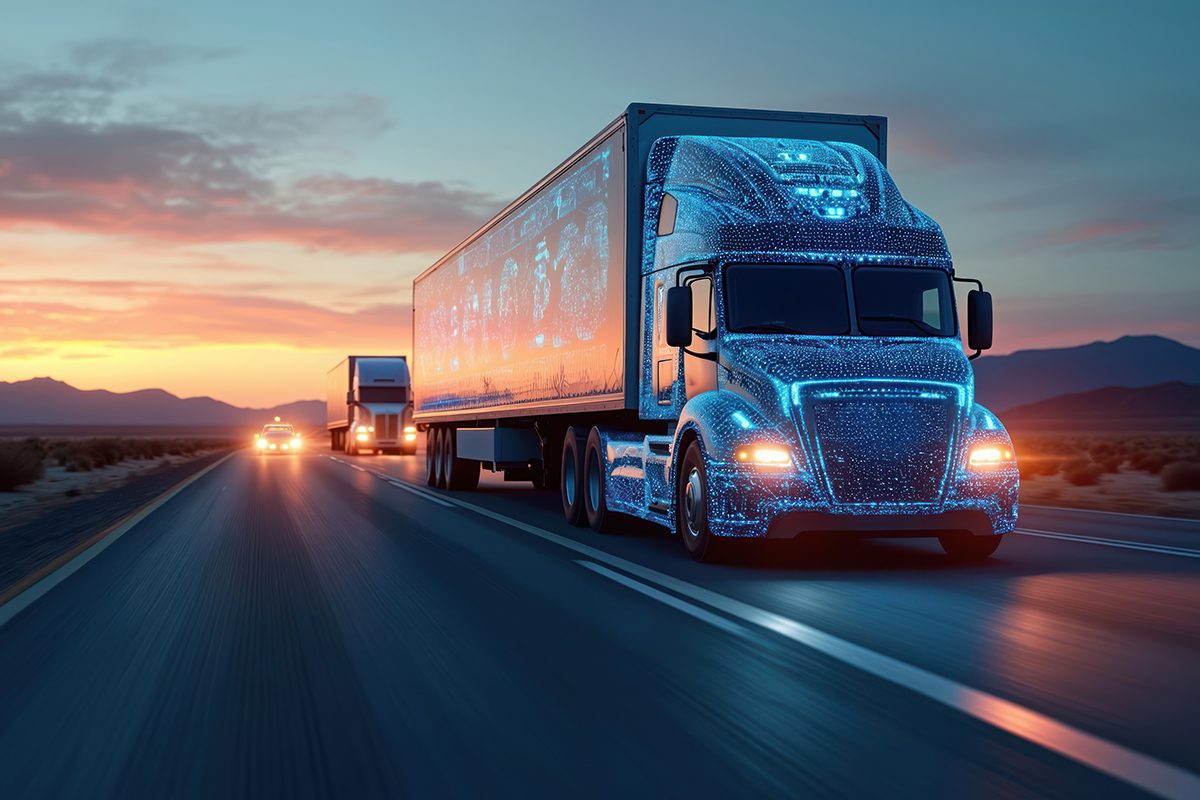
At Level 2, Class 8 trucks began relying on LiDAR to enhance lane-keeping, distance control, and braking assistance. By Level 3, when trucks could manage limited driving tasks under supervision, LiDAR’s ability to detect smaller obstacles and accurately model road geometry became critical. Now, at the edge of Level 4 autonomy, where the truck can safely operate without a human in the cab along specific routes, LiDAR serves as the truck’s eyes, forming the backbone of real-time perception and decision-making systems.
Several autonomous truck developers are leading this evolution. Aurora uses multiple LiDAR sensors on its Aurora Driver platform to provide 360-degree perception for long-haul routes. Kodiak Robotics integrates roof-mounted LiDAR arrays designed for redundancy and high-speed data fusion. Daimler Truck’s Torc Robotics, Plus, and TuSimple have each adopted multi-sensor architectures where LiDAR, radar, and cameras work together to identify lane markings, vehicles, pedestrians, and roadway debris in all lighting conditions.
Behind these deployments are the LiDAR manufacturers pushing performance and scalability. Luminar Technologies and Innoviz have built high-resolution, long-range LiDAR systems optimized for highway-speed detection, which is crucial for Class 8 autonomy. Hesai Technology, one of the largest LiDAR suppliers globally, partners with multiple trucking OEMs to supply mass-production sensors. Ouster and Aeva’s platforms continue to refine solid-state and frequency-modulated LiDAR units that improve durability and lower costs, bringing the technology closer to commercial viability for fleets.
As these systems advance, the cost and size of LiDAR units continue to drop, making them practical not only for fully driverless trucks but also for advanced driver-assist retrofits and mixed-fleet safety upgrades. For fleet operators, understanding how LiDAR fits within the broader autonomy stack is no longer optional. Knowledge of LiDAR’s role in data collection, sensor fusion, and vehicle perception will define how fleets evaluate automation’s return on investment. Learning about LiDAR is, ultimately, learning about the roadmap to autonomy. For Class 8 trucks, it marks the transition from technology that helps the driver to technology that is the driver, one laser pulse at a time.
In May, join the autonomous vehicle industry and some of the leading LiDAR technology integrators at ACT Expo in Las Vegas. Come and learn from creators of virtual driver platforms and from the fleets and industry leaders deploying LiDAR in autonomous vehicles, but additionally from fleets using it to navigate the world.