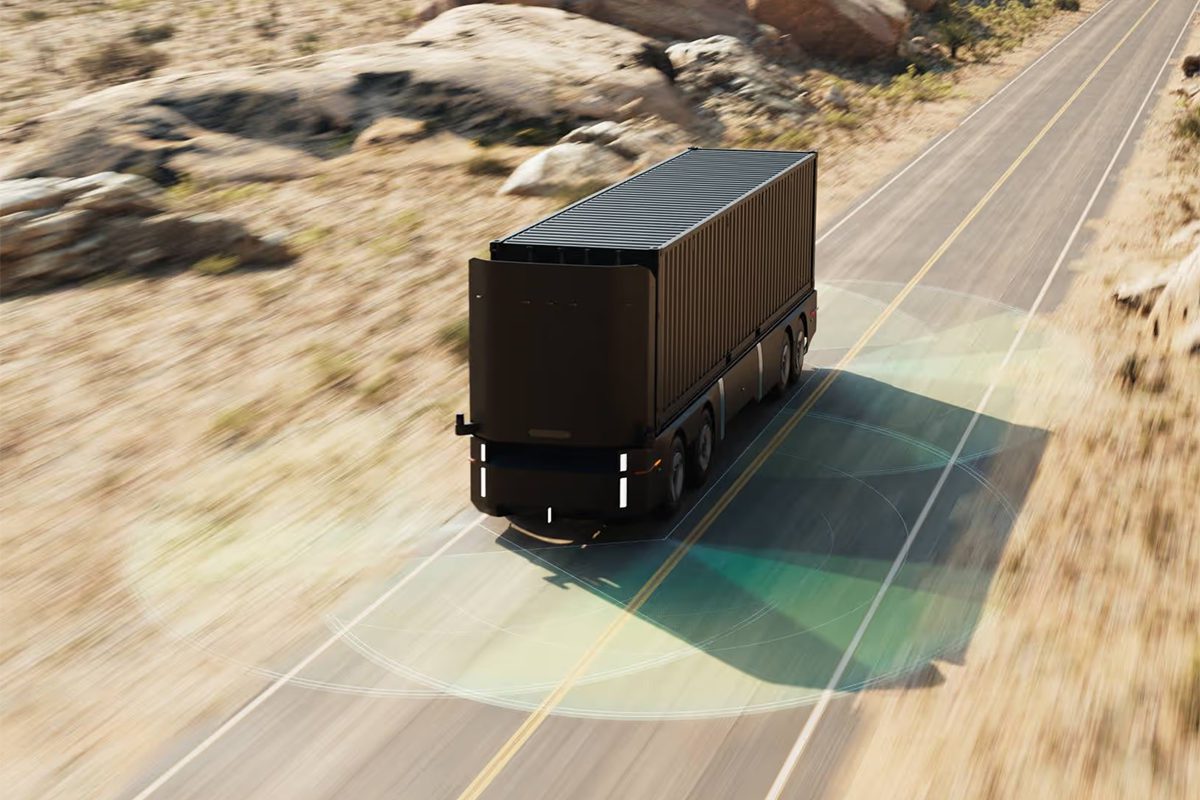
A new entrant in autonomous freight is betting that a different vehicle architecture could help move the technology closer to commercial use.
Humble has emerged from stealth with the Humble Hauler, a fully autonomous, cabless, battery-electric freight platform designed to handle containerized cargo in logistics environments such as warehouses, railyards and seaports. The company also disclosed $24 million in seed funding, led by Eclipse with participation from Energy Impact Partners and other backers.
Rather than retrofit automation onto a conventional truck, Humble says it designed the vehicle from the ground up as a lighter platform without a cab. The company said that approach improves payload efficiency and opens up new logistics use cases compared with a traditional Class 8 tractor-trailer configuration.
Humble said the first version of the platform is built to move shipping containers and is intended for dock-to-dock operation. According to the company, the vehicle uses a combination of cameras, lidar and radar for 360-degree awareness, while its autonomy stack is powered by vision-language-action models aimed at helping the system respond to unfamiliar scenarios.
The company is positioning the vehicle around both cost and operations. Humble said the electric powertrain can reduce exposure to volatile fuel prices and lower maintenance burden, while the cabless design and autonomous capability are intended to allow freight movement without human intervention. The company also framed the product as a zero-emission freight solution at a time when fleets and shippers continue to weigh how automation and electrification might intersect in real-world duty cycles.
Humble said it completed its first prototype in less than six months and is now working with logistics and supply chain partners to begin autonomous testing and commercialization pilots. The seed funding, the company said, will support vehicle development, expansion of its autonomy stack, initial pilot deployments and early manufacturing as it works toward public-road deployment.
The announcement adds another voice to the autonomous freight conversation, but with a model that combines a purpose-built vehicle, battery-electric propulsion and cabless design in one platform. The next test will be whether that integrated approach can translate from pilot environments into repeatable freight operations at scale.