The BUILD America 250 Act, introduced in the House last week, would reauthorize federal surface transportation programs for highways, bridges, transit, rail, safety, and related transportation programs. For fleets and clean transportation stakeholders, two provisions stand out: a proposed federal registration fee structure for electric and plug-in hybrid vehicles, and a new federal framework for automated driving system-equipped commercial motor vehicles operating in interstate commerce.
While the bill is broad in scope, these two sections could have direct implications for the economics and regulatory certainty surrounding advanced vehicle deployment.
New Federal Fees Could Change the EV Cost Equation
Section 1129 of the bill would establish a federal annual registration fee of $130 for covered electric vehicles and $35 for covered plug-in hybrid vehicles. Beginning in 2029, the Federal Highway Administration administrator would increase those amounts by $5 every two years, with the EV fee capped at $150 and the plug-in hybrid fee capped at $50. The fees would terminate on October 1, 2036.
For fleets evaluating EVs and plug-in hybrids, the provision adds another factor to total cost of ownership calculations. Even though the proposed annual fees are relatively small compared with vehicle acquisition, fuel, maintenance, and charging costs, they signal a broader policy shift: EVs and plug-in hybrids would be brought more directly into the federal roadway funding system.
The bill directs state motor vehicle departments to incorporate the fees into vehicle registration and renewal processes, or receive approval for an alternate collection method. States would remit the collected fees monthly to the FHWA, and the bill includes a withholding mechanism for states that do not comply.
The provision is also limited in an important way. The bill defines a “covered motor vehicle” in a way that excludes covered farm vehicles and commercial motor vehicles, as those terms are defined in federal regulation. That means the proposed fee structure, as written, would not apply across all commercial fleet vehicles.
Bill Would Establish Federal Rules for Autonomous Commercial Trucks
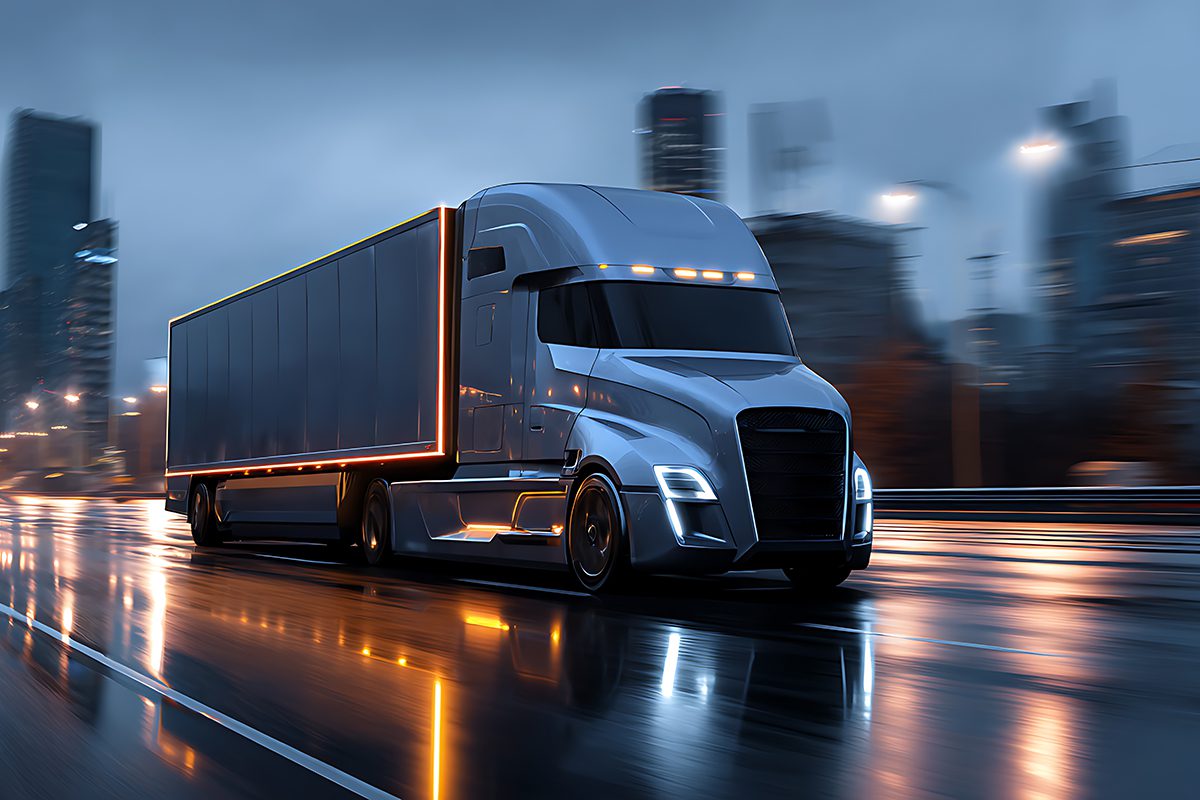
The BUILD America 250 Act also includes a dedicated subtitle on the “Safe Integration of Autonomous Commercial Motor Vehicles.” Section 5402 would require the Secretary of Transportation to issue regulations within two years establishing a performance-based safety standard for ADS-equipped commercial motor vehicles operating in interstate commerce. The standard would apply to Level 3, Level 4, and Level 5 vehicles.
Under the bill, an ADS-equipped commercial motor vehicle could not operate in interstate commerce after the effective date of the regulations unless the manufacturer has certified that the vehicle meets the federal safety standard, the manufacturer and operator comply with applicable regulations, and the vehicle has not been materially altered in a way that makes it noncompliant.
That could be significant for autonomous trucking developers, fleets, shippers, and insurers because it would create a clearer federal structure for interstate deployment. Instead of relying solely on a patchwork of state-by-state approaches, the bill would direct federal regulators to establish the safety requirements, certification expectations, and operating rules for ADS-equipped commercial vehicles.
The proposed safety standard would require a manufacturer to meet the standard through a safety case, including evidence that the design, construction, and performance of the ADS-equipped commercial vehicle would provide an equivalent or greater level of safety compared with a non-ADS-equipped commercial motor vehicle subject to federal requirements. The safety case would also need to include information on hardware, software, sensors, redundancies, operational design domain, engineering methods, crash response, hazard alerting, and cybersecurity.
The bill also addresses human oversight and operational roles. Remote drivers, remote assistants, and DDT fallback-ready users performing covered aspects of the dynamic driving task would need to be properly qualified and licensed to operate a commercial motor vehicle. Remote assistants, driverless operations dispatchers, and remote drivers would need to be physically located in the United States or a U.S. territory, and certain monitoring time would be treated as driving time under federal hours-of-service rules.
For Level 3 ADS-equipped commercial vehicles, the bill would require a DDT fallback-ready user to be physically located in the driver’s seat. It would also require a human operator inside ADS-equipped commercial vehicles transporting primarily minors, such as school buses, or placarded hazardous materials.
A More Formal Path to Commercial AV Deployment
The bill would create a transportation rulemaking committee within 90 days of enactment to make recommendations on implementing the ADS commercial vehicle framework. That committee would include representatives from autonomous commercial motor vehicle technology providers, OEMs, law enforcement, safety professionals, roadway safety advocates, trucking, shippers, labor organizations, first responders, state highway safety offices, insurers, and independent research and testing organizations.
The committee would consider inspection standards, safety fitness procedures, workforce implications, roles and responsibilities among manufacturers and operators, restrictions for placarded hazardous materials, limits on how many ADS-equipped vehicles a remote assistant or dispatcher may oversee, and training requirements.
The bill also directs regulators to update federal rules so ADS-equipped commercial vehicles can be incorporated into safety fitness determinations, inspected under standards specific to ADS-equipped vehicles, and tracked separately from non-ADS vehicles in safety fitness information.
That could help fleets assess autonomous trucking partners with clearer safety data. It could also create a more defined compliance pathway for carriers operating both conventional and ADS-equipped vehicles.
Workforce and Safety Data Would Also Be Part of the Framework
The bill would require the national consumer complaint database to collect safety violation information specific to ADS-equipped commercial motor vehicles and display that information both separately and aggregated with other complaint data.
It would also establish a commercial motor vehicle workforce development grant program that includes training individuals to safely operate and maintain ADS-equipped commercial motor vehicles. Eligible projects would include training current CDL holders, supporting apprenticeships, internships, or scholarships tied to new and emerging technologies, and helping the current workforce adapt to changes in transportation, transit, and logistics. The bill authorizes funding for the program from FY 2027 through FY 2031.
For the freight sector, that could make the bill more than a regulatory framework for autonomous trucks. It could also become a workforce transition framework for drivers, technicians, remote operations staff, and other roles tied to automated freight movement.
For clean transportation stakeholders, the BUILD America 250 Act is not just another infrastructure bill. Its EV and plug-in hybrid registration fee provision could shape future roadway funding debates and add a new policy variable to electrified vehicle economics. Its autonomous commercial vehicle subtitle could create one of the clearest federal pathways yet for ADS-equipped trucks operating across state lines.
For fleets, both issues come back to the same question: how quickly emerging vehicle technologies can move from pilots to scalable operations. The bill would not, by itself, determine whether EVs, hybrids, or autonomous trucks make financial sense for a given operation. But it could change the policy environment in which those decisions are made — by adding new road-use fees for certain electrified vehicles and by setting federal safety, workforce, and compliance rules for autonomous commercial trucks.