California is advancing a broader regulatory framework for autonomous vehicles, with new rules from the California Department of Motor Vehicles and proposed legislation that would add requirements for remote operations, incident response, manual vehicle control, and data reporting.
The DMV announced April 28 that it had adopted new autonomous vehicle regulations covering both light-duty and heavy-duty vehicles. The rules expand oversight and enforcement authority while allowing manufacturers to apply for permits to test and deploy heavy-duty autonomous vehicle technology on California roadways.
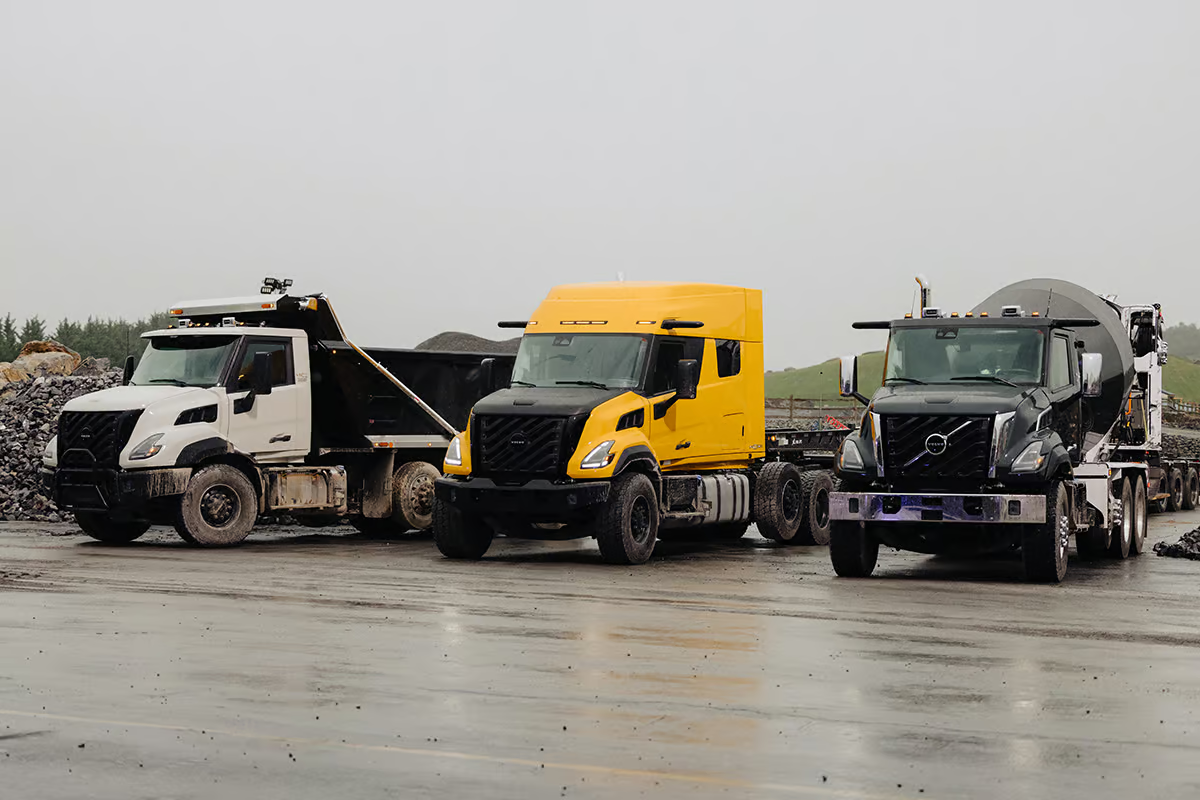
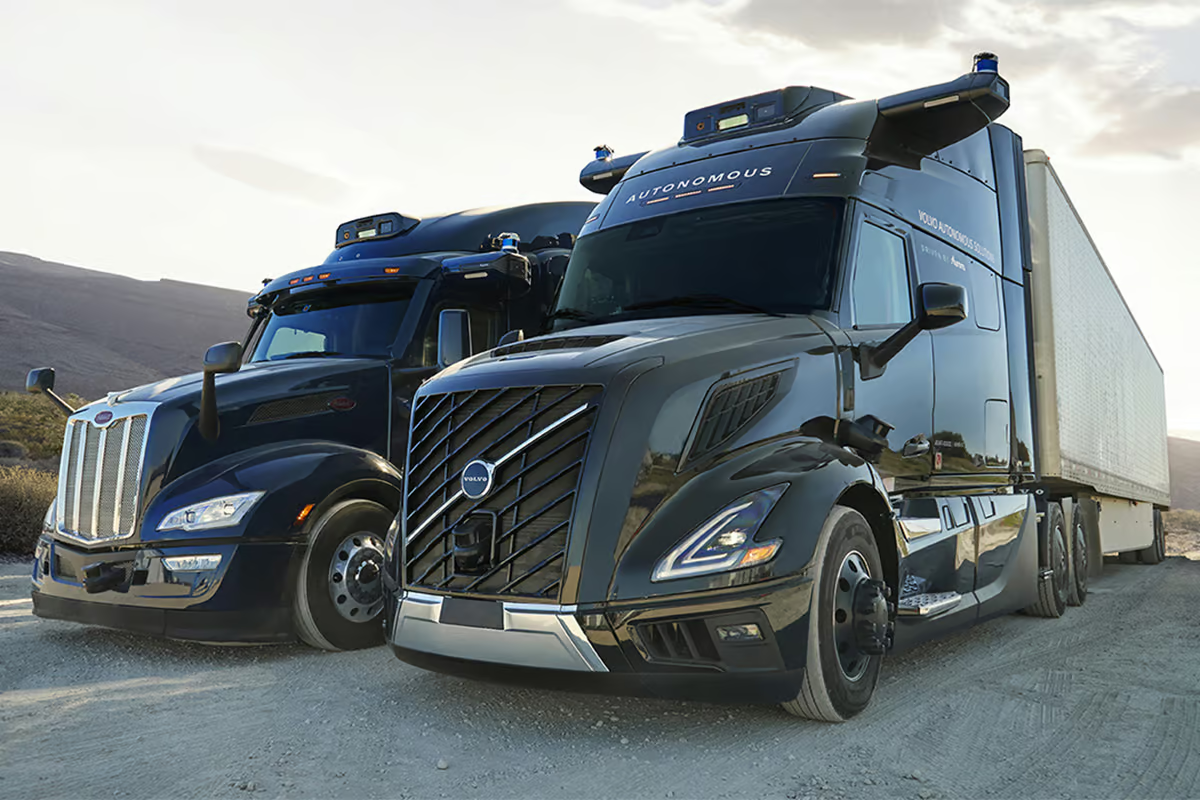
The regulatory update marks a significant shift for autonomous freight. By removing the prior prohibition on autonomous vehicles with a gross vehicle weight rating of 10,001 pounds or more, California is opening a pathway for heavy-duty AV freight operations, while still requiring those vehicles to comply with applicable commercial motor vehicle requirements, including stopping at CHP weigh stations.
The new DMV rules also establish a more structured process for autonomous vehicle deployment. Manufacturers must begin with testing that includes a safety driver, progress to driverless testing, and then apply for commercial deployment. The rules require manufacturers to complete 50,000 miles of testing for light-duty vehicles or 500,000 miles for heavy-duty vehicles at each phase, along with a structured safety case covering vehicle hardware, software, and operations.
For fleets, AV developers, public agencies, and first responders, the most immediate changes are focused on accountability and emergency response. The regulations create a process for law enforcement to issue a Notice of AV Noncompliance when an autonomous vehicle commits a moving violation. They also require annual updates to first responder interaction plans, access to manual vehicle override systems, two-way communication links with 30-second response times, and updated training requirements.
The DMV rules also give local emergency response officials the ability to issue emergency geofencing directives. Under those provisions, AV manufacturers must direct their vehicles to leave identified emergency areas within two minutes of receiving a message, helping limit conflicts between autonomous vehicles and active emergency response operations.
At the same time, California lawmakers are considering SB 1246, a bill that would add more requirements for commercial autonomous vehicle operators and autonomous passenger service vehicles. The bill would require remote assistants, remote drivers, and local incident technicians who monitor, advise, supervise, or control commercial autonomous vehicles on California public roads to be located within the U.S. and hold a valid California driver’s license of the appropriate class.
SB 1246 would also require autonomous vehicle operators to ensure that remote drivers or remote assistants can immediately respond to calls and incidents. Local incident technicians would have to be able to arrive at the scene within 10 minutes of an accident or a first responder request.
Another major provision would require commercial autonomous vehicles operating without a human driver to include a manual override system. Under the bill, local incident technicians, first responders, tow operators, and other trained personnel would need to be able to access emergency steering, braking, and relocation controls during an emergency.
The bill also addresses lane blocking and other obstruction issues. Commercial autonomous vehicles blocking a travel lane, crosswalk, intersection, transit lane, bicycle lane, freight corridor, emergency access route, disabled parking space or ramp, or fire hydrant would have to be moved as soon as possible. If the vehicle is drivable, it would have to be relocated within five minutes after the obstruction is detected. If field personnel or towing is required, the vehicle would have to be removed within 30 minutes, with limited exceptions.
SB 1246 would require AV operators to maintain data on staffing, remote operations, local incident technician response times, obstructions, immobilizations, emergency events, accidents, and first responder requests. Operators would also have to provide monthly summary statistics to the DMV and the California Public Utilities Commission showing incidents in which manual control was necessary or remote personnel exercised control. Those statistics would be posted publicly by the agencies.
Violations under SB 1246 would not be treated as crimes but would be subject to civil penalties and administrative actions. The Senate Appropriations Committee analysis said the bill would create new responsibilities for the California Highway Patrol, including establishing a registration and certification process for local incident technicians, reviewing manual override systems, and developing training guidelines.
Together, the DMV rules and SB 1246 reflect California’s effort to balance autonomous vehicle expansion with more defined safety, enforcement, and emergency response requirements. For the commercial vehicle industry, the DMV regulations create a new path for heavy-duty autonomous freight operations in the state. The proposed legislation, if enacted, could add further operational requirements for AV companies, particularly around remote staffing, incident response, vehicle relocation, and manual control.