Volvo Trucks North America used ACT Expo to highlight a broad product update that includes a new engine designed to meet 2027 U.S. EPA emissions standards, expanded capabilities for the Volvo VNR Electric, a preview of the next-generation Volvo VNL Electric and continued progress on autonomous freight operations with Aurora.
The OEM unveiled a new D13 engine designed to meet the EPA’s 2027 emissions standards while delivering what Volvo called its most fuel-efficient and reliable engine ever. The engine reduces nitrogen oxide emissions by more than 80% compared with current standards and is designed to meet the EPA’s 35-milligram NOx standard. It will be available across all Volvo Truck models and is being developed alongside its production operations, dealer network and service infrastructure ahead of the January 2027 implementation of the new standards.
Volvo said the new engine will offer ratings up to 540 hp and 1,950 lb.-ft. of torque, with engine braking performance of up to 630 braking hp. The engine is compatible with renewable diesel and biodiesel blends up to B20, and is designed to comply with emissions requirements in all 50 states.
The OEM also announced new functionality for the Volvo VNR Electric through a mechanical electric power take-off, or ePTO, that allows the truck to power equipment using its own batteries without a diesel engine running in the background. The added capability expands the VNR Electric into applications including construction, waste collection, distribution and other vocational uses.
The ePTO converts traction battery DC voltage into three-phase AC voltage to power an electric motor capable of producing 69.5 kW of continuous power at 271 Nm of torque. Caltrans is among the first North American customers to use the capability, deploying a Volvo VNR Electric straight truck configured as a multipurpose municipal vehicle with a 15-foot cargo body that can function as a flatbed with a liftgate or as a dump truck with a hydraulic lift.
“Volvo Trucks has been at the forefront of battery-electric innovation for several years, and we are continuing to expand what these vehicles can do for our customers in North America,” said Peter Voorhoeve, president of Volvo Trucks North America. “With solutions like the mechanical electric power take-off, we are enabling fleets to electrify more demanding, real-world applications while building on a foundation of proven performance and a well-established support ecosystem.”
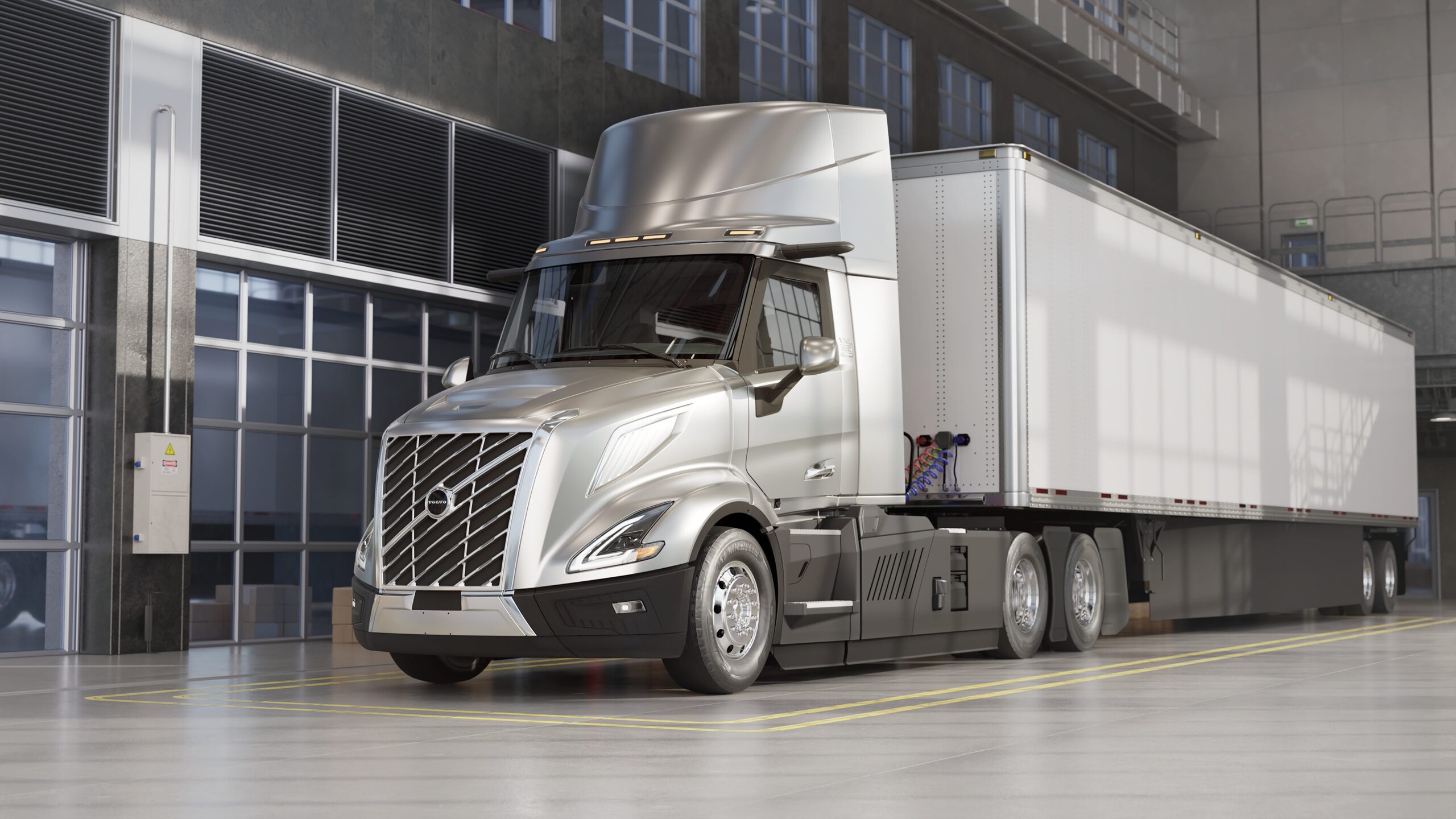
The company also previewed the next-generation Volvo VNL Electric, a battery-electric truck in development for regional haul, drayage and city distribution. Volvo said the truck will be built on its new platform alongside the all-new Volvo VNL, all-new Volvo VNR and a recently previewed future vocational model. The platform is designed to support battery-electric, fuel cell and internal combustion technologies.
The VNL Electric will use Proterra’s Onyx Battery Platform. Volvo said the truck will build on more than seven years of experience delivering battery-electric trucks to customers globally and will offer the comfort, connectivity and safety expected from the VNL family in a zero-tailpipe-emission configuration.
Volvo said more than 750 battery-electric trucks are operating across the United States and Canada, with more than 30 million zero-tailpipe-emission miles logged. The company also said its Certified EV Dealer network now includes 84 locations across 33 U.S. states and four Canadian provinces.
Separately, Volvo Autonomous Solutions and Aurora announced the expansion of their autonomous freight network with a new 200-mile route between Dallas and Oklahoma City. The program currently supports trips five days a week in supervised autonomy, with Volvo Autonomous Solutions hauling freight to customer facilities in Oklahoma City using the Volvo VNL Autonomous integrated with the Aurora Driver.
Volvo and Aurora said the Oklahoma City route marks a step toward scaling autonomous transport and reducing the need for drayage moves and additional handoffs. The companies said Aurora mapped the Dallas-to-Oklahoma City interstate route and began autonomous hauls within weeks. Volvo plans to build hundreds of Volvo VNL Autonomous trucks in 2027, and the companies said they are in the final validation phase for driverless operations.