For years, conversations about clean transportation have been framed as a debate between competing technologies. Electric versus hydrogen. Renewable natural gas versus propane. Biofuels versus diesel. Public sector versus private sector.
But on June 10–11, at the 2026 Clean Transportation Expo, leaders from across the Southeast will gather around a more practical question: What solutions actually move fleets, businesses, and communities forward?
Hosted by Clean Cities Georgia at the Georgia International Convention Center, the Expo represents one of the region’s most important conversations about the future of transportation infrastructure, fleet operations, and energy diversification.
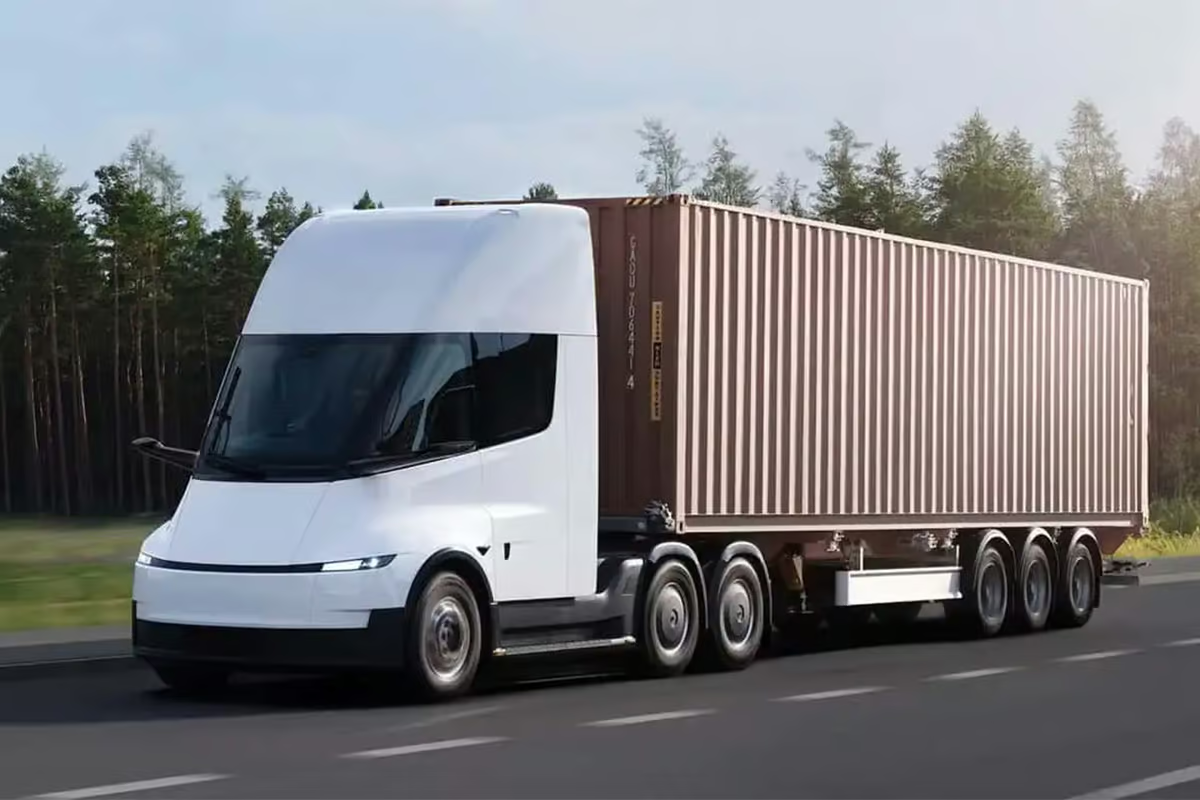
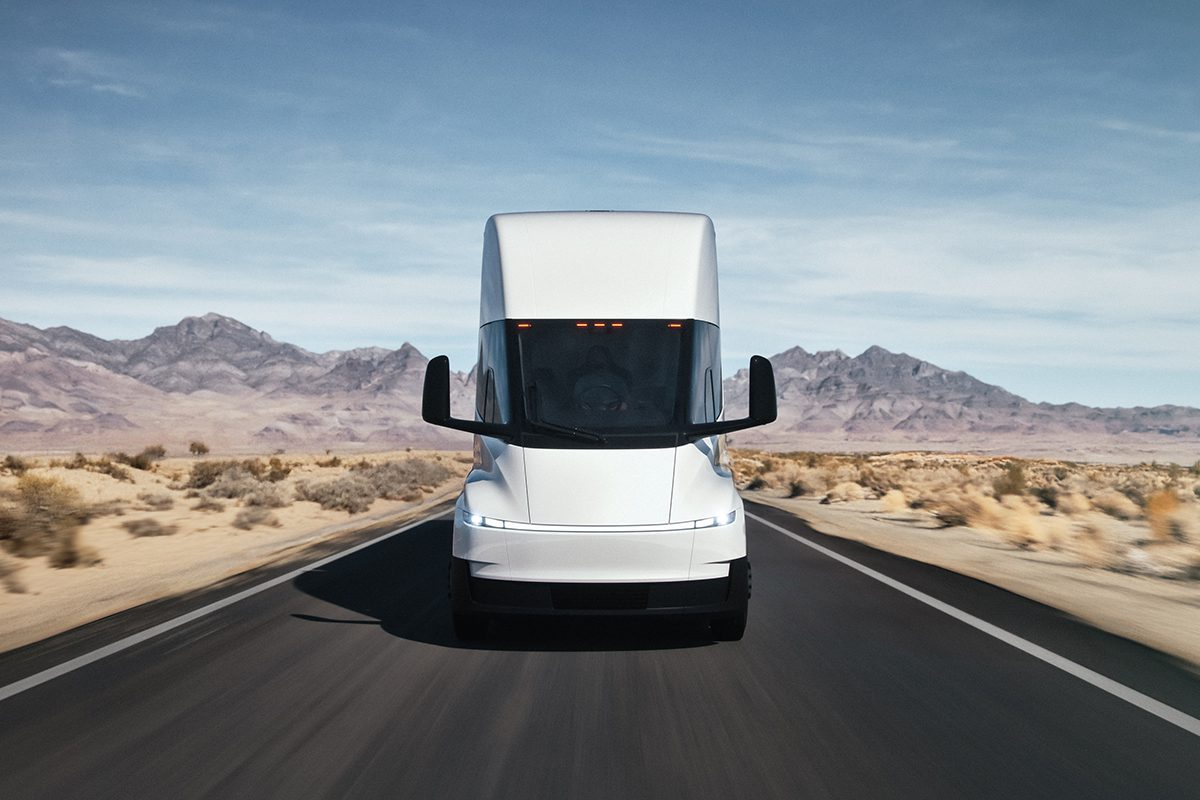
And this year, there is a headline moment that signals just how quickly the industry is evolving: the Tesla 2026 Production Semi is scheduled to make its first public East Coast appearance at the event, alongside discussions around the company’s developing East Coast charging strategy.
That matters.
Not because one company or one technology will “win” the future of freight and transportation, but because heavy-duty trucking is entering a new era where infrastructure, logistics, energy, and economics are finally converging in ways that could reshape supply chains across the Southeast.
Recent industry reports show Tesla is actively expanding its Megacharger network into Georgia and other Southeastern states as part of a broader national buildout supporting commercial electric trucking corridors.
Georgia is uniquely positioned to be part of that transition.
The state already sits at the center of one of the nation’s most critical freight and logistics ecosystems. With the Port of Savannah, Atlanta’s distribution network, interstate connectivity, advanced manufacturing growth, and expanding energy investments, Georgia has become a proving ground for how clean transportation technologies can operate at scale in the real world.
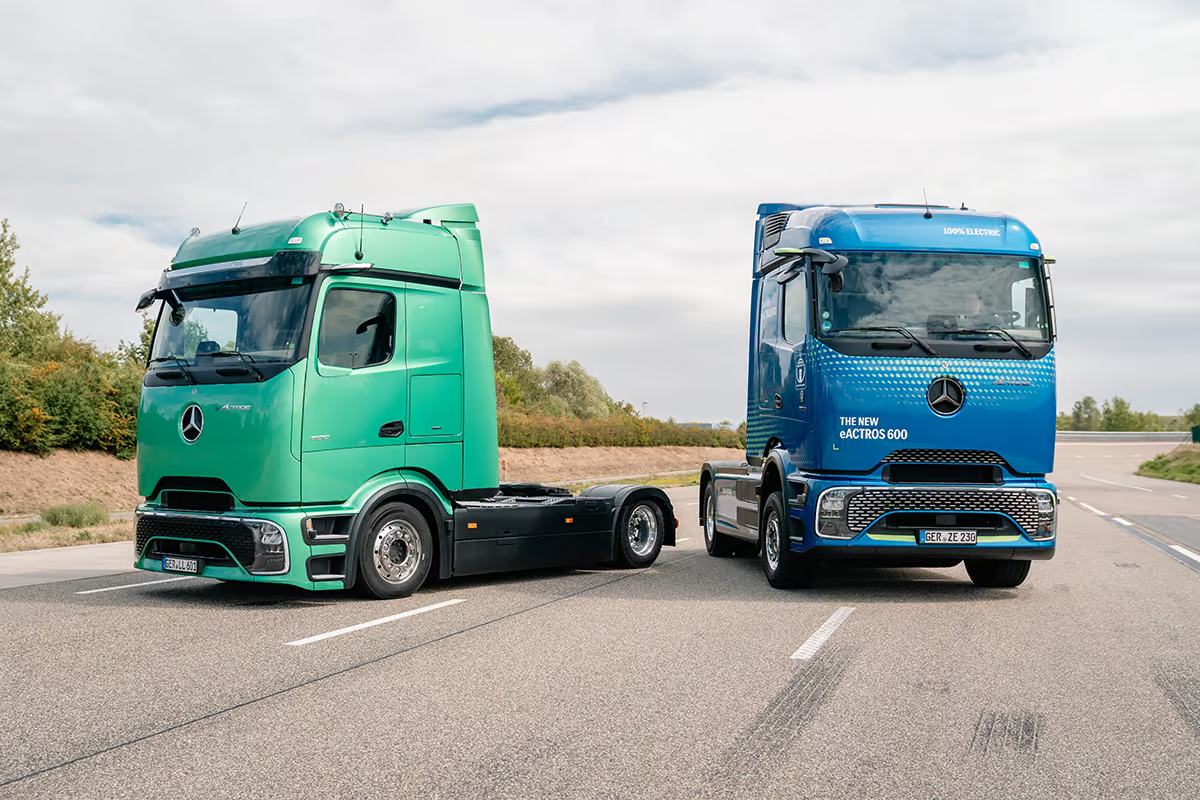
As the largest economic development deal in Georgia’s history, Hyundai will also be represented at the Expo with their XCIENT Fuel Cell Truck and their groundbreaking story of making the real-world case work for hydrogen powered heavy-duty trucks in the Southeast.
That’s why the Clean Transportation Expo is not simply another industry conference.
It is where fleet managers, utilities, school systems, manufacturers, policymakers, technicians, fuel providers, sustainability leaders, and infrastructure developers can sit at the same table and discuss the operational realities behind transportation change.
The agenda reflects that practicality.
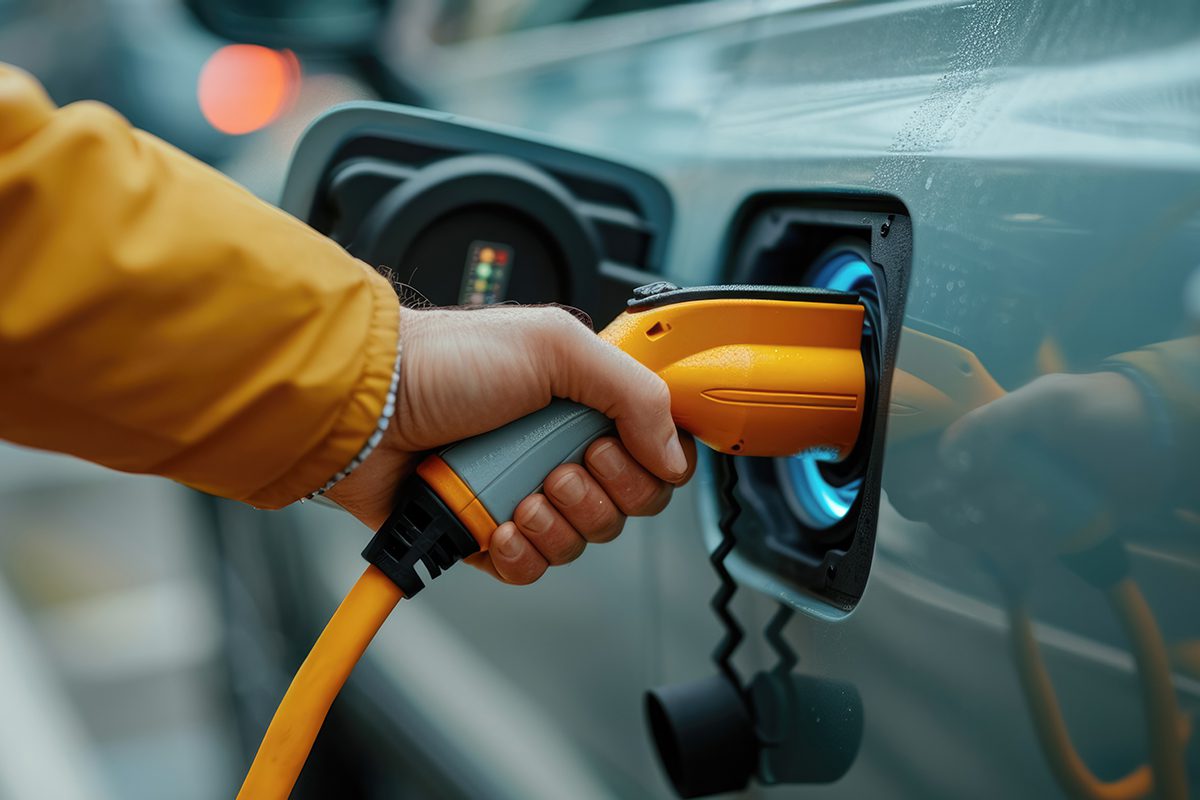
Sessions will focus on building the business case for alternative fuels, using telematics to reduce fleet costs, preparing technicians for alternative fuel vehicles, navigating incentives and grants, scaling EV charging infrastructure, and evaluating emerging technologies like hydrogen and automation.
This is not theoretical policy discussion detached from daily operations. It is a working conversation about total cost of ownership for alternative fuel vehicles, uptime, fuel costs, workforce readiness, infrastructure access, resiliency, and long-term planning.
And importantly, the event does not treat clean transportation as a one-size-fits-all solution, but rather choosing the right fuel for the right application.
A municipal fleet in rural Georgia has different operational needs than a regional logistics provider moving freight along I-75. A school district faces different constraints than an airport authority. Long-haul trucking requires different infrastructure than local service fleets.
That is why the Expo intentionally brings together discussions around renewable natural gas, hydrogen, biofuels, propane, electrification, sustainable aviation fuel, and supporting technologies under one roof.
The future of transportation will likely involve multiple fuel pathways working together—not a single universal answer.
What makes this moment especially important is that clean transportation is no longer a niche conversation. It is increasingly tied to economic competitiveness and domestic energy security.
Companies evaluating facility locations now examine charging infrastructure readiness and fleet transition capabilities. Utilities are preparing for increased transportation electrification demand. Municipal leaders are weighing how transportation investments affect workforce recruitment, air quality, resilience, and long-term operating costs.
The organizations that learn early, collaborate early, and adapt early will have a measurable advantage.
That is why events like the Clean Transportation Expo matter beyond the transportation sector itself.
They create relationships and partnerships needed to move projects from pilot programs to implementation.
They give fleet operators access to peers already testing new technologies in the field.
They help public agencies understand what private industry actually needs.
And they remind everyone involved that transportation progress is rarely driven by one announcement or one technology alone. It happens through collaboration between industries that historically operated in separate lanes.
The Southeast, and Georgia specifically, is no longer watching the clean transportation transition from the sidelines.
It is helping shape it.
And this June, many of the people driving that progress will be in Georgia at the Clean Transportation Expo.