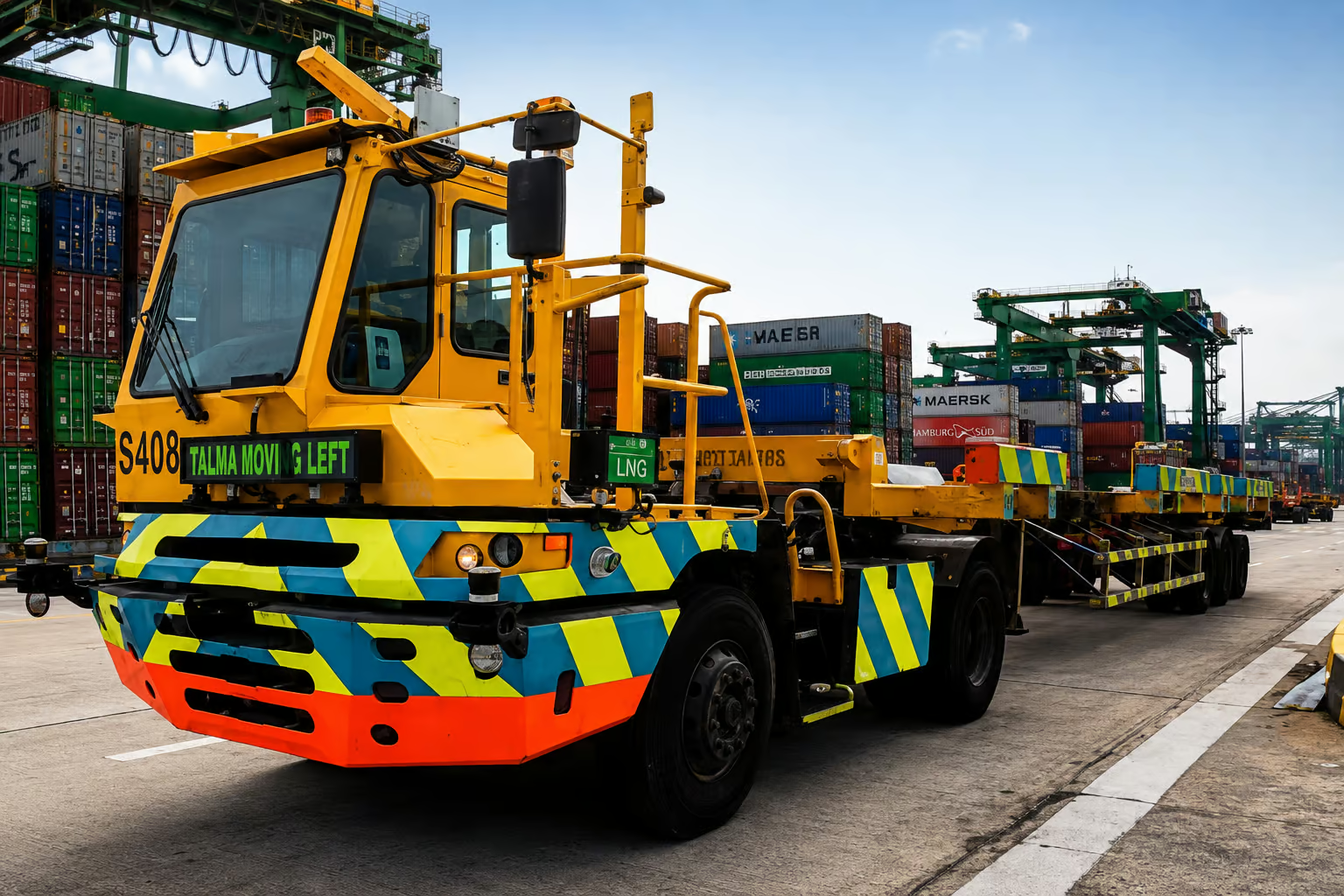
Venti Technologies plans to deploy driverless container trucks at U.S. intermodal terminals under a long-term agreement with an unnamed Class 1 railroad.
The initial deployment will place Venti’s autonomous vehicle technology at two of the busiest intermodal facilities in the country, where the trucks will load, move, and unload containers without a driver inside the vehicle. The project has been described as the first use of autonomous container trucks in full production at a large U.S. intermodal facility.
The company expects more than 100 autonomous container-moving trucks to be operating across eight railroad sites by 2027. The deployment could expand to more than 600 trucks by the end of the decade.
Venti and the railroad will establish a joint steering committee to oversee implementation and project milestones. The railroad will use trucks equipped with Venti’s precision navigation system, including the company’s software, sensors, and other components. The vehicles will operate in active rail yards rather than on dedicated test sites.
The deployment focuses on container movement within intermodal facilities, where trucks repeatedly transport containers between trains, storage areas, and other parts of the terminal. Unlike autonomous highway trucking operations, the vehicles included in the agreement will operate within railroad facilities.
Venti’s autonomous vehicles can operate alongside human-driven equipment without dedicated lanes or additional infrastructure. The systems perform vehicle localization and decision-making onboard and can position trucks within approximately an inch.
The autonomous vehicles have traveled more than 500,000 miles and moved more than 340,000 containers in industrial and logistics environments. Venti said its driverless fleet had been operating around the clock in full production for approximately two and a half years as of that announcement.
“We are pleased to be chosen to help our partner truly re-invent the supply chain at this important time,” said Heidi Wyle, founder and CEO of Venti Technologies.
The agreement represents a move from limited autonomous vehicle demonstrations toward planned multi-site deployment within the U.S. intermodal freight network. The closed and repeatable nature of terminal operations can allow autonomous systems to perform defined tasks without encountering the full range of conditions associated with public-road operation.