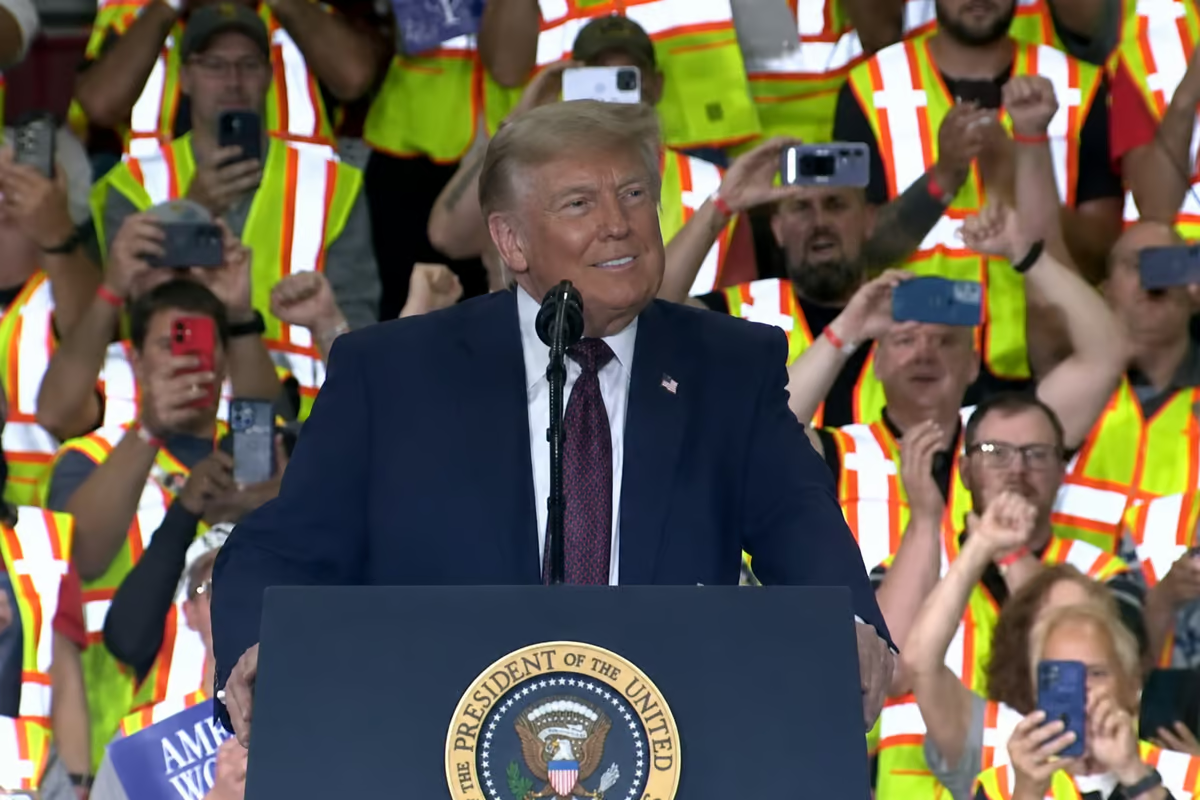
President Donald Trump’s visit to Mack Trucks’ Lehigh Valley Operations plant placed one of the country’s most recognizable truck manufacturers back in the national spotlight, while also bringing electric trucks into a broader conversation about the future of U.S. commercial vehicle manufacturing.
The visit focused largely on domestic manufacturing, jobs, tariffs, trucking, and industrial production. Speaking at the 1.7 million-square-foot facility, Trump praised Mack’s long history as an American truck brand and pointed to medium- and heavy-duty truck manufacturing as part of his broader economic message.
One of the more notable threads was the mention of electric trucks at a site that already has a role in Mack’s zero-emission product strategy.
While Trump criticized blanket electric vehicles or zero-emission mandates before charging infrastructure is mature, he maintained buyers should still be free to purchase EVs if they choose.
Mack’s Lehigh Valley Operations facility assembles the company’s Class 8 trucks for North American and export markets. It is also tied to the Mack LR Electric, the company’s fully electric refuse truck, which entered serial production at the Macungie plant in 2021. Mack also offers the MD Electric, a Class 6 and 7 battery-electric truck designed for medium-duty applications such as urban delivery.
Electric trucks are no longer just a policy talking point for commercial fleets. They are part of active product portfolios, manufacturing plans, dealer training programs, charging discussions, and fleet deployment decisions, even as the pace and scale of adoption continue to vary by duty cycle, region, and customer use case.
Trump has made domestic manufacturing a central part of his economic platform and has also moved to roll back several clean vehicle policies, including California’s ability to enforce certain zero-emission vehicle and heavy-duty truck rules. That has created a different policy environment for fleets and manufacturers than the one many were planning around several years ago.
For the industry, electrification is moving forward at a slower pace. Some applications, including refuse, urban delivery, drayage, yard operations, and return-to-base routes, continue to show practical alignment with battery-electric trucks. Other long-haul and heavy regional applications remain more difficult due to range, charging infrastructure, payload, vehicle cost, and operational flexibility.
The broader industry question is not whether every fleet will move to electric trucks on the same timeline, but where electric trucks can provide a workable business case today, and how manufacturers can support those deployments while continuing to build diesel and other powertrain options for customers with different operating needs.
Trump’s appearance at Mack Trucks underscored the importance of truck manufacturing to the U.S. economy. His reference to electric trucks also showed that even in a policy environment less centered on zero-emission mandates, electrification remains part of the commercial vehicle conversation, especially for manufacturers already building electric models and fleets looking for the right applications to deploy them.