President Donald Trump and Environmental Protection Agency (EPA) Administrator Lee Zeldin today finalized a rule that eliminates the 2009 Greenhouse Gas Endangerment Findings and all subsequent federal greenhouse gas (GHG) emission standards for vehicles and engines, including those for heavy-duty commercial trucks.
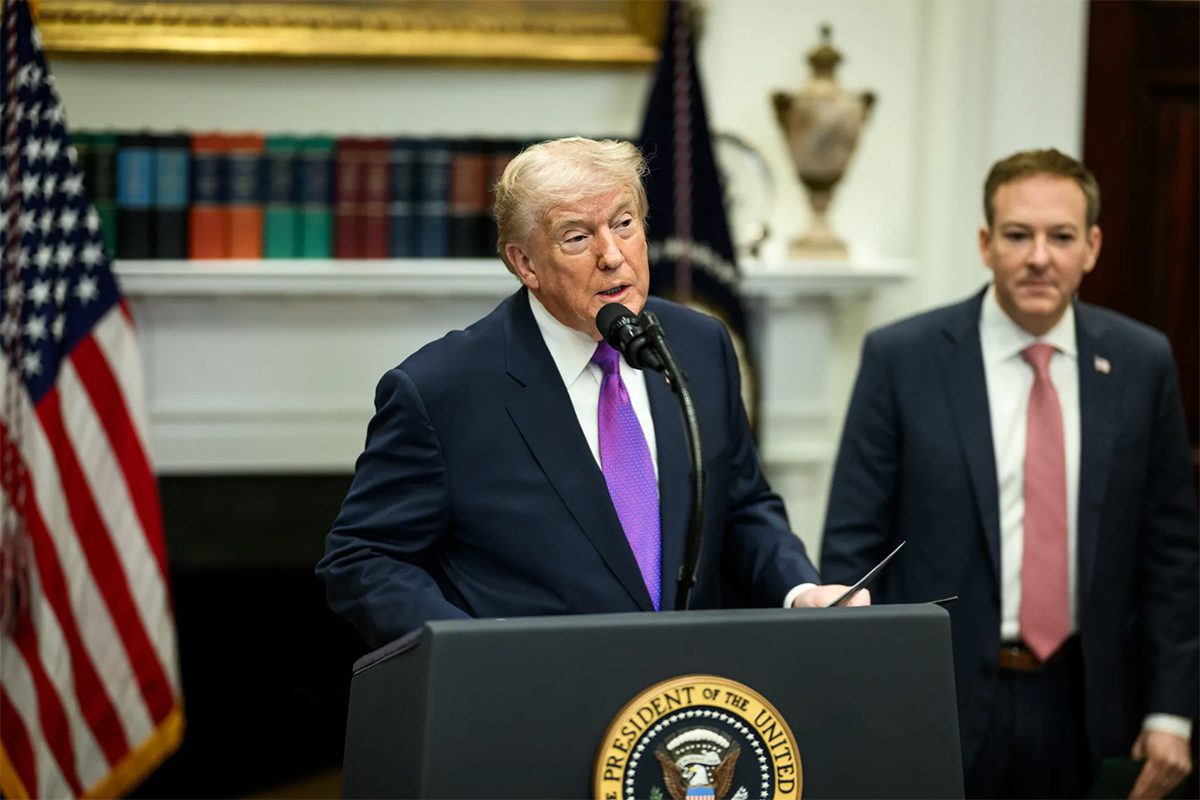
At a White House event, Trump called the decision “the single largest deregulatory action in American history, by far,” and labeled the endangerment finding “one of the greatest scams in history” with “no basis in fact or law.” He said the policy had unfairly restricted vehicle manufacturing and raised costs.
Under the final rule, the EPA said it will save American taxpayers more than $1.3 trillion by eliminating federal GHG standards that had applied to all motor vehicles and engines for model years 2012 through 2027 and beyond. The action also removes all off-cycle credits, such as incentives for automatic engine start-stop features.
The 2009 endangerment finding had served as the foundational legal basis for regulating GHG emissions under the Clean Air Act. By rescinding that finding, the EPA said it no longer has statutory authority to impose federal GHG standards for new motor vehicles and engines the way the previous rule did.
While the EPA did not detail specific industrial impacts, rescinding the endangerment finding could effectively nullify the legal foundation for GHG standards that apply to heavy-duty commercial vehicles. Without the endangerment finding as the statutory basis, EPA cannot enforce the GHG emission standards that had been developed for heavy-duty engines and vehicles, including what industry analysts have described as the Phase 3 greenhouse gas standards covering model years through 2032.
Commercial truck manufacturers and fleet operators have previously expressed concerns about increasingly stringent GHG rules, which they argued could require costly new emissions technologies and push toward advanced zero-emission vehicles in the Class 8 segment. With the endangerment finding eliminated, those regulatory requirements could be removed, reducing compliance obligations tied to federal GHG limits.
Industry stakeholders have also noted that removal of emissions standards may reshape investment and purchasing decisions for fleets, particularly those that had begun transitioning to technologies in anticipation of phase-in standards for heavy-duty vehicles.
The EPA said the change does not affect regulations related to other pollutants such as criteria air pollutants and air toxins, which remain in place under existing law.
Legal challenges from environmental and public-health groups are expected, as critics argue the repeal disregards scientific evidence and undermines decades of climate policy; such litigation could further influence how emission regulation evolves for on-road heavy-duty vehicles.