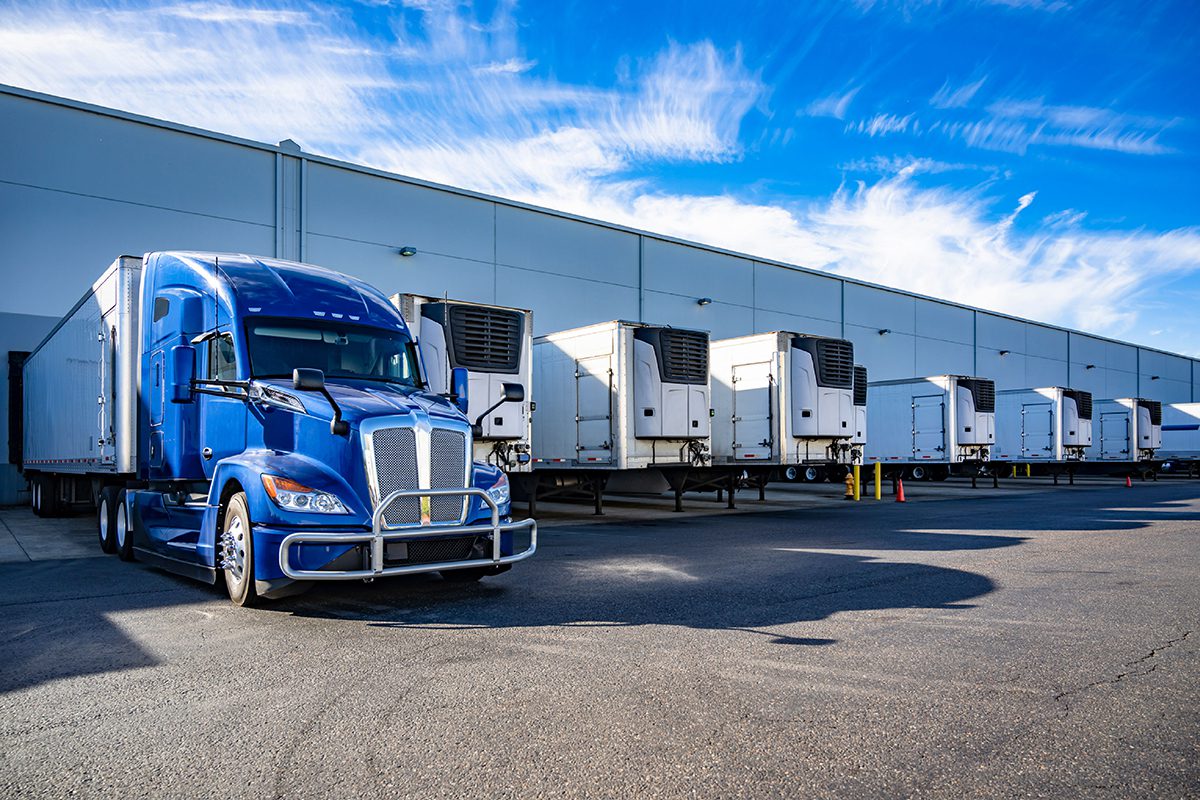

There is a hidden “tax” on refrigerated trailer operations that most operators are not aware of, and which is not immediately obvious when reviewing fleet operating costs. And yet this hidden cost impacts every reefer in every fleet, everywhere in the world. In fact, this cost is intrinsic to the normal operations of all refrigeration systems.
This hidden cost comes from the frost and ice that builds up in the evaporator unit that cools the inside of your trailer, forcing the system to work harder and burn extra fuel.
Situation Normal, All Frosted Up
If ice is pushing up your fleet’s operating costs, why is it there in the first place?
Transportation Refrigeration Units (TRUs) operate the same way as any other refrigeration system or air conditioner. They run a vapor compression cycle that uses a refrigerant to move heat from one side of the device to the other. On each side there is a heat exchanger (like a radiator, it’s a bunch of aluminum fins with tubes of refrigerant running through it). The heat exchanger on the front of the trailer is hot and releases heat outside, while the one inside is cold and cools the inside air.
The heat exchanger in the inside evaporator unit gets really cold, with the surface temperature below freezing. Similar to condensation on a cold beer, ambient humidity in the air condenses on the metal surfaces, and because that surface is so cold, it freezes and builds up frost. As that frost builds up, it starts to block the airflow through the heat exchanger and reduces its ability to continue removing heat or maintaining temperature setpoint. This gets worse and worse until the system needs to shut off and defrost so the ice can melt away.
Frost, Defrost, Incur Cost
As mentioned, this cycle of ice build-up is a completely normal part of operations. TRUs are engineered to manage it by running defrost cycles. Systems can use a timer or sensor readings to decide when to turn off refrigeration and run a defrost. Many systems even run hot refrigerant through the evaporator unit to melt the ice and return to normal operation faster. Once the ice melts, the system kicks back into cooling mode and runs extra hard to pull back down to set-point, making up for the time the system wasn’t cooling and for any extra heat that was introduced into the trailer by the hot defrost cycle. This whole cycle requires the TRU’s engine to run at high speed, which burns more fuel and increases wear and tear on the equipment. This also increases the temperature within the trailer and can cause cargo temperatures to increase, potentially causing regulatory compliance issues.
In addition to the direct fuel costs incurred every time the refrigeration system runs a defrost, there are knock-on operational costs. This is especially impactful when a trailer is empty and pulling down the temperature to its set point before loading. Defrost cycles that must run during the pull-down create delays in reaching the set point, which means an empty trailer is sitting in the yard burning fuel longer before it can be loaded.
More Moisture, More Ice
The situation described here is made worse where there is more ambient humidity in your trailer. Every time the trailer door opens, some ambient humidity enters the trailer which can then condense and freeze in the evaporator. Also, some cargo like fresh vegetables will respirate moisture, with similar impact. Therefore, the ice-tax is even higher for some routes and use cases than others.
Less Defrosts, Less Hidden Costs
Historically there has been no way to significantly mitigate the operating costs of icing. It has always been a normal part of reefer operations, and so many operators have not paid close attention to it. Afterall, TRUs are engineered to handle frost and ice by running defrost cycles. It uses some extra fuel, but the system generally keeps the cargo cold and it’s business as usual.
However in recent years the IceNein® anti-ice upgrade has become available for TRUs. IceNein® is a ceramic anti-ice coating from Nelumbo that is applied to the evaporator heat exchanger in the TRU, and which can be installed during new trailer construction or as a standard retrofit during a maintenance stop.
IceNein® reduces defrost frequency and reduces the duration of defrost cycles by preventing condensed moisture from sticking to the heat exchanger, and by reducing the adhesion of the frost that does form on the surface.
The impacts are meaningful. Reefer trailers equipped with IceNein® see up to 10% reduction in diesel use from reduced defrosting. Operators can also see up to 30% faster pump-down times, and up to 40% more time held at temperature set-point. These improvements can speed up loading times and protect cargo stability in transit.
Other potential benefits from the measurably reduced engine runtime may include reduced maintenance frequency and increased asset life. IceNein® may additionally provide the opportunity to qualify for regional incentives such as the WAIRE program, as an example.
Although icing and defrost cycles have always been a normal part of reefer operations, they have been silently adding costs for refrigerate fleet operations. Proven solutions like IceNein can help operators break that cycle to save fuel, time, and maintenance costs.