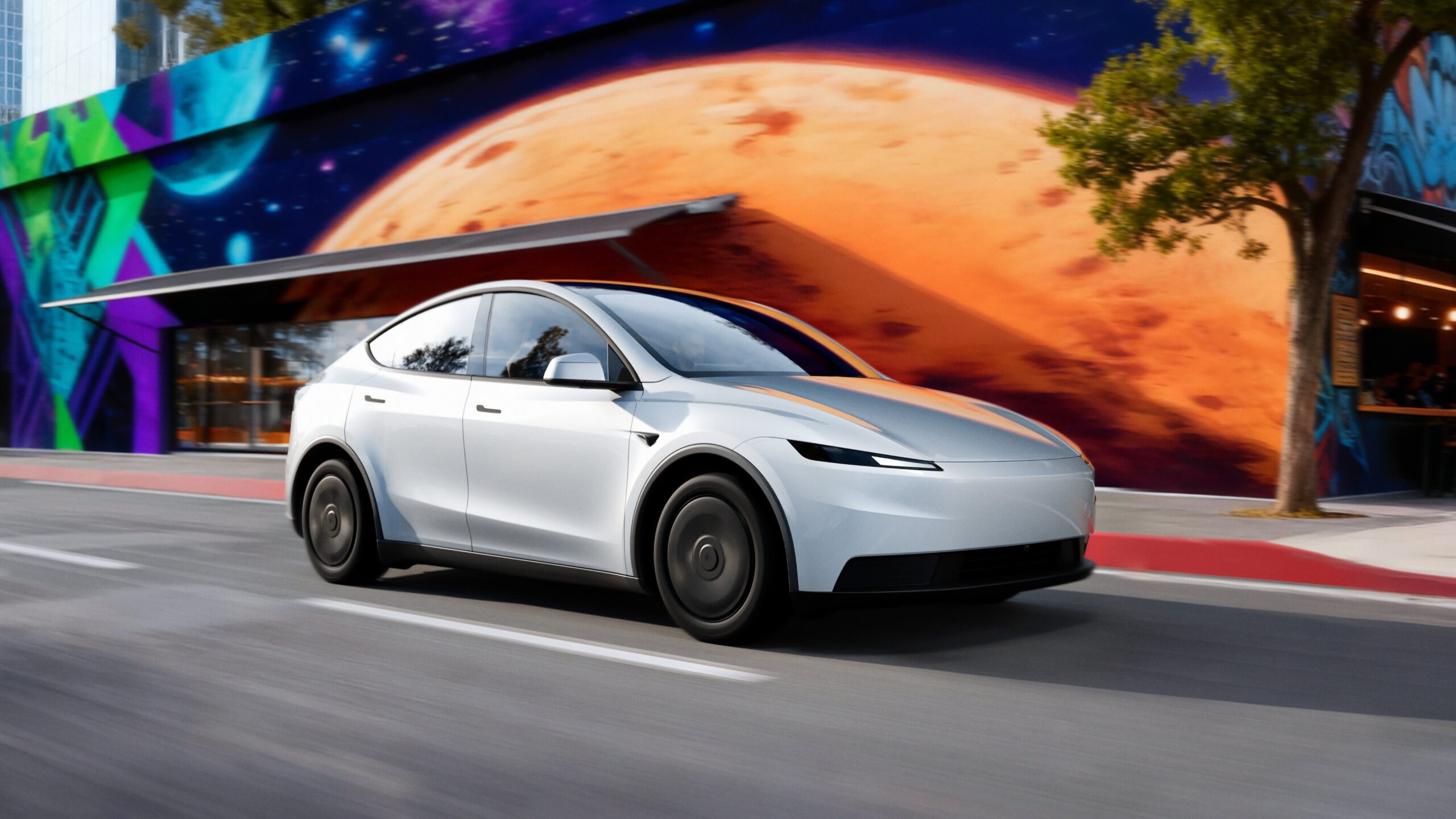
Tesla today unveiled new “Standard” versions of its Model 3 and Model Y, confirming speculation that followed a series of cryptic teaser posts on X earlier this week. The new variants, priced at $36,990 for the Model 3 Standard and $39,990 for the Model Y Standard, aim to make the automaker’s best-selling EVs more accessible as U.S. incentives shift and global competition intensifies.
According to Tesla, the vehicles will begin deliveries between December 2025 and January 2026, with production expected to start at its Fremont, California facility later this quarter. Both models feature reduced range compared to the long-range versions but retain core Tesla design and performance characteristics. The Model 3 Standard is expected to offer roughly 250 miles of range per charge, while the Model Y Standard will reach about 270 miles.
Meet Model Y Standard & Model 3 Standard – our most affordable vehicles
Ultra-low cost of ownership, engineered for safety & comes with the best Tesla features you love
– 321 mi of range
– Extreme efficiency that takes you farther + saves you $$
– Minimal maintenance
– Can… pic.twitter.com/2cMQ5NW6Yf— Tesla (@Tesla) October 7, 2025
The announcement marks Tesla’s first major lineup expansion of 2025 and follows months of speculation about the company’s strategy for reenergizing sales. After a series of price adjustments earlier this year, Tesla has faced margin pressures and growing competition from automakers offering affordable EVs under $40,000. By introducing these simplified trims, Tesla is seeking to retain its market share while appealing to new buyers entering the EV segment for the first time.
Analysts view the move as a strategic response to the expiration of certain federal EV tax credits at the end of September and as a signal that Tesla is leaning into efficiency improvements across its supply chain. While the lower-cost models share components with existing versions, Tesla has reportedly reduced complexity in manufacturing and limited premium features to achieve the price cuts.