
A new report from the International Council on Clean Transportation (ICCT) highlights diverging trends in the cost of battery electric commercial vehicles (BECVs) across U.S. markets and abroad. The analysis, which reviewed more than 4,000 real-world price data points from 2020–2026, found that while smaller electric trucks are becoming more affordable in the U.S., heavy-duty models are seeing price increases.
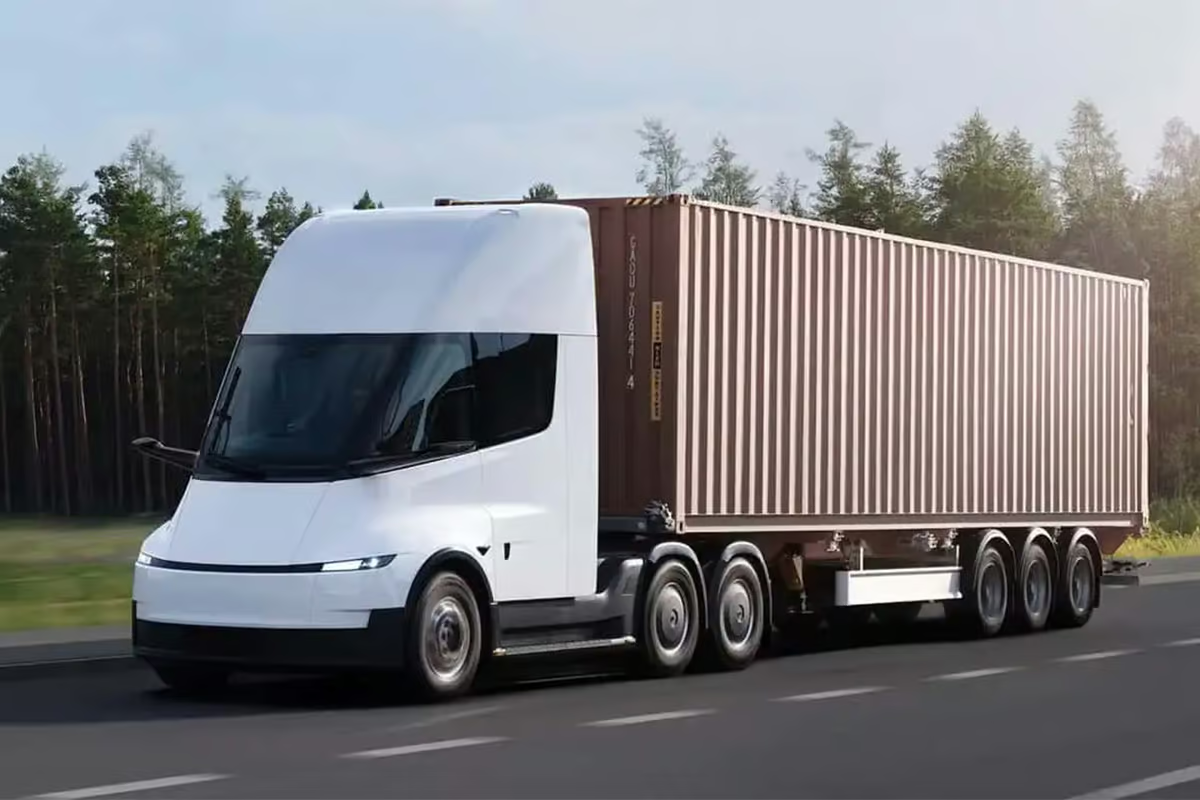
According to the report, the median price of Class 5 electric trucks and smaller has steadily declined in the U.S., improving access for fleets looking at zero-emission delivery options. By contrast, the median price of battery electric Class 8 tractor trucks rose 27% between 2020 and 2025. Transit and school bus markets also saw mixed results: transit bus prices increased by 13% during the same period, while Type C electric school buses declined by about 5%.
International comparisons show a different picture. In the European Union, battery electric Class 7–8 tractor and straight trucks saw price decreases of 32% and 23% respectively since 2020. These opposite trends echo findings from California regulators, who noted that U.S. Class 8 tractors are roughly $57,000 more expensive than their European counterparts.
Fleet operators, manufacturers, and researchers offered several explanations for rising U.S. heavy-duty truck prices. Stakeholders cited higher raw material costs, larger battery sizes designed for longer ranges, and differences in supply chains between the U.S. and Europe. Some fleets suggested that the entrance of legacy OEMs into the market has pushed prices up, while independent analysts noted that European manufacturers face stricter CO₂ standards, giving them greater incentive to price competitively.
The report underscores the role of state incentive programs, which covered nearly 80% of U.S. battery electric vehicle purchases captured in the dataset. However, incentives have not always kept pace with vehicle price increases, meaning fleets may shoulder higher upfront costs. ICCT researchers recommend that states expand efforts to collect and publish real-world transaction prices, which could improve transparency and help bring costs down over time.