The North American Council for Freight Efficiency (NACFE) has released its initial findings from Run on Less – Messy Middle, offering a snapshot of how fleets across North America are navigating the complex and evolving transition toward cleaner, more efficient freight movement.
The demonstration, which featured 13 fleets and four distinct powertrain types, is designed to illuminate the “messy middle” between today’s diesel dominance and tomorrow’s zero-emission future. NACFE’s early results reveal significant progress across every fuel type, along with ongoing challenges that continue to define this pivotal era for the trucking industry.
According to NACFE Executive Director Mike Roeth, the initial findings show that “powertrain technologies in the trucking industry are constantly evolving yet must compete directly on cost and performance in an environment of shifting regulations and incentives.”
NACFE’s initial analysis underscores several key developments:
- More choices, more complexity: Fleets now have a growing number of powertrain options from OEMs, increasing segmentation and decision-making challenges.
- Sustainability with ROI in mind: Customers and fleets alike continue to value environmental leadership but remain focused on return on investment.
- Rapid technological progress: Notable advancements include 15L natural gas engines, 400+ mile battery-electric trucks, expanded renewable fuel availability, and new high-power fast charging stations.
- Infrastructure remains a hurdle: Despite technical progress, fueling and charging availability, vehicle weight, and upfront costs remain major barriers to large-scale adoption.
“The Run on Less showcase provides an excellent opportunity for fleets to see firsthand how technology innovations are delivering results across diverse duty cycles,” said José Sampiero, vice president of On-Highway Engine Business at Cummins, one of the Run’s title sponsors alongside Shell.
Performance data collected during the Run reflect the operational diversity of clean freight technologies:
- Diesel: Two trucks logged 22,550 miles combined, averaging 11.6 MPG.
- Biodiesel (B99): One truck ran 5,418 miles at 9.5 MPG.
- Natural Gas: Three trucks completed 20,739 miles under heavy-duty conditions, with most miles powered by renewable natural gas (RNG) contracts.
- Battery Electric: One BEV achieved 465 miles on a single charge, while another covered 875 miles in one day using only public charging. A slip-seated BEV achieved 3,676 miles over 18 days, operating 52% of the time while charging just 13%.
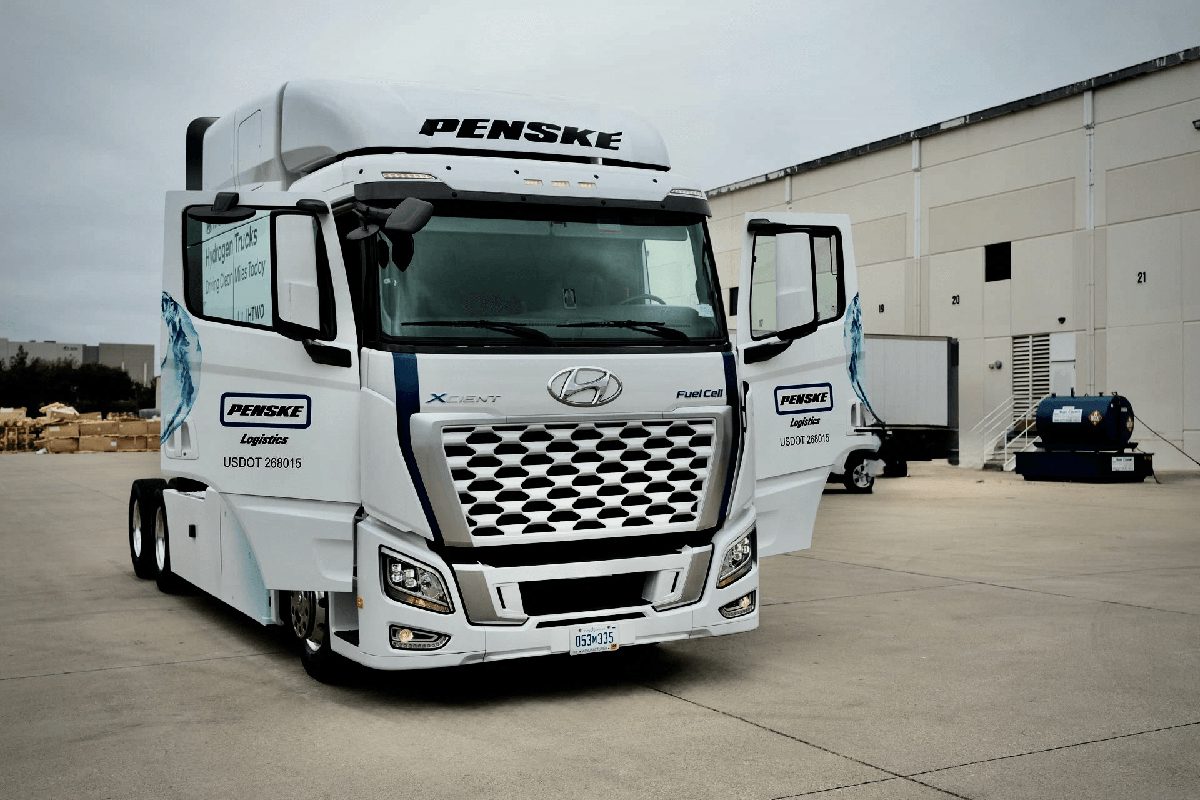
- Hydrogen Fuel Cell: One truck maintained 100% uptime, covering 4,076 miles and averaging 7.8 miles per kilogram of hydrogen.
NACFE will publish the full dataset from all 14 trucks on November 3, followed by a mechanical report in January, a data workshop in February, and a comprehensive analysis by mid-2026. This year’s Run on Less event was preceded by a series of webinars produced in partnership with ACT News:
- Diesel Drop-In Alternatives: Ultra-Low Sulfur, Bio-, and Renewable
- Decarbonizing with Natural Gas
- Future Prices & Availability of Existing Infrastructure: What’s Next?
- The Current State of HD BEV – Technologies and Capabilities
- Strategizing Successful HD BEV Adoption
- Charging Depots, Networks, & the Economics of Fleet Electrification
- The Production Processes of Hydrogen Fuel
- Moving Hydrogen from Here to There: The Distribution and Storage of Hydrogen Fuel
- The Opportunities and Challenges of Selling Hydrogen to the Industry
- Run on Less – Messy Middle Bootcamp Finale Workshop
The Run on Less – Messy Middle initiative continues to highlight the freight sector’s complex journey toward decarbonization, where each technology is improving, yet none alone can solve every fleet’s challenge.