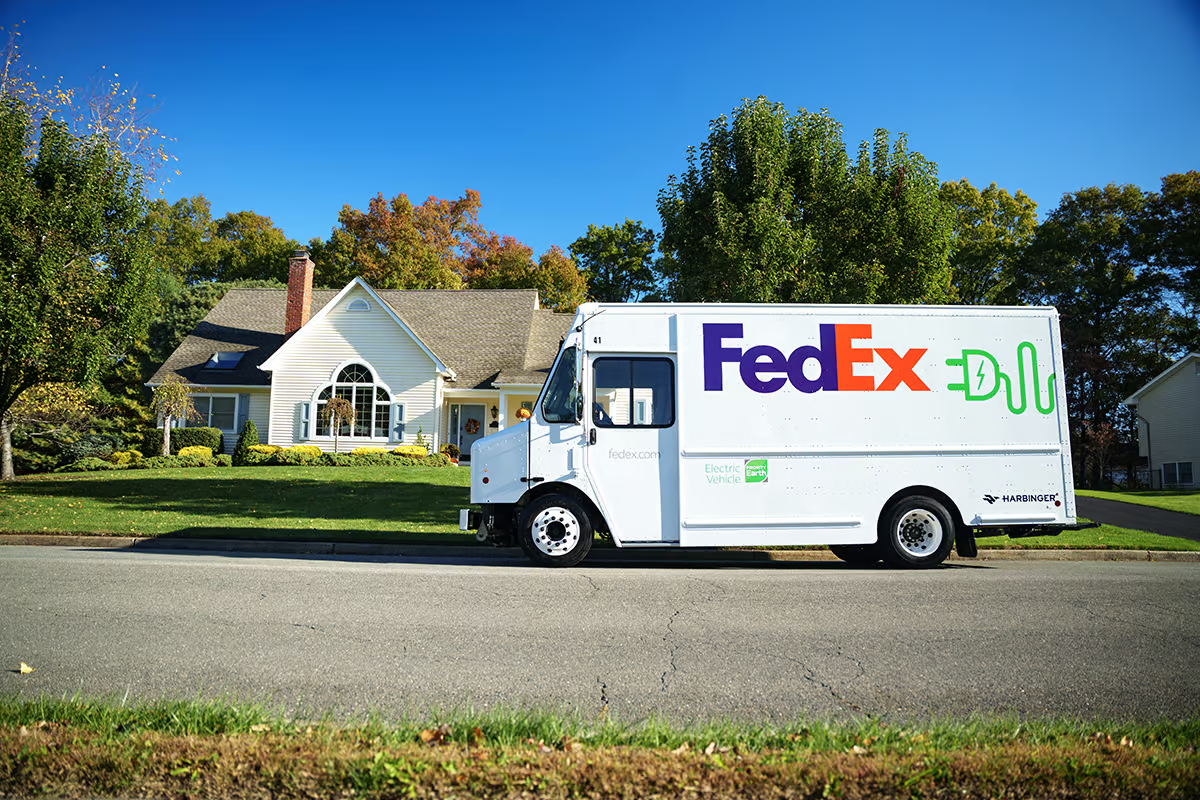
FedEx has ordered 2,000 all-electric trucks from Harbinger in a deal valued at more than $300 million, the medium-duty manufacturer announced. Delivery is planned by the end of 2027, with the vehicles deployed across North America.
The order is among the largest single commitments to medium-duty electric trucks announced to date, and it comes from a fleet that has already run Harbinger vehicles in service. The order expands on a previously successful deployment of Harbinger vehicles within FedEx operations and follows FedEx’s co-lead investment in Harbinger’s $160 million Series C equity raise.
“FedEx is demonstrating that the business case for incorporating electric vehicles into real-world fleet operations at scale makes sense,” said John Harris, co-founder and CEO of Harbinger.
The OEM estimates the trucks will reduce fuel costs by an average of $20,000 per vehicle per year against conventional equivalents, roughly $40 million annually across the full fleet and approximately $800 million over a 20-year service life. It also projects the deployment will avoid an estimated 1.7 million tons of carbon dioxide emissions over the vehicles’ operating lives.
FedEx framed the order the same way, as an operational and financial decision that also advances an emissions target rather than one made in spite of cost.
“Expanding our deployment of Harbinger vehicles gives us an opportunity to continue making progress toward our fleet electrification goals while reducing fuel and operating costs,” said Paul Melander, senior vice president of safety and transportation at FedEx.
On the product side, Harbinger’s HC Series Cab carries a 26,000-pound gross vehicle weight rating and a 42-foot turning diameter, and the company lists up to 210 miles of range for its electric models. Harbinger engineers its vehicles for a 20-year service life, which is the assumption underneath both the $800 million fuel savings figure and the emissions estimate.
The turning diameter is not a throwaway specification in this application. Pickup and delivery routes put a medium-duty truck into residential streets, alleys and loading zones repeatedly through a shift, and maneuverability at that weight rating is closer to a daily productivity factor than a spec sheet line.