The clean transportation transition is often measured by the vehicles that reach the road. But the next stage of electrification will depend just as much on what happens upstream: battery production, manufacturing capacity, workforce readiness, and the ability to build key components closer to the vehicles they will power.
Ford’s latest update on BlueOval Battery Park Michigan points directly to that broader issue.
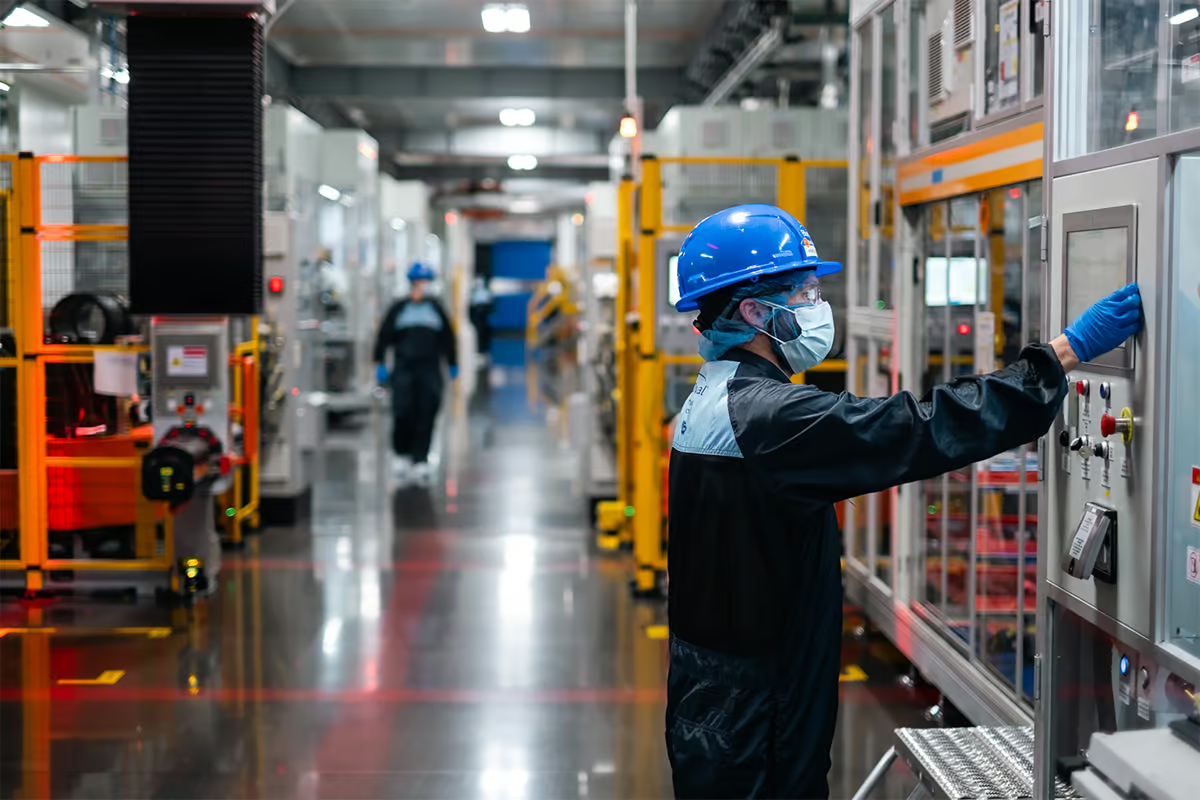
The automaker’s Marshall, Michigan, battery facility is moving toward lithium iron phosphate battery production while continuing to build out the workforce needed to support the operation. Ford describes BlueOval Battery Park Michigan as America’s first automaker-backed LFP battery plant and says the facility is creating approximately 1,700 new jobs.
For the clean transportation industry, the significance goes beyond a single plant. LFP batteries are an important part of the evolving EV landscape because they are tied to efforts to make electric vehicles more accessible and affordable. Ford has framed the Michigan facility as part of its plan to support future electric vehicles through domestic LFP battery production.
That matters for fleets and commercial transportation stakeholders because EV adoption is not only a vehicle-availability question. It is also a supply-chain question. Fleets evaluating electrification need confidence that automakers can deliver vehicles at the right cost, with the right durability, supported by stable production networks and long-term parts availability.
Battery manufacturing sits at the center of that equation.
BlueOval Battery Park Michigan will produce LFP battery cells for Ford’s next-generation electric vehicles, including future passenger vehicles and trucks under development. While the announcement is not focused specifically on a new commercial vehicle deployment, it speaks to one of the core factors shaping the market for electric transportation: the ability to scale battery production in a way that supports cost, volume, and product planning.
Ford’s hiring activity also highlights the workforce side of the transition. Battery plants require technical, manufacturing, maintenance, environmental, engineering, and operational talent. As more automakers and suppliers build out EV-related manufacturing capacity, workforce development is becoming a critical part of clean transportation infrastructure.
That is especially relevant as fleets move from early pilots to longer-term procurement strategies. The economics of electrification depend on more than incentives and charging infrastructure. They also depend on battery cost, battery chemistry, domestic production capacity, and the ability of OEMs to align vehicle programs with real market demand.
Ford’s BlueOval Battery Park Michigan update reflects that shift. The facility is not just a manufacturing project; it is part of the industrial foundation required to support broader EV adoption.
For ACT News readers, the takeaway is clear: the clean transportation transition will be shaped by much more than the vehicles announced at product launches. Battery plants, supply chains, manufacturing jobs, and chemistry choices such as LFP will play a major role in determining how quickly and affordably electrified transportation can scale.