Fleet managers face a persistent challenge when evaluating idle management technology: the systems designed to reduce engine hours often create new operational headaches. Complex installations require cutting factory wiring harnesses. Manual controls depend on operator behavior that varies by individual and deteriorates over time. Aftermarket HVAC units crowd dashboard space and deliver inconsistent performance. The result is technology that makes sense on paper but struggles to deliver sustained results in real-world fleet operations.
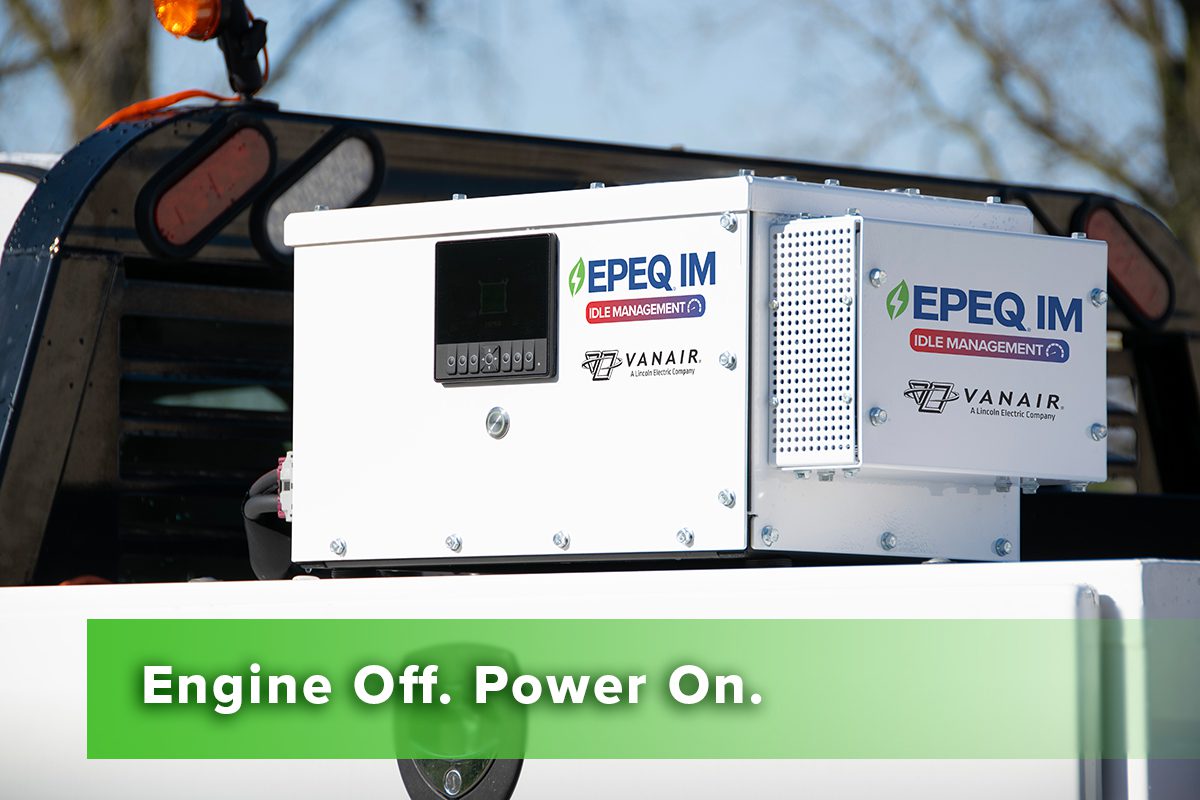
Vanair’s EPEQ® Idle Management (EPEQ® IM) HVAC system addresses these implementation barriers through an architecture that integrates directly with factory heating and air conditioning components while automating engine control based on fleet-determined parameters.
Factory Integration Without Dashboard Clutter
Unlike aftermarket systems requiring separate auxiliary units mounted under the dashboard, EPEQ® IM HVAC connects in parallel to existing OEM HVAC components. For cooling, an auxiliary compressor circulates refrigerant through the factory condenser and evaporator, delivering climate-controlled air through existing vents. An auxiliary compressor circulates refrigerant through the factory condenser and evaporator, while a fuel-fired heater warms coolant flowing through the heater core and engine block.
When the vehicle shuts down, the system automatically transfers electrical loads including headlights, blower fans and interior lights from the vehicle’s starting battery to the ELiMENT® 48-volt battery system. This prevents parasitic drain while maintaining all vehicle functions. An internal thermostat continuously monitors cab temperature and automatically restarts the engine if auxiliary systems cannot maintain comfort during extreme conditions.
The distinction matters operationally. Technicians and drivers experience the same air delivery and control interface they’re accustomed to rather than learning a separate aftermarket system. Fleet managers avoid dashboard real estate challenges and inconsistent performance that come with add-on HVAC units. The factory integration delivers climate control that feels transparent to operators while eliminating thousands of engine hours annually.
Simplified Installation Architecture
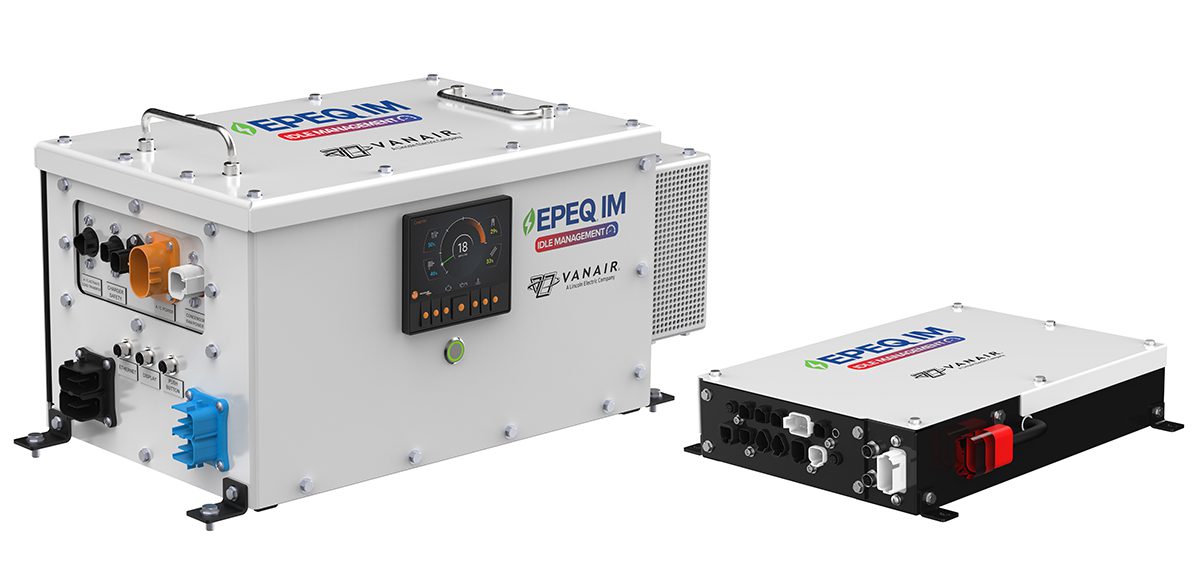
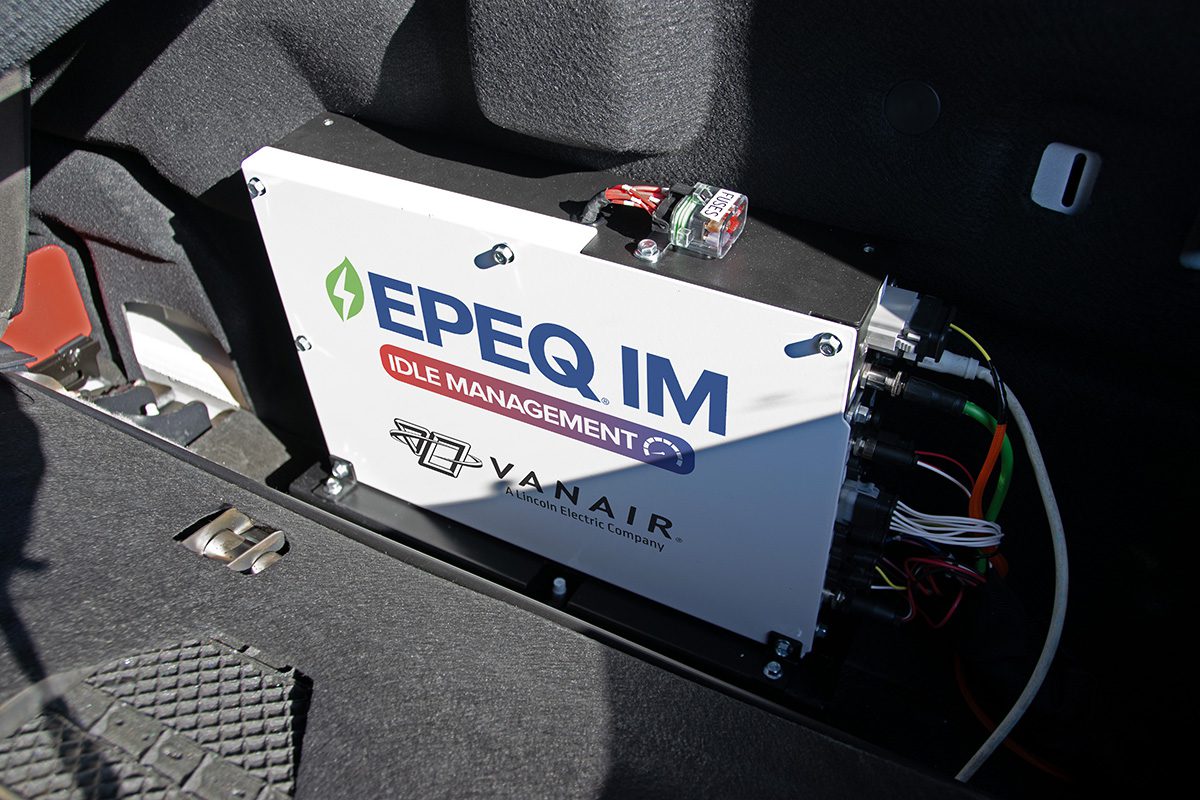
The two-module design reduces installation connection points by approximately 44% compared to traditional multi-component idle management systems. Ignition and on-board diagnostics integration uses a plug-and-play OEM-style connector with T-configuration rather than requiring technicians to cut factory wiring. This approach cuts installation time by almost half, while minimizing failure points and maintaining wiring system integrity.
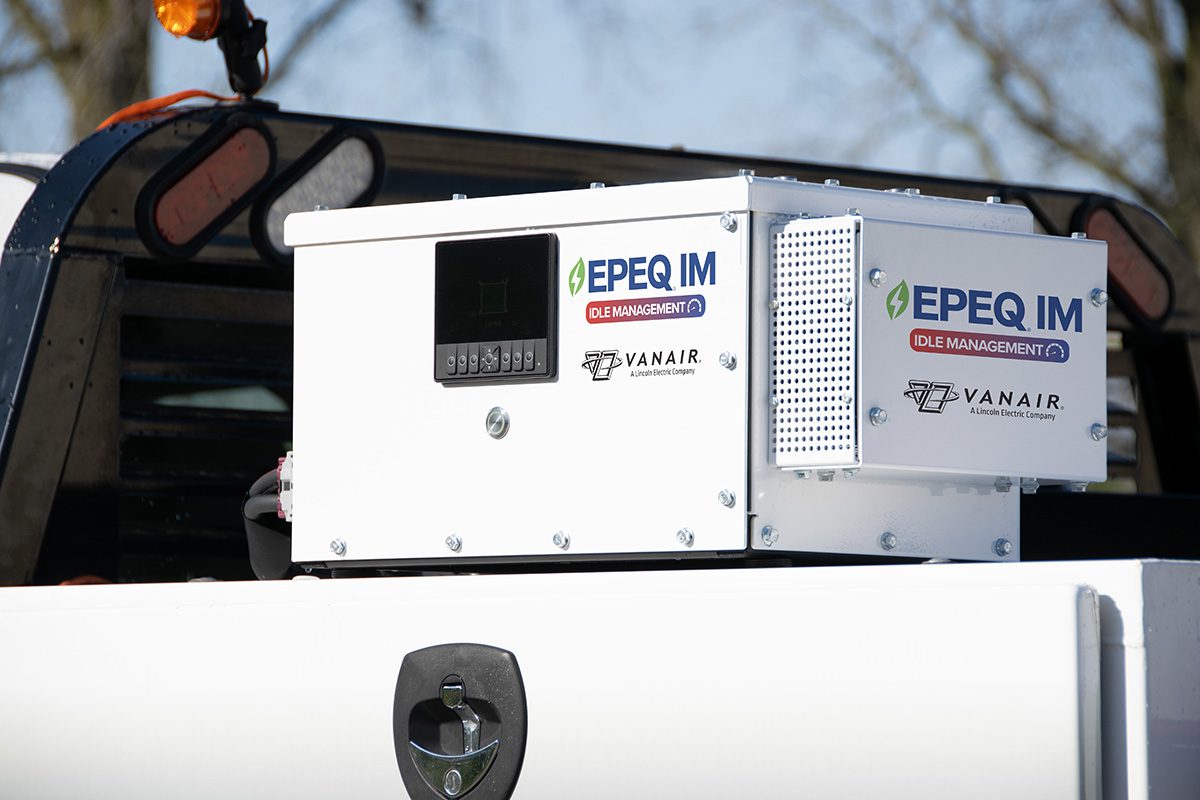
All internal components carry weatherproof ratings, allowing flexible mounting including external bed placement for vehicles with limited interior space.
For fleets managing installations across multiple body configurations and upfitters, the simplified architecture translates to more consistent results and fewer post-installation service calls addressing wiring issues or component failures traced to installation complexity.
Automatic Operation Eliminates Operator Dependency
Manual idle management systems rely on individual operators remembering to activate shutdown protocols. Compliance varies by driver, deteriorates over time and creates enforcement challenges for fleet managers. The EPEQ® IM HVAC system operates automatically based on fleet-determined parameters, with managers setting predetermined shutdown timers that ensure consistent regulatory compliance without relying on operator behavior.
This automation addresses a critical compliance challenge facing municipal and utility fleets. New York City prohibits idling for more than one minute adjacent to schools and parks, with citizen reporting programs that have generated substantial fines for non-compliant fleet operators. Similar restrictions exist across urban areas nationwide, with enforcement mechanisms that make operator-dependent compliance increasingly risky.
The system monitors battery state, power demand and equipment requirements in real time, bringing the engine online for recharging before power levels become critical. Operators never face situations where equipment stops working mid-shift. This intelligent management eliminates the range anxiety that makes fleet managers hesitant about battery-powered auxiliary systems while ensuring regulatory compliance occurs automatically rather than through driver discipline.
Business Case Beyond Sustainability Messaging
Rising vehicle acquisition costs are forcing fleets to extend rotation cycles beyond historical norms. Every hour of engine idling generates wear equivalent to 25 to 33 miles of driving, compounding maintenance costs and impacting resale value. EPEQ® IM HVAC addresses this challenge by reducing ghost miles and engine hours that are driving depreciation.
Real-world fleet data from a Tennessee-based quarry operation demonstrates the operational impact. Using EPEQ® IM technology, the fleet reduced daily fuel consumption from 10-15 gallons to 2-3 gallons per eight-hour shift. At the state’s average diesel price at the time of this writing, this translates to approximately $17,000 in annual fuel savings per vehicle while maintaining full operational capability in demanding applications.
Beyond fuel savings, idle reduction extends oil change intervals, reduces wear on engine mounts and exhaust components like DPFs, and delays major service events. By reducing ghost miles accumulated during idling, fleets retain higher vehicle values and extend replacement cycles.
The proprietary 48-volt, 5-kilowatt-hour battery provides several hours of climate-controlled operation depending on ambient conditions. Additional batteries extend runtime for applications requiring longer engine-off periods.
Unified Control Across Electrified Equipment
Operators access idle management, battery status, EPEQ® AIR45 compressor controls, EPEQ® EPTO hydraulic functions and other EPEQ® Electrified Power Equipment® through a single interface. This eliminates the multiple displays and separate controls required by systems lacking integrated architecture.
For fleets already operating EPEQ® air compressors or hydraulic systems on service vehicles, the idle management integration extends existing investment rather than introducing separate control platforms. For fleets new to electrified auxiliary equipment, the unified interface reduces training requirements and simplifies troubleshooting.
Implementation Considerations
For fleet managers evaluating idle management technology, the question is no longer simply whether to reduce engine hours. It’s whether the implementation approach addresses the installation complexity, operator dependency and regulatory compliance challenges that determine whether idle management delivers sustained results or becomes another underutilized fleet technology investment.