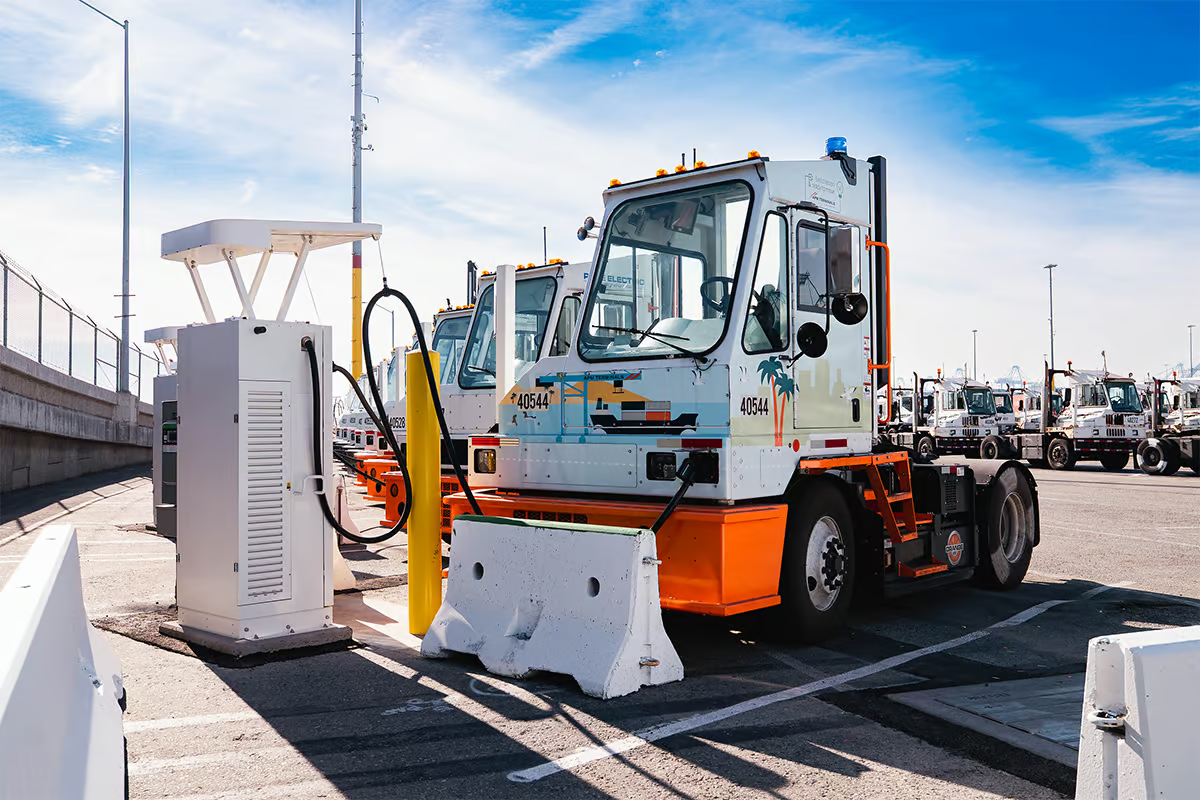
APM Terminals Los Angeles is expanding its battery-electric terminal tractor fleet at Pier 400 through a new contract with Orange EV for 40 HUSK-e XP electric terminal tractors, building on a deployment that began in April 2025.
The order will bring Pier 400’s total electric terminal tractor count to 60 units and complete the electrification of the terminal’s on-dock rail drayage fleet. APM Terminals Los Angeles will be the first container terminal at the Port of Los Angeles to reach that milestone.
The expansion is tied to operational data from the first 20 Orange EV terminal tractors deployed at the site. Those units have accumulated 42,000 zero-tailpipe-emission operating hours, averaged 98.8% uptime, displaced more than 40,700 diesel-equivalent gallons, and avoided an estimated 427 metric tons of CO₂.
“This procurement is grounded in 12 months of real-world performance data,” said Jon Poelma, managing director of APM Terminals Los Angeles. “Our operators ran these trucks hard, and the results earned this expansion. Their performance feedback drove the standard we required, and our lead mechanics are trained and ready to keep this fleet running at the highest level.”
With the 60 electric terminal tractors expected to be in operation by January 2027, Pier 400 will have converted approximately 60% of its 101-unit terminal tractor fleet to battery-electric power, representing the highest conversion rate among container terminals at the Port of Los Angeles. The procurement also supports APM Terminals’ broader commitment toward full terminal tractor fleet conversion. An additional grant application is currently in progress for 30 more electric units.
Charging infrastructure is already part of the buildout. Pier 400 currently operates 51 chargers, more than any other terminal in the San Pedro Bay harbor complex. To support the expanded fleet, the terminal plans to procure 20 additional dual-plug Level 3 fast-charging stations.
The project is supported by funding from the EPA Clean Ports Program, the Port of Los Angeles, and APM Terminals. In addition to the 40 Orange EV terminal tractors, the larger effort will replace 64 pieces of port equipment, including top handlers, forklifts, and cone carts. APM Terminals is receiving the funding through the Port of Los Angeles, with the EPA covering 60% of the cost, the port covering 20%, and APM Terminals investing the remaining 20%. APM Terminals has also committed $40 million of its own capital to support its broader Pier 400 fleet electrification program.
“The EPA Clean Ports Program was designed to deliver cleaner air to port communities, and APM Terminals is demonstrating how that investment is meant to work,” said Port of Los Angeles Executive Director Gene Seroka. “Sixty human-operated, electric terminal tractors operating at Pier 400 means fewer diesel exhaust emissions for the workers and the communities neighboring the port. This is the Clean Ports Program achieving its purpose — real equipment, in operation, making a measurable difference.”
Workforce development is also included in the deployment plan. A select group of International Longshore and Warehouse Union mechanics will complete Level 2 electrical safety training before the new units enter service, building on foundational training completed by 21 Power Shop mechanics in 2025. An Orange EV HUSK-e XP unit has also been placed at the ILWU mechanic training center as a hands-on training asset for the broader workforce.
“In environments like APM Terminals, performance is measured in uptime, throughput, and reliability,” said Kurt Neutgens, co-founder, president, and CTO of Orange EV. “We’ve worked closely with the Pier 400 team even before the first units were deployed, and their operational feedback directly informed improvements to the HUSK-e XP.”
Neutgens added that the expansion reflects “a broader inflection point, where fleets are standardizing around Orange EV trucks to improve uptime and total cost of ownership.”