
For longtime Southern California residents, the region’s air-quality history includes days when the mountains surrounding Los Angeles disappeared behind smog. Pollution was part of everyday life, affecting the communities where people worked and raised their families. That experience helped shape Gladstein, Neandross & Associates (GNA), founded in Southern California in 1993 with a focus on making cleaner transportation part of the solution.
California Clean Air Day, organized by the Coalition for Clean Air and observed this year on October 7, offers an opportunity to consider how far that work has come and what it will take to deliver the next generation of improvements. For the commercial transportation industry, that history can be traced through the fleets that put new technologies into service and the partnerships that helped make those investments possible.
The broader regional record shows that sustained efforts can make a difference. South Coast AQMD reports that maximum ozone levels have fallen to less than one-quarter of their levels in the 1950s, despite substantial growth in population and vehicles. The agency also makes clear that significant work remains to protect public health. Cleaner transportation is part of that continuing effort, not a completed chapter in the region’s history.
Getting cleaner trucks into daily service
In GNA’s early years, natural gas offered a way to reduce emissions from heavy-duty vehicles compared with the conventional diesel technology of the time. The team helped Waste Management secure grant funding for its first natural gas trucks, supporting an early example of how public investment could help fleets adopt cleaner equipment while continuing to provide essential services.
“The work with Waste Management was about getting cleaner trucks onto routes, not simply demonstrating a new technology. The funding helped make those early decisions possible, but the trucks still had to do the job. That connection between the clean-air goal and the fleet’s day-to-day needs has stayed with us.”
As renewable natural gas became available, the opportunity expanded to connect transportation with waste management and lower-carbon fuel production. CR&R’s anaerobic digestion project showed how organic waste could be processed into renewable natural gas and used to fuel heavy-duty vehicles. The project brought the vehicle, its fuel supply and the infrastructure supporting it into the same conversation, an approach that would become increasingly important as clean transportation evolved.
These projects helped establish a working approach that carried into later deployments: understand the fleet’s needs, assemble the right technology and partners, and use funding to help manage the risks of early adoption. What happened after the vehicles entered service was equally important, providing experience that could inform the next investment.
What the funding put to work
Over more than three decades, the team that began as GNA and continues as TRC Clean Transportation Solutions has helped secure more than $3 billion for clean transportation projects. An earlier milestone provides one measure of what those investments supported: by May 2024, when the funding total had reached $1.5 billion, that work had supported the deployment of more than 9,300 vehicles and pieces of equipment.
The projects behind those numbers also show how the work changed. At Frito-Lay’s Modesto facility, a zero- and near-zero-emission freight project brought together electric trucks and equipment, renewable natural gas vehicles, charging, renewable energy and energy storage. Rather than focus on replacing one type of vehicle, the project addressed how multiple technologies could operate together across a manufacturing and distribution facility.
Volvo LIGHTS explored the support needed to introduce battery-electric Class 8 trucks into commercial operations. Charging and utility coordination were part of the effort, alongside dealership readiness, maintenance, workforce development and permitting. The Daimler Innovation Fleet and electric-truck work at Penske’s Ontario facility likewise brought emerging technologies into working fleets, where operational requirements could inform their development. A BNSF battery-electric locomotive project extended the work to freight rail.
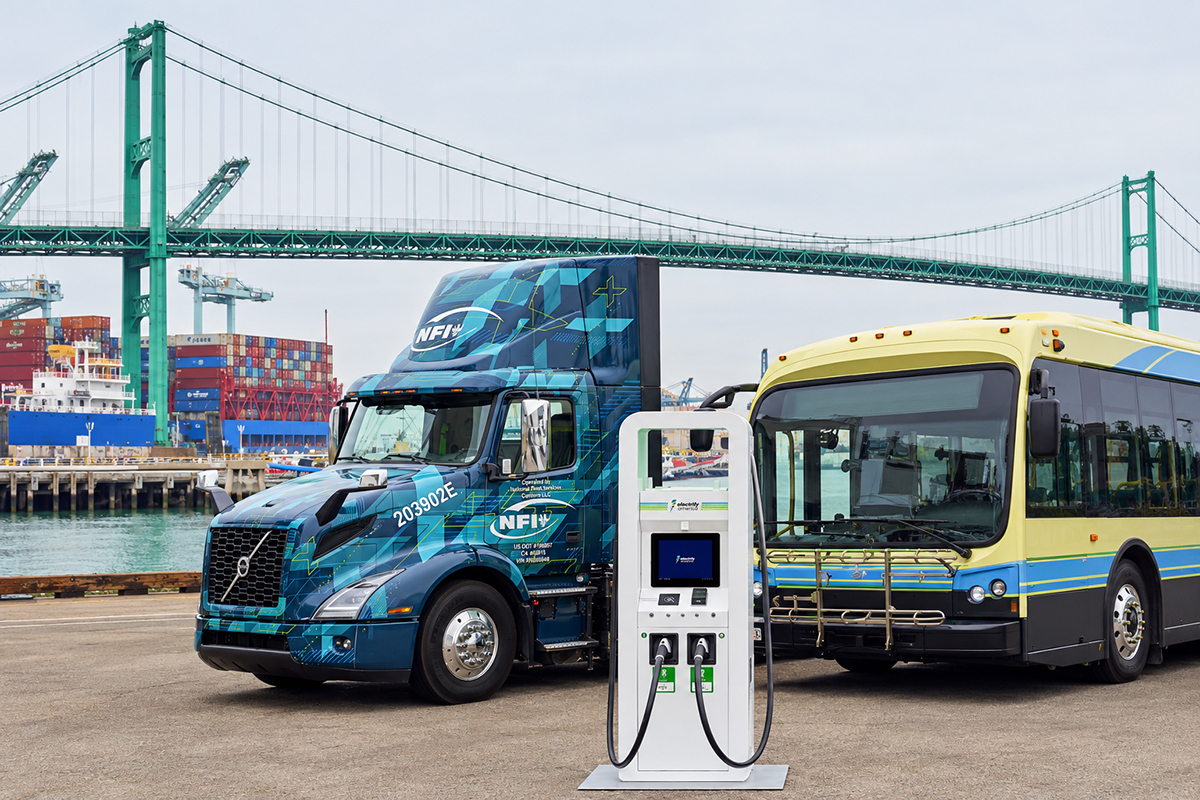
In Southern California, the Joint Electric Truck Scaling Initiative, or JETSI, moved the focus beyond smaller demonstrations. Through the project, NFI and Schneider deployed 100 battery-electric Class 8 trucks with supporting charging infrastructure. TRC worked with more than 20 organizations on project development, grant assistance and communications.
The significance of that deployment goes beyond the truck count. Operating at that scale requires fleets to coordinate charging and energy availability with dispatch, maintenance, workforce needs and uptime. The experience helps the industry understand what must be in place for electric trucks to become a dependable part of a larger operation, rather than a small project managed separately from the rest of the fleet.
Making the next deployments possible
That history has shaped how our team approaches funding. A grant application is often the most visible part of a project-development effort that begins much earlier, with an understanding of the fleet’s operational needs and the conditions required for the investment to succeed. Selecting equipment is only one part of that work; infrastructure, partners, financial viability and implementation responsibilities need attention before a proposal is submitted.
The work also continues after an award. Implementation, compliance and reporting determine whether the proposed investment becomes an operating project and whether its results can be documented. For a fleet, securing funding is an important milestone, but the practical test comes when the equipment must perform the work it was purchased to do.
As projects have become more complex, the range of expertise needed to deliver them has grown. GNA joined TRC in 2023, expanding the team’s access to engineering, environmental, energy and infrastructure capabilities. With TRC now a member of WSP, that work is part of a broader organization addressing many of the transportation and energy challenges that increasingly intersect at a fleet facility.
For Southern California, the changes since those early natural gas deployments are visible in the equipment now doing the work and in the infrastructure built around it. Waste-derived fuel can power collection vehicles, battery-electric trucks are moving freight, and fleet facilities are integrating charging with energy management. Those developments represent meaningful progress, while the region’s continuing air-quality challenges give the industry a reason to keep improving on them.
The next challenge is no longer simply to show that a cleaner technology can work. It is to make deployment reliable and economically workable across more fleets and applications, with infrastructure and service support that operators can depend on. On Clean Air Day, the value of the industry’s progress lies in how consistently it can turn that experience into cleaner equipment doing everyday work, and fewer emissions in the communities that work serves.