
Smart Freight Centre and Catalyst Mobility, formerly CALSTART, are bringing major shippers together to support an initial order of 2,500 battery-electric Class 8 trucks. Through the ZET SCALE alliance, the organizations are combining freight demand with volume purchasing and fleet financing to reduce costs and support deployments beyond individual pilot projects.
The order could nearly double the country’s electric Class 8 fleet. It also follows the change from CALSTART to Catalyst Mobility, the nonprofit formed through the combination of CALSTART and Forth.
For participating carriers, the program connects the truck purchase with several decisions that determine whether a deployment can work: how the vehicle will be financed, where it will operate and how its costs align with the fleet’s actual duty cycle.
ZET SCALE, short for Zero-Emission Truck Shipper-Carrier Alliance Leading Electrification, is jointly operated by Smart Freight Centre and Catalyst Mobility. Founding shippers include Microsoft and PepsiCo, with participants contributing different levels of engagement and freight demand signaling. The alliance uses that combined demand to give manufacturers a larger purchasing opportunity than an individual participant could present alone.
“ZET SCALE aligns shippers, carriers, manufacturers, and financiers around a single real demand signal,” said Christoph Wolff, CEO of Smart Freight Centre.
That coordination extends beyond securing trucks. The program brings the organizations generating freight demand together with the carriers moving it, while incorporating financing and deployment planning into the same process. Its structure is intended to distribute the risks of electrification rather than leave an individual fleet to address each barrier independently.
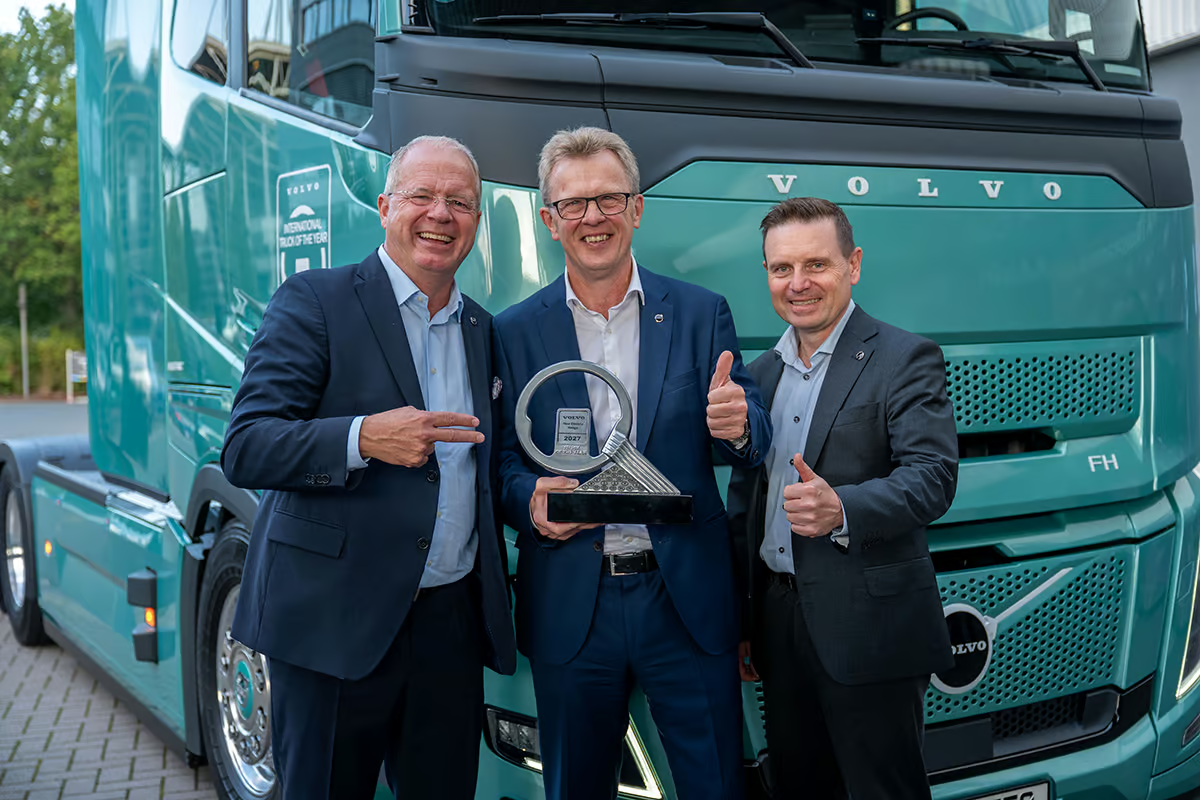
An independently conducted, competitive request for proposals evaluated manufacturers on price, range, charging capability and production capacity. Tesla was selected as the primary manufacturer for the initial procurement. Kenworth, RIDE and Volvo are additional options for carriers whose operating requirements call for other vehicles.
ZET Financial, a strategic partner to the alliance, is issuing the purchase order and will make the trucks available through a fair market value leasing program. Its ZET Lease structure is designed to eliminate residual-value risk for fleet operators, addressing uncertainty around what the trucks will be worth later in their operating lives.
The financing work also includes a fleet-specific assessment of operating costs. ZET Financial uses each participant’s data, duty cycle and operating metrics to examine the business case, including financing, electricity compared with diesel fuel, and maintenance. Infrastructure and charging advisory services are part of that support.
For fleets, this places the vehicle’s purchase price within a broader operating-cost assessment. The approach considers how a truck will be used rather than evaluating the equipment separately from its routes, energy requirements and financing.
Deployment planning will concentrate the first round of trucks in 10 freight hubs: Los Angeles, Stockton and Bakersfield, California; Seattle/Tacoma; Houston; Dallas; San Antonio; the Chicago area; Atlanta; and the Northern New Jersey/Newark/New York City region.
The locations are intended to bring trucks into freight-dense areas with suitable initial routes and operating economics. Concentrating deployments is also designed to increase utilization of both vehicles and charging infrastructure, supporting the program’s total-cost-of-ownership objectives.
The initial 2,500-truck procurement is the first stage of a larger effort. ZET SCALE is recruiting additional shipper and carrier partners, with a goal of expanding the model to at least 10,000 electric trucks. Additional participation would support deployments in new regions while increasing the purchasing volume available for subsequent rounds.