
At this year’s ACT Expo, I noticed one theme surfaced repeatedly, from the main stage, in breakout sessions, in customer meetings, and across countless conversations heard from the expo floor: fleet electrification will only work if it improves the bottom line.
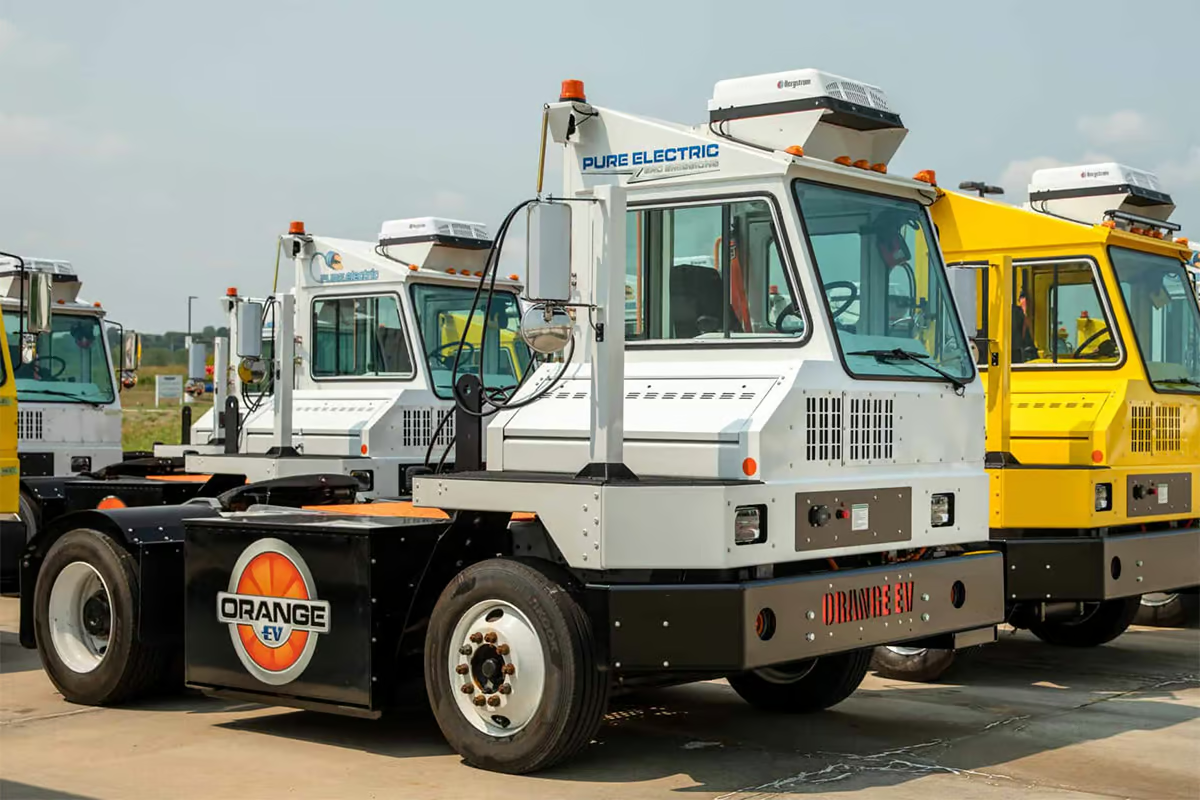
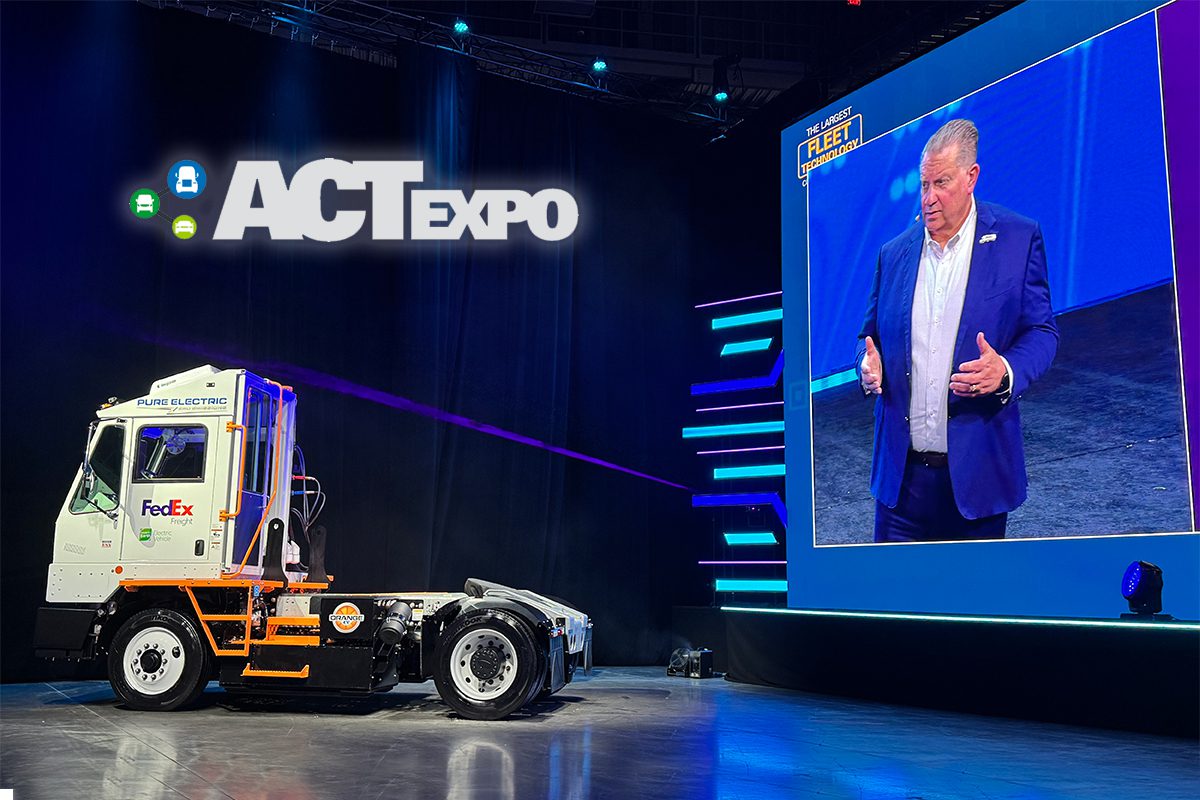
That point came through crystal clear during the opening keynote session when John Smith, incoming President and CEO of FedEx Freight, featured an Orange EV e-TRIEVER® terminal truck while discussing FedEx Freight’s broader fleet electrification strategy. John counseled the crowd, “Sustainability is only sustainable if you stay in business.” This message resonated because it reflected a growing reality across the yards of warehouses, distribution centers, and ports: sustainability initiatives are meaningless unless they also improve the business.
That is a major shift from where this industry has been.
For years, fleet electrification conversations focused on possibility. Can EVs perform? Will the technology hold up? Can yard operations adapt easily? This year, the conversation felt fundamentally different. After years of demos, pilots, and tests, operators have run the numbers to understand that EV yard trucks are a superior solution over traditional diesel tractors. The question being asked today is how quickly fleets can standardize their operations around EV.
Since Orange EV deployed its first EV terminal truck to DHL back in 2015, yard operations have acted as proving grounds for supply chain electrification because the highly repeatable duty cycles of terminal trucks provide the ideal use case. Operators now have access to more than 10 years of real-world data showing increases in uptime, predictability, throughput, and maintenance efficiency compared to traditional diesel tractors. This experimental phase was necessary, as fleets are loath to trade a known set of operational headaches for a newer, greener version of complexity.
As John Smith noted, transitioning from diesel to EV must be operationally seamless and must be worth the squeeze performance-wise. It cannot introduce infrastructure uncertainty, charging instability, unreliable equipment, or excessive deployment delays. Electrification only succeeds when it simplifies operations and improves business outcomes. Sustainability cannot be its only benefit.
While at ACT, I had the pleasure of moderating a discussion, How Fleet Technology Is Redefining the Yard and the Network. We had operators from ports, logistics providers, and drayage fleets on the panel. Each reinforced a similar theme: the industry is reaching an inflection point where hard operational performance data, not sustainability, is driving EV adoption.
Chris Bennett, VP of EV Energy & Sustainability at Lazer Logistics, made an important observation during the panel that echoed John Smith’s keynote message. Sustainability initiatives only succeed when they produce operational and economic benefits. He also emphasized that successful deployment of new technologies requires the right people, processes, and operational fortitude. This point cannot be overemphasized in my opinion. Technology alone does not modernize operations. Operational excellence is still a requirement.
Orange EV has been on the vanguard of this evolution. We have deployed almost 2,000 trucks across more than 360 fleets in North America. These trucks have logged more than 33 million miles and 12 million key-on hours, consistently delivering an average uptime of 97%.
More importantly, those deployments have helped usher the industry from experimentation to standardization. Today, we estimate that more than 25% of new terminal trucks purchased and delivered this year will be EV, with about nine out of every ten of those electric terminal trucks being from Orange EV. Many of our fleet customers are moving from isolated pilot projects to scaling EVs, having already completed the operational and financial calculations and are now standardizing around Orange EV as a superior operating model for modern yard operations.
So why change now? Because diesel yard operations have forced fleets to accept unpredictable uptime, higher maintenance burden, and ongoing operational drag for decades. Sticking with diesel may feel like maintaining the status quo, but it is still a decision to continue absorbing those costs, disruptions, and inefficiencies while the competition speeds ahead with EV.
This is the enduring message from this year’s ACT Expo.