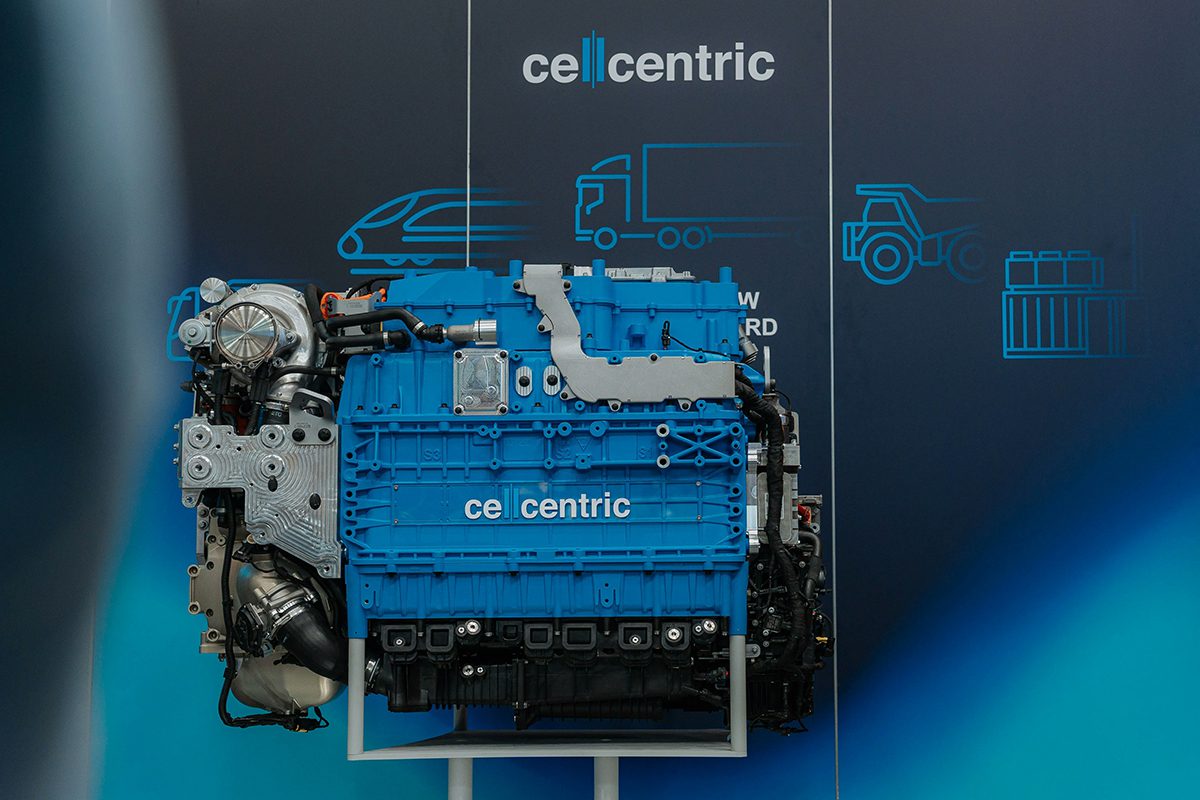
cellcentric has launched its new BZA375 fuel cell system, positioning it as a next-generation platform for long-haul trucks and other demanding heavy-duty applications. Previously known as “NextGen,” the product is now available for testing, validation, and further industrial scale-up.
The company said BZA375 was developed with a clear focus on total cost of ownership, durability, and performance in real-world heavy-duty use. cellcentric described the system as engineered to compete with modern diesel engines in applications where range, uptime, and efficiency remain critical.
“BZA375 is custom tailored for the needs of heavy-duty, long-haul trucks and an excellent fit in other applications with comparable requirements,” Nicholas Loughlan, CTO of cellcentric, said in the release.
According to cellcentric, the new system delivers up to 375 kW of continuous net power from a single-system package and cuts fuel consumption by 20% compared with its earlier BZA150 system. The company also said BZA375 reduces waste heat and complexity while increasing power density, making it easier to integrate into vehicle platforms originally designed for conventional diesel engines.
cellcentric said BZA375 is designed to replace the twin-system approach used in earlier heavy-duty truck applications with a more compact single-system layout. The company also said the system maintains a 25,000-hour service life, which it equates to roughly 10 years in a heavy-duty truck.
While long-haul trucking is its primary target, cellcentric is also positioning BZA375 for use in coaches, rail, mining, and stationary power generation. Prototype production is already underway, with customer testing and validation now beginning ahead of planned series production around the turn of the decade.