
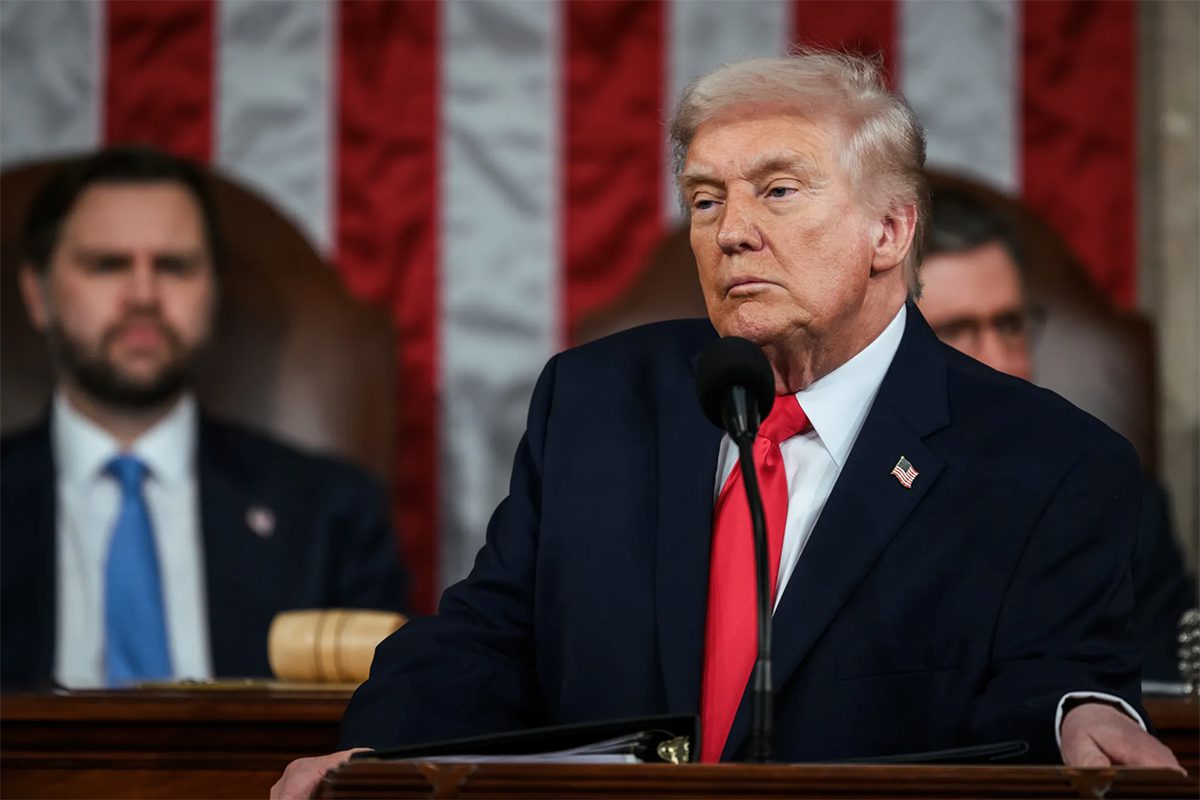
The Trump administration has escalated its conflict with California’s transportation and climate policies, filing a federal lawsuit aimed at stopping the state from enforcing vehicle emissions regulations that federal officials argue are unlawful.
The U.S. Department of Justice and U.S. Department of Transportation announced the legal challenge this week, arguing that California’s rules effectively impose fuel economy standards that conflict with federal authority. The lawsuit, filed on behalf of the National Highway Traffic Safety Administration (NHTSA), contends that the state’s policies create a regulatory framework that goes beyond the authority granted to California under federal law.
According to the Justice Department, the Energy Policy and Conservation Act gives the federal government exclusive authority to regulate vehicle fuel economy standards. Federal officials argue that California’s requirements operate as a de facto electric vehicle mandate by forcing automakers to meet state-specific mileage and emissions targets.
The case marks the latest chapter in a long-running policy battle between Washington, D.C. and Sacramento over California’s ability to set its own vehicle emissions rules. For decades, the state has operated under waivers granted through the Clean Air Act that allow it to adopt stricter emissions standards than federal requirements, with other states often choosing to follow California’s rules.
Earlier in the week Governor Gavin Newsom released a statement criticizing the administration’s broader approach to energy and transportation policy, accusing President Trump of driving up fuel costs while undermining efforts to address emissions.
Newsom said the administration’s policies are “raising gasoline prices on Americans with no plan and no accountability,” while California continues pursuing strategies aimed at reducing pollution and accelerating the transition to cleaner vehicles.
The lawsuit adds another layer of uncertainty for automakers, fleets, and technology providers already navigating a complex regulatory environment. Since multiple states adopt California’s vehicle standards, the outcome of the case could influence vehicle technology requirements across a significant portion of the U.S. market.
For commercial fleets, the legal battle could affect long-term planning around vehicle procurement, alternative fuel strategies, and compliance with evolving emissions requirements. California policies have historically shaped broader national trends in vehicle technology adoption, particularly around electrification and zero-emission vehicle deployment.
As the case moves through federal court, the dispute underscores the growing divide between federal and state approaches to transportation emissions policy — a divide that could have significant implications for fleets, manufacturers, and infrastructure providers across the commercial transportation sector.