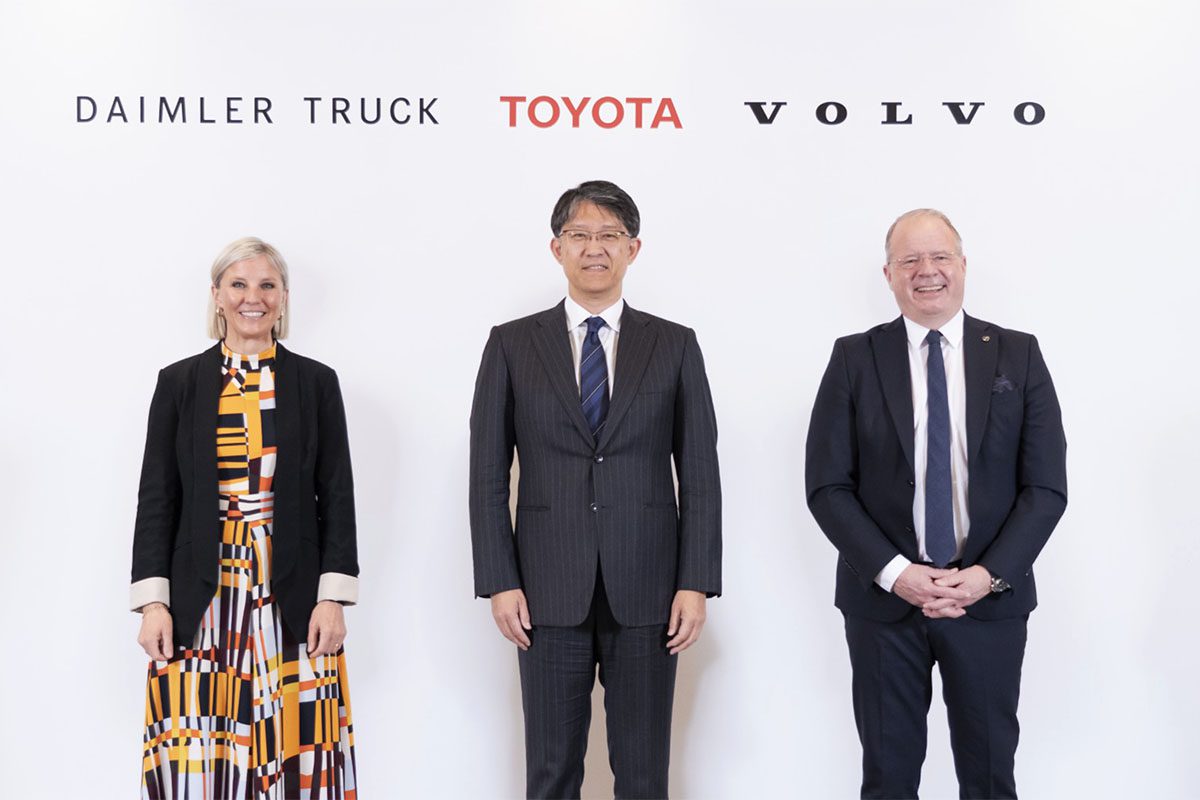
Toyota Motor Corporation is aiming to join Volvo Group and Daimler Truck as an equal shareholder in cellcentric, a fuel cell joint venture focused on developing and commercializing hydrogen-powered systems for heavy-duty applications. The proposed move would bring Toyota would expand the scope of cellcentric’s efforts to advance fuel cell technology for trucking and other transport segments.
Cellcentric was established by Volvo Group and Daimler Truck to accelerate the development of hydrogen fuel cell systems, with a particular focus on long-haul and heavy-duty use cases where battery electric solutions may face limitations. Toyota’s potential entry as an equal partner reflects the company’s continued investment in hydrogen as part of its broader multi-pathway strategy.
According to the announcement, the three companies intend to combine their expertise to further scale fuel cell technology and support its commercialization. The joint effort is expected to strengthen development capabilities and help advance hydrogen as a viable zero-emission solution for commercial transport.
For fleets, the development highlights the ongoing push to bring fuel cell trucks closer to large-scale deployment. While battery electric vehicles have gained early traction in shorter and regional duty cycles, hydrogen fuel cell systems are being positioned as a potential solution for longer routes, faster refueling needs, and higher payload requirements.
The collaboration also signals a growing level of industry alignment around hydrogen, particularly among global OEMs seeking to address the operational challenges of decarbonizing heavy-duty transport.
As investment and partnerships continue to expand, fuel cell technology is moving beyond early-stage development toward a more structured path to commercialization, though timelines and infrastructure readiness remain key factors for widespread adoption.