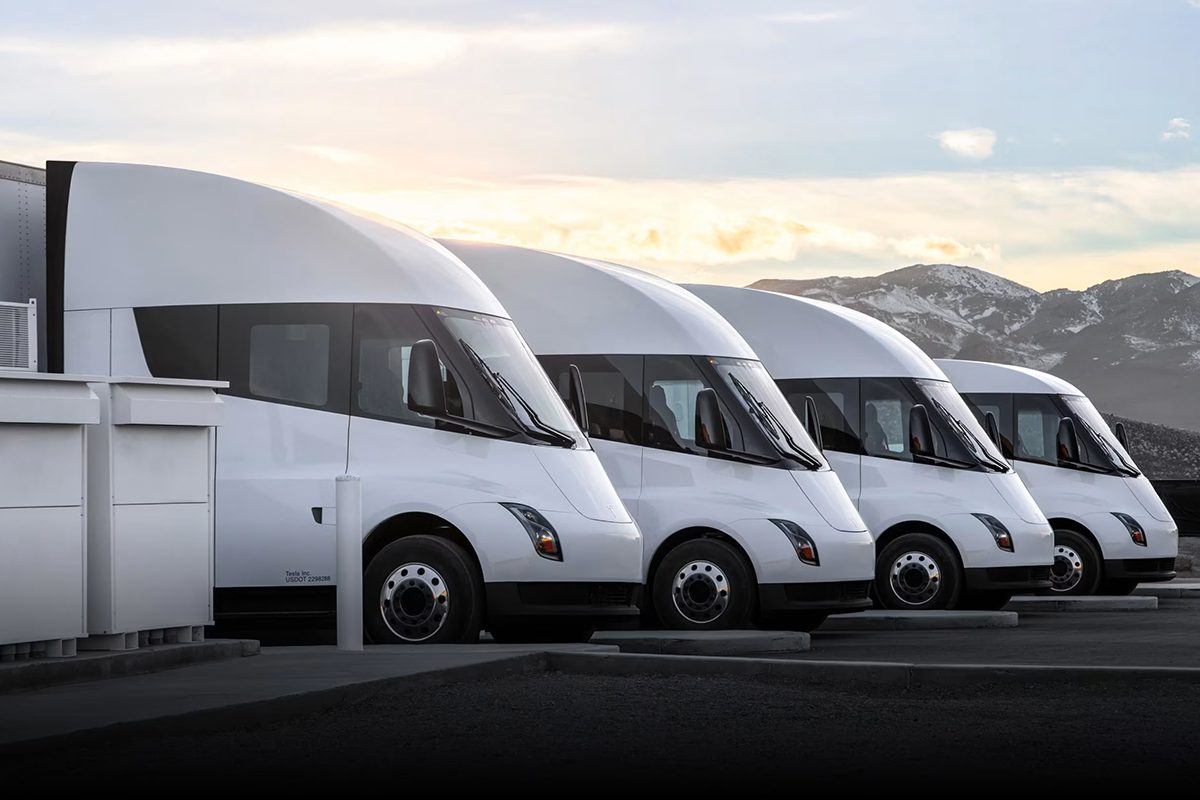
Tesla provided new details on the progress of its long-awaited all-electric Class 8 truck, the Tesla Semi, highlighting developments in production, battery technology, and megawatt charging infrastructure, during its Q3 2025 earnings call.
The company confirmed that its dedicated Semi production facility in Nevada is nearing completion, with full-volume production now targeted for 2026. Tesla expects the plant to reach an output of up to 50,000 units annually at full capacity. Early production units will primarily serve internal logistics and data collection before broader customer rollout.
Since its original unveiling in 2017, the Semi has remained a closely watched project in the zero-emission trucking sector. The vehicle has undergone extensive testing and limited pilot deployments, including with PepsiCo, while Tesla refines battery systems and charging technology to meet the demanding needs of heavy-duty freight applications.
Tesla plans to offer the Semi in multiple range configurations, with approximately 300-mile and 500-mile versions expected. The latest design incorporates a reengineered battery pack using domestically sourced cells, optimizing cost and energy efficiency without sacrificing range.
Supporting the vehicle’s charging needs, Tesla is expanding its Megawatt Charging System (MCS) network across the U.S., with roughly 46 sites planned along major freight corridors. The MCS architecture can deliver up to 1.2 megawatts of power, dramatically reducing downtime compared with conventional charging systems.
Additional new features include an Electric Power Take-Off (e-PTO) capability, allowing the Semi’s battery to power auxiliary equipment such as refrigerated trailers and stationary tools. Tesla has also previewed updates to the truck’s cab, offering improved driver visibility, comfort, and storage options, and hinting at future sleeper configurations for long-haul operations.
While Tesla’s revised production schedule marks another delay, it also underscores the company’s approach of aligning vehicle rollout with supporting infrastructure and domestic battery supply. Once in full production, the Semi is expected to play a significant role in advancing the electrification of heavy-duty freight and lowering total operating costs for fleets.