The National Transportation Safety Board will examine two fatal 2024 crashes involving Ford’s hands-free BlueCruise partial driving automation system, one in Texas and one in Pennsylvania, at an upcoming meeting. Board members will discuss safety issues tied to both crashes and vote on probable causes and safety recommendations.
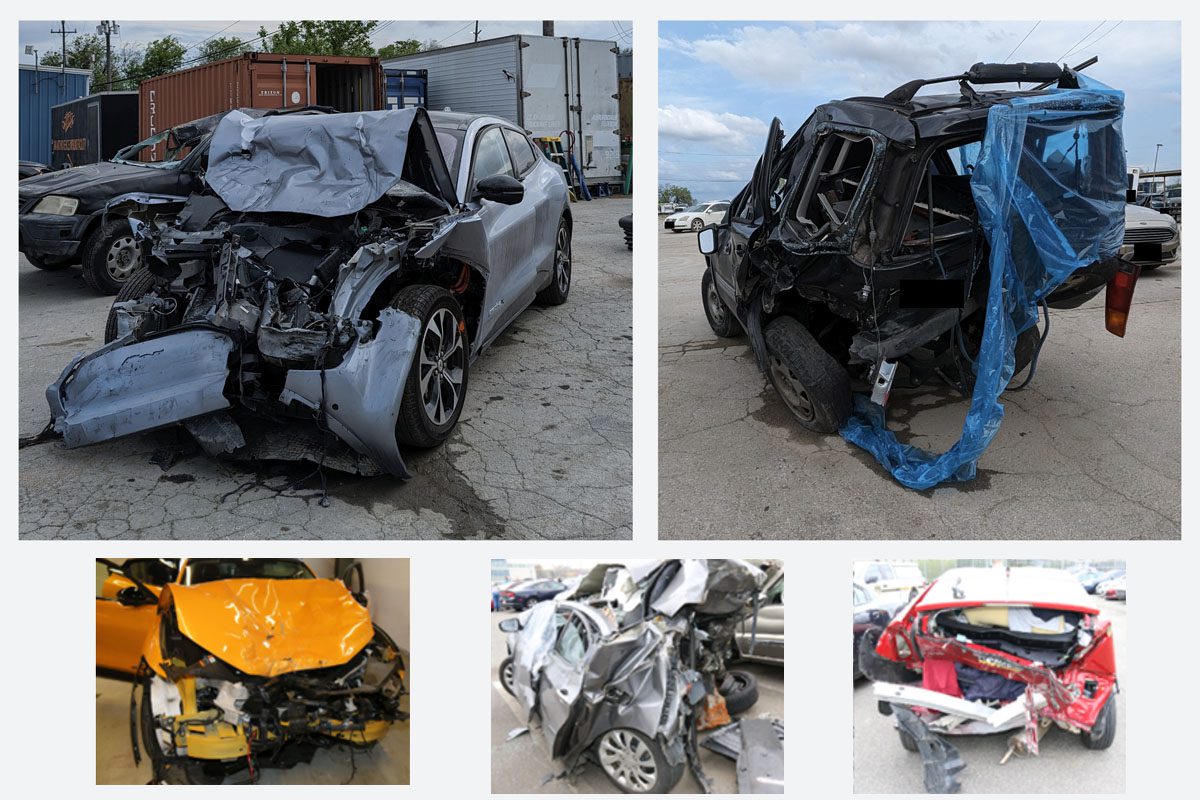
The San Antonio crash from February 2024 involved a 2022 Ford Mustang Mach-E striking the rear of a stationary 1999 Honda CR-V. The Honda driver was killed, and NTSB investigators said vehicle data showed the Mach-E driver had been operating in BlueCruise mode — a hands-free highway driving technology that works on prequalified controlled-access highways called “Blue Zones” — at the time of the crash A witness told investigators the stopped Honda’s hazard, tail, brake and license-plate lights were not illuminated.
The second crash, which occurred in Philadelphia in March 2024, involved two stationary vehicles were that were struck by a 2022 Ford Mach-E traveling at highway speed. Two people were killed, and NTSB investigators said post-collision data showed the Mach-E was also operating with BlueCruise engaged. The crash site was in a long-term active work zone with lane realignment and a reduced statutory speed limit of 45 mph.
Taken together, the two investigations put the spotlight on a core automated-driving challenge: detecting and responding to stationary hazards fast enough at highway speeds. In both vehicle automation reports, NTSB documented that Ford’s adaptive cruise control deceleration response to stationary vehicles depends on whether the sensors determine the object is a hazard, and Ford told investigators it would not expect the current generation of radar-camera fusion AEB systems to detect and classify a collision target with enough confidence to respond in conditions like the Philadelphia crash.
The Philadelphia docket is especially striking on timing. NTSB said the Mach-E’s forward camera system did not detect a hazard and did not request AEB activation, while a forward collision warning was provided only between 200 milliseconds before impact and the moment of impact. Pre-crash data also showed no braking during the recorded five seconds before the crash, with the driver-monitoring system classifying the driver as looking at the forward roadway throughout that interval.
The San Antonio docket raises a different but related concern: the limits of gaze monitoring as a safeguard. NTSB’s vehicle automation report says BlueCruise’s driver-monitoring system is designed to detect distraction, not drowsiness or impairment. In the recorded six seconds before the San Antonio crash, pre-crash data showed repeated off-road glances toward the infotainment area before the driver’s gaze returned to the forward roadway just before impact. Separate Ford telematics data showed BlueCruise remained in hands-free mode as late as 6 seconds before the crash and recorded off-road alerts 29 seconds and 8 seconds before impact.
While this case focuses on the passenger-vehicle market, it is also examining how partial automation, driver monitoring, warning timing and object detection interact when a vehicle on automated assistance approaches stopped traffic at speed. For an industry moving deeper into advanced driver assistance and automated-driving features, that makes these two investigations relevant to fleets looking to implement these evolving safety features.