
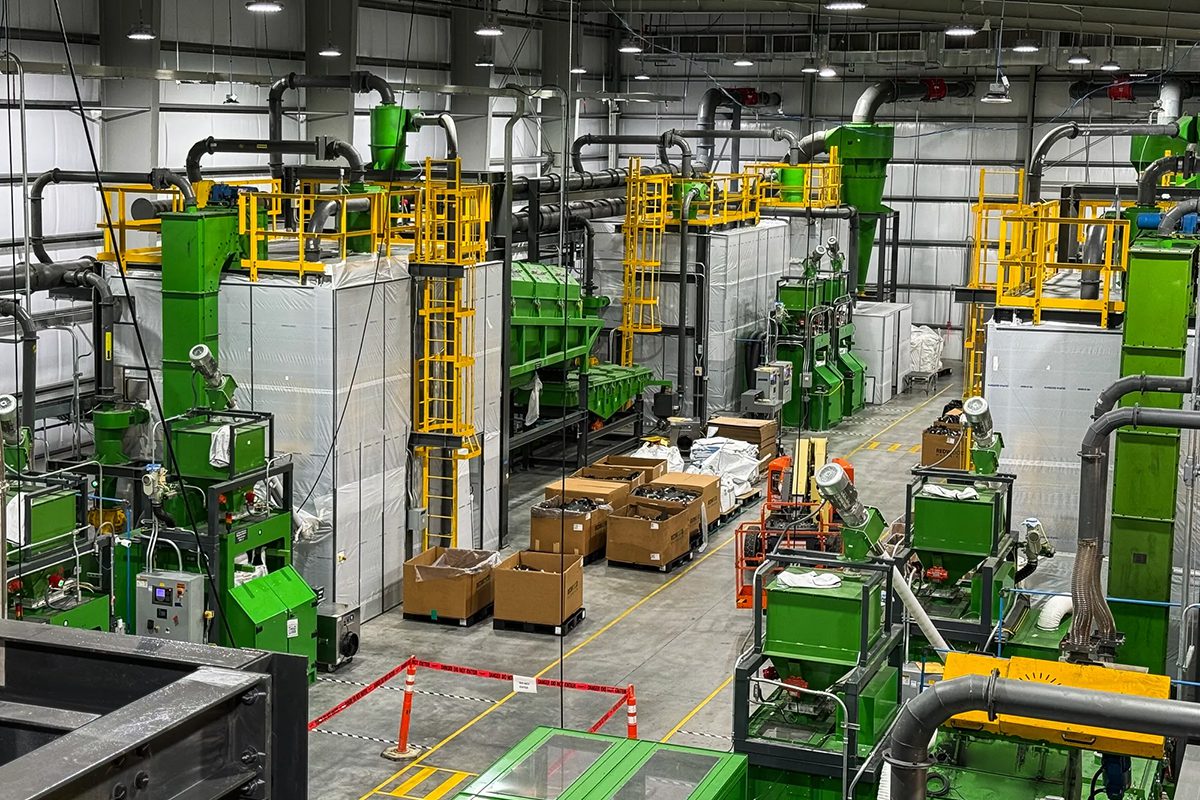
Redwood Materials has begun operations at its new Carolina Campus in Ridgeville, South Carolina, marking the company’s first phase of critical-materials recovery on U.S. soil. The campus, located in the Camp Hall Commerce Park and extending over 600 acres, will process end-of-life batteries and manufacturing scrap to extract metals like lithium, nickel, cobalt and copper for reuse in battery-grade materials.
The facility is strategically designed to support the electric vehicle supply chain, championing a circular-economy approach by reclaiming key inputs traditionally sourced via overseas supply chains. Redwood says the campus will be powered entirely by clean energy, with no fossil-fuel line drawn to the site—a configuration intended to lower the carbon footprint associated with battery-material processing.
By locating the campus in Berkeley County, near Charleston and rail/port infrastructure, Redwood taps into the growing battery-materials ecosystem in the U.S. Southeast and positions the facility to meet rising demand for advanced-battery components. The company also projects that the campus will create more than 1,500 jobs over its development and operation.
As the campus begins recovery operations, Redwood emphasizes this is a foundational step — before full-scale manufacturing of refined anode and cathode materials begins — toward closing the loop in battery manufacturing. The initiative reflects both industrial strategy and environmental goals, with domestic supply-chain resilience and sustainable processing at its core.