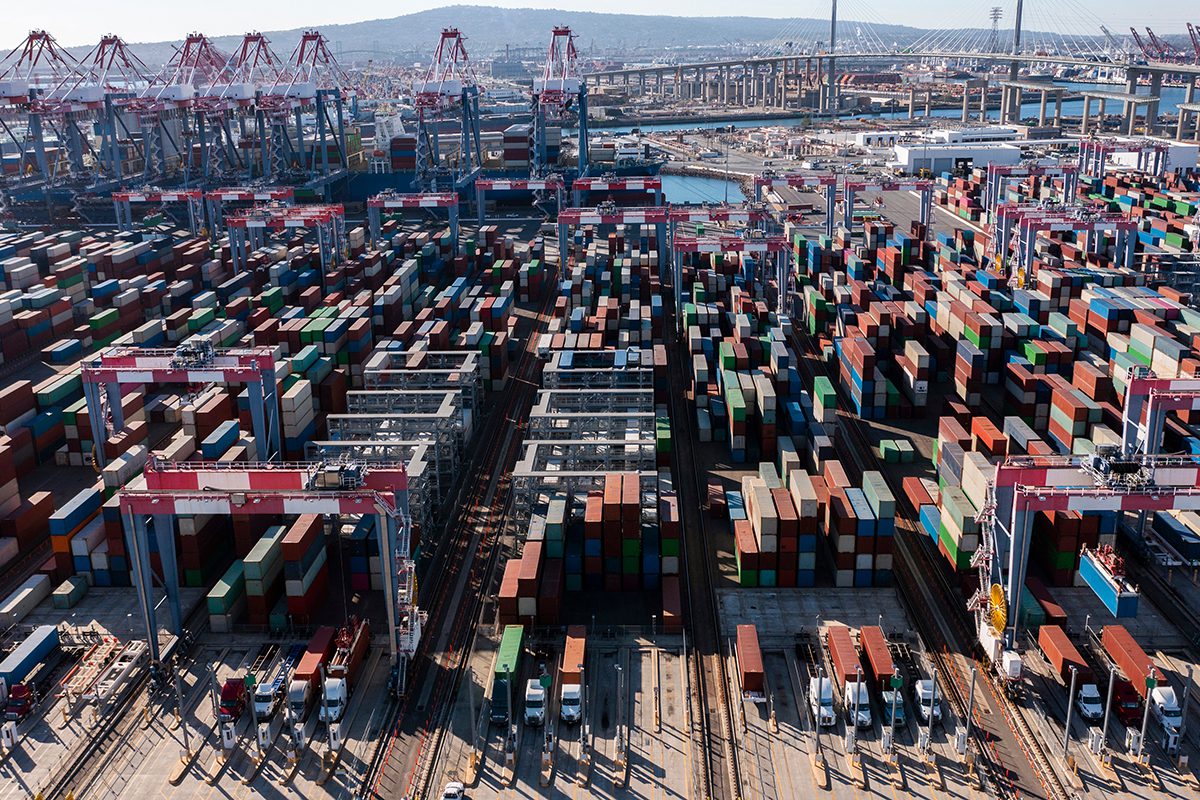
The Long Beach Board of Harbor Commissioners has unanimously approved a landmark cooperative agreement with the South Coast Air Quality Management District (SCAQMD) and the Port of Los Angeles that sets enforceable deadlines for developing zero-emission infrastructure across the nation’s busiest port complex.
Approved by SCAQMD earlier this month, the agreement outlines a phased approach to achieving zero-emission operations. A draft plan for zero-emission infrastructure covering multiple equipment types is expected by May 2027, with finalized plans for all categories to be in place by the end of 2029. These commitments expand on the Clean Air Action Plan (CAAP), a long-running collaboration between the ports that has already reduced diesel particulate matter by 90%, nitrogen oxides by 68%, and sulfur oxides by 98% since 2005.
In addition to these new deadlines, the ports and SCAQMD will pursue “CAAP Plus” initiatives designed to tackle emissions from oceangoing vessels—the largest remaining pollution source at the ports. Potential strategies include expanding the Environmental Ship Index incentive program, using Clean Truck Fund revenue to support zero-emission trucks and charging infrastructure, and developing programs to encourage zero-emission drayage truck utilization.
“This cooperative agreement accelerates the progress we’ve achieved by making our operations cleaner and more efficient,” said Long Beach Harbor Commission President Frank Colonna. “It will deliver tangible results and a sustainable future without risking jobs or cargo throughput.”
Port of Long Beach CEO Mario Cordero emphasized that collaboration remains key to achieving environmental goals. “Together, with the participation and active support of the ports, SCAQMD, labor, industry, energy suppliers, utilities, technology developers, and community representatives, I am confident we can reach our shared goal of a zero-emissions future.”
Long Beach Mayor Rex Richardson added that the initiative demonstrates how “environmental progress and economic leadership are no longer competing goals—they must move forward together.”
The Los Angeles Harbor Commission is set to vote on the agreement Nov. 20, after which all three parties will execute the document. Negotiations on additional CAAP Plus measures are expected to conclude by spring 2026.
As the Port of Long Beach celebrates 20 years of its Green Port Policy, this agreement marks another milestone in its role as a national leader in sustainable maritime operations. Over the next decade, the Port plans to invest $3.2 billion in capital improvements aimed at expanding capacity, competitiveness, and environmental performance.