
Electricity bills are steadily rising and driving up expenses for households. Inflation, energy supply chain disruption, wildfires, data center growth and other issues are all boosting the cost of residential electricity prices.
As demand for electrons grows, utilities are upgrading aging, outdated grid infrastructure to meet the moment. These upgrades cost money — costs that are typically passed to residential customers.
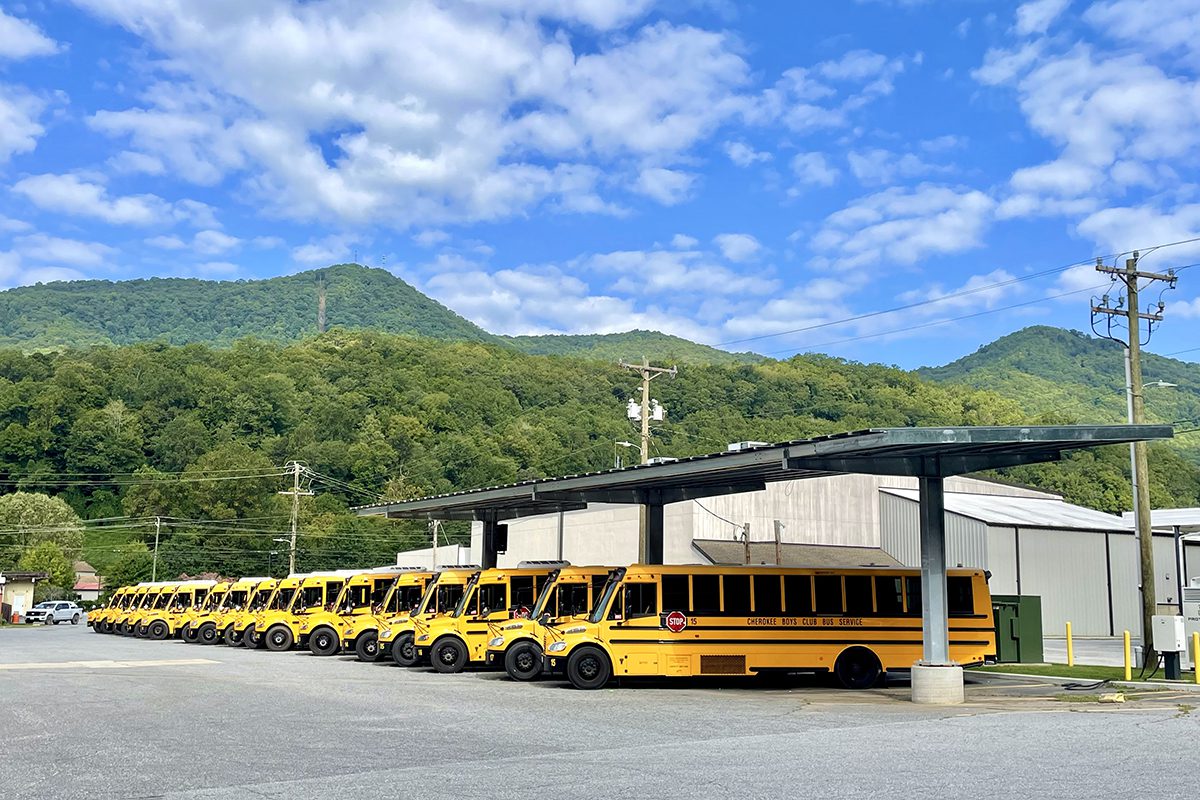
But somewhat surprisingly, electric school buses can help with this problem and drive down rates.
That’s because electric vehicles can decrease electricity prices for everyone by better utilizing the existing grid and spreading costs across more electric customers, without the need for significant grid investment. And electric school buses, which have flexible, off-peak charging times, are especially primed to help drive down energy rates.
The U.S. electricity grid is built to handle moments of heavy demand on the grid, which means it’s not always in use at the levels it could be, leading to higher rates for everyone involved. If more customers can be added to the grid specifically outside of times of peak demand, as electric school buses can, it can spread the fixed costs of electricity among more users.
Consider the electricity grid as a vacation rental. A group of five friends is looking at different houses to rent for a week, and they find one with an extra bed. Inviting a sixth friend might mean more money spent on groceries, but it will still drive down the total cost of the rental for everyone, because they can divide the final bill by a higher number.
Electric vehicles can be that sixth friend in electric grid utilization. As long as the costs of groceries (or the costs to operate the electric grid, in the case of electric school buses) don’t exceed the savings from bringing in a sixth person, everyone will pay less.
And electric school buses, which are on the road in 49 states, four U.S. territories, DC and several Tribal nations, are uniquely poised to play this “sixth person” role. This is because they are available to charge overnight, when there’s lower demand for electricity, or midday, when solar power can create excess supply on the electric grid.
Managed charging software can also make electric school bus charging even more efficient by helping buses charge specifically when demand is low or supply is high. This sets electric vehicles apart from other additions to the grid, like data centers, that often need power during periods of high demand and don’t have the same amount of flexibility in charging time.
Cutting electricity costs is a rising concern. The average monthly residential electric bill jumped about 30% between 2021 and 2025. For low-income households, the strain of energy and transportation costs is even more significant, accounting for 17.8% of household income, which is more than three times the national average. Quantifying the savings from adding electric vehicles like electric school buses is tricky, because it will vary by region and grid, but research has found that between 2011 and 2021, electric vehicles alone contributed $3.12 billion more through electric bills payments than the associated costs to power the vehicles.
Electric school buses can also provide financial benefits for school districts or support community resilience by delivering power back to the grid. By using “vehicle-to-everything” technology, electric vehicles, including electric school buses, can be used as a mobile battery with stored energy that can be discharged to other sources as needed. A charged electric school bus can be used like a generator, providing backup power to a home or building if the power goes out.
Or in similar vehicle-to-grid situations, the electric school bus can send power back to its local grid, helping to lower peak power demand on a system — and lower costs. In Beverly, Mass., Highland Fleets has an estimated earnings for the school district of $6,000 per bus per year, based on bidirectional charging capacity through the ConnectedSolutions program. Using electric vehicles to offset everyone’s electricity prices, not just EV owners, is still a nascent concept as more consumers look for alternatives to fossil fuel-burning cars. But early outputs show clear benefits of EV adoption for consumer costs around the country, and electric school buses are well-positioned to be a key part of the promising trend.