
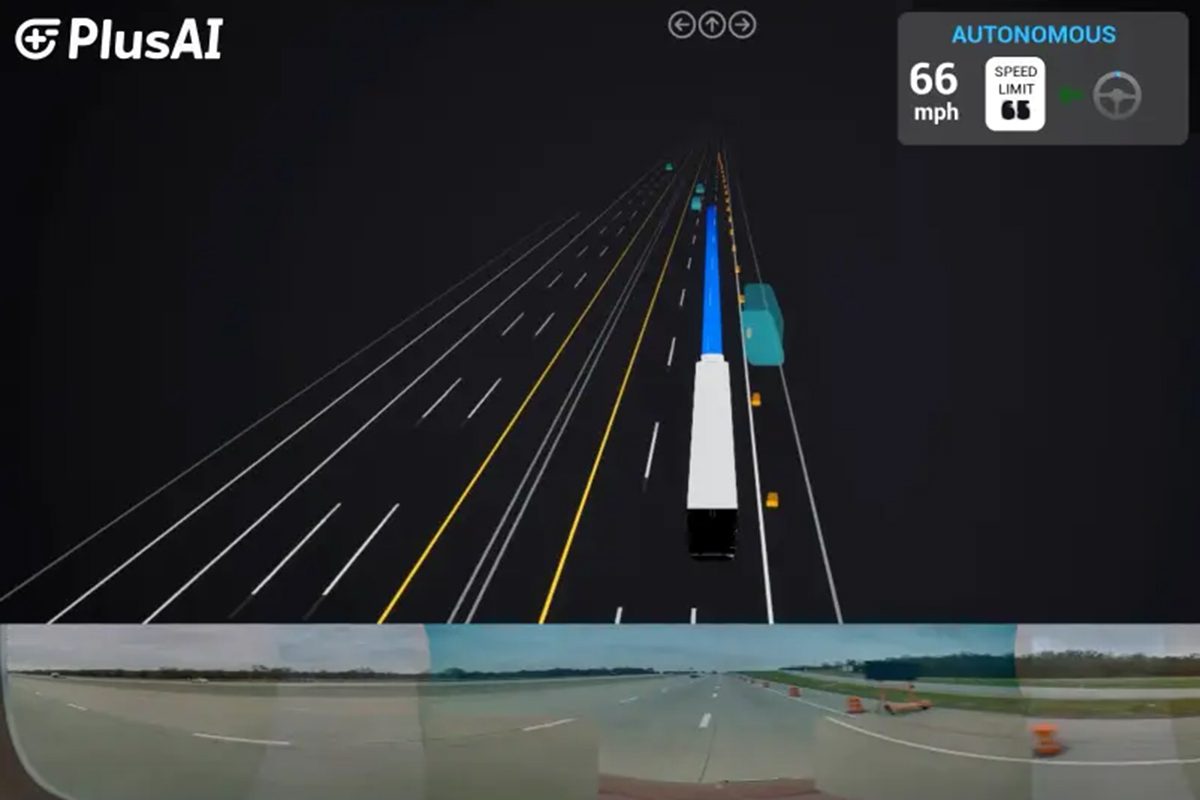
Autonomous trucking technology developer PlusAI has launched a new autonomous driving system designed to support large-scale commercial deployment of driverless freight operations.
SuperDrive 6.0, the latest version of its autonomous driving software and hardware stack, combines artificial intelligence software, sensors, and vehicle integration designed to allow heavy-duty trucks to operate autonomously on highways. The new 6.0 version is intended to improve performance, reliability, and readiness for commercial deployment.
According to the company, SuperDrive 6.0 incorporates advancements in AI-based perception and decision-making designed to improve how autonomous trucks interpret and respond to complex highway environments. The system is designed to detect and track surrounding vehicles, road conditions, and other traffic participants while planning safe driving actions in real time.
The system also includes upgraded hardware architecture and improved redundancy across critical vehicle systems to support driverless operation. These redundancies are intended to ensure that autonomous trucks can continue operating safely even if individual components fail. The new platform can be incorporated into factory-built autonomous trucks developed in collaboration with truck manufacturers.
According to the company, SuperDrive is designed to support long-haul highway freight operations, where autonomous technology developers believe automation can improve efficiency, reduce operating costs, and increase equipment utilization. The latest version of the system is intended to help accelerate the transition from pilot programs and testing toward broader commercial deployment of autonomous trucking.