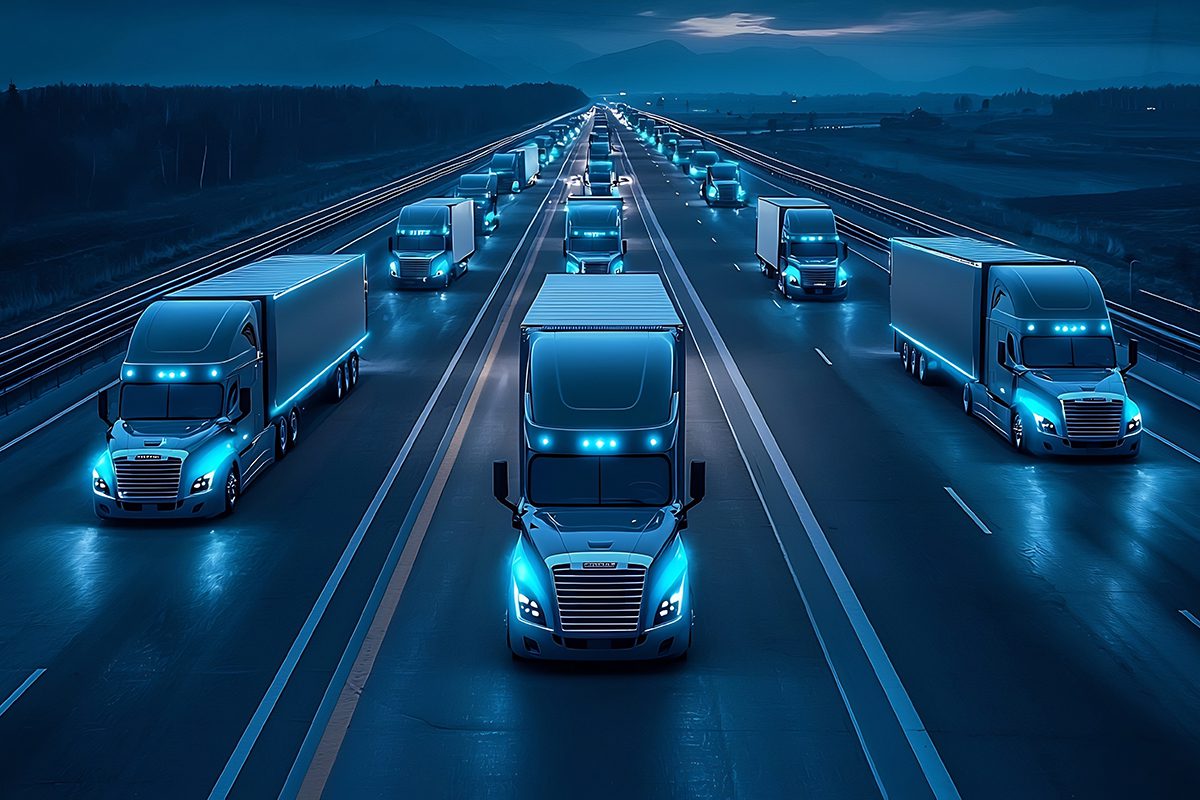
As autonomous freight technology advances from concept to commercial reality, leading developers are testing different strategies to bring automation to scale. Kodiak AI, PlusAI, and Gatik each operate on distinct models — long-haul, hub-to-hub, and regional distribution — but share a common focus: proving that autonomy can enhance safety, efficiency, and reliability for fleets.
Building Trust Through Safety and Real-World Data
All three companies identify safety as the defining factor for industry acceptance. Kodiak AI’s Vice President of External Affairs Daniel Goff said the company’s experience in Texas’ Permian Basin, where it operates eight fully driverless Class 8 trucks for Atlas Energy Solutions, has been transformative.
“These vehicles operate day and night and encounter dynamic road and weather conditions,” Goff explained, describing the area as a harsh environment that sees heavy rains wash out roads and even dust storms. “These experiences have enhanced our capabilities to safely operate in these challenging conditions.”
Kodiak has logged more than 3,000 paid driverless hours and 3 million autonomous miles, using this data to refine the Kodiak Driver, an AI-powered system designed to function without the reliance on high-definition maps. Goff said the company’s proprietary Actuation Control Engine (ACE) performs more than 1,000 system checks per second to monitor safety-critical systems, ensuring the trucks can continue or safely stop if any component fails.
At PlusAI, Vice President of Operations and Program Management Amisha Vadalia emphasized that true safety extends beyond the software layer.
“Autonomous trucking is not just about having the trucks operate safely,” she said. “Reliability, durability, and serviceability are critical to ensuring that autonomous trucks operate through their 1 million-plus-mile lifetime.”
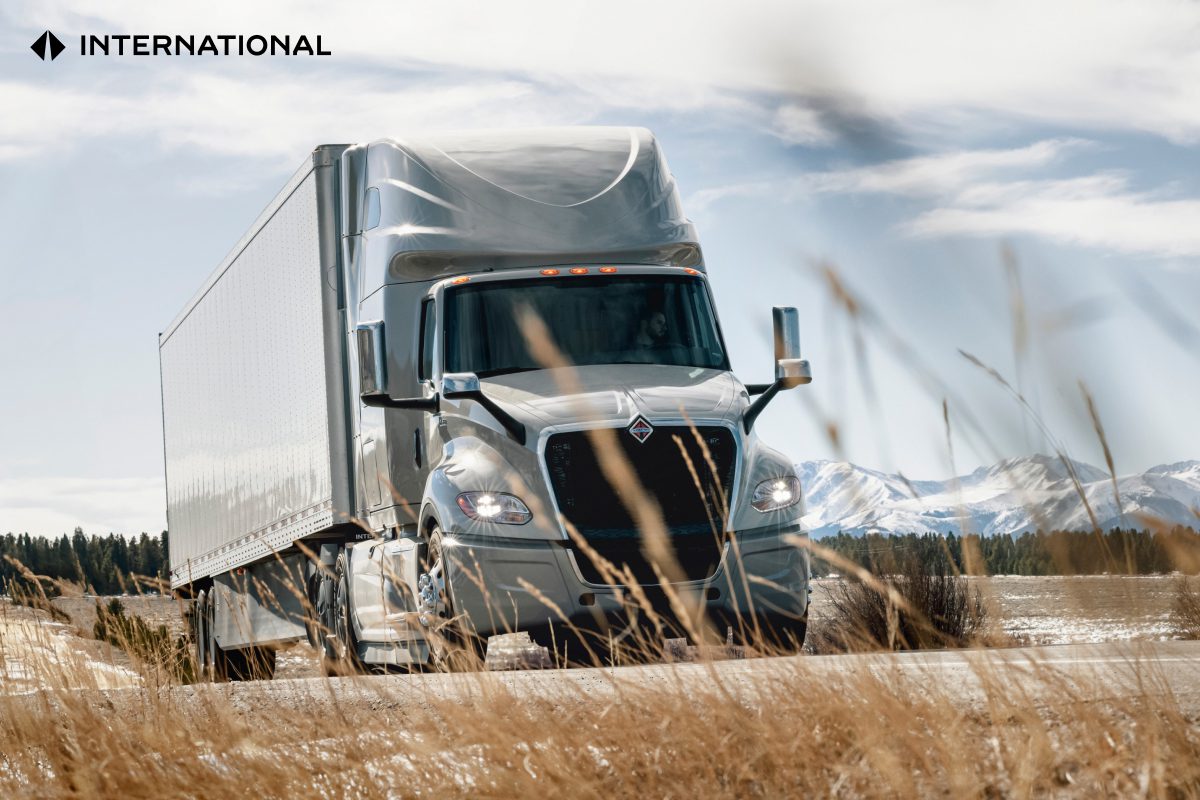
That’s why PlusAI has focused on factory-built integration, working directly with OEMs like International to manufacture and validate autonomous trucks on the production line.
For Gatik, safety is baked into its operational design. By focusing on short-haul, fixed routes between distribution centers and retail stores, Gatik minimizes exposure to unpredictable driving conditions.
“We can select the safest routes every time,” said Richard Steiner, vice president of government relations and public affairs. “A bag of groceries won’t complain if the route takes four minutes longer because we took three right turns to avoid one unprotected left.”
Steiner added that this “network automation” approach — limiting routes to controlled environments — enables faster, safer commercialization than urban passenger robotaxis. It also allows the company to collect more predictable, repeatable data to refine its systems.
Scaling Models, Different Roads to Commercialization
Each company’s path to commercialization reflects a different market segment.
Kodiak AI’s deployment with Atlas marks one of the first sustained driverless Class 8 operations in North America, operating around the clock in one of the harshest freight environments in the U.S.
“Our main focus right now is on how autonomy integrates into day-to-day operations,” Goff explained. “From pickup and drop-off to the support we provide, it all has to work seamlessly for customers.”
PlusAI, meanwhile, remains focused on scaling its hub-to-hub long-haul network. Partnering with International and operating from San Antonio, the company’s pilots aim to replicate traditional freight lanes under real-world conditions.
“Fleet customers have been clear that they want autonomous trucks to integrate with their existing operations,” Vadalia said. “We’re expanding our fleet trials to additional fleets and routes to collect diverse feedback.”
Gatik has chosen the middle ground, both literally and strategically. Its Class 6 and 7 box trucks are operating across North America, including Ontario and Texas, for major retail and grocery partners such as Walmart, Loblaw, and Kroger. Having scaled from a single truck in 2020 to more than 100 vehicles today, Gatik plans to operate fully driverless in 2025.
In doing so, the company also added layers of visibility that give their customers greater insight into their operations and the benefits they offer.
“Our customers not only get an autonomous delivery service, they also get a much greater visibility on everything that we’re moving for them,” added Steiner. “And yeah, from, from my understanding, from, from “According to our operations teams, who work directly with our customers across the nation, day in day out, that’s been hugely appreciated.”
Technology That Meets Fleets Where They Are
Across the three companies, a consistent message emerges: fleets want autonomy to fit into existing logistics ecosystems, not reinvent them.
PlusAI’s OEM-built trucks allow fleets to buy, finance, maintain, and warranty autonomous vehicles through the same channels as their conventional fleets.
“Fleets have shown strong interest in adopting the technology because autonomy promises to make their operations safer and more efficient,” Vadalia said. “They prefer factory-built trucks with the virtual driver integrated, so they can manage them like any other asset.”
Kodiak shares that mindset, integrating with well-known carriers including J.B. Hunt, Werner, and IKEA to test autonomy on standard long-haul routes. Its technology architecture, built with Tier 1 suppliers, includes redundant braking, steering, and computer systems validated to traditional OEM safety standards.
“Our trucks include backup systems for key safety functions such as braking, steering, power, compute, and sensors, so if a primary system fails, the truck can still perform or be guided to a safe state,” said Goff.
For example, the redundant steering system includes two steering actuators and is controlled by Kodiak’s safety system. If the primary steering actuator experiences a failure, the system seamlessly switches to the secondary actuator to maintain full control.
Gatik takes a more immediate, pragmatic approach by helping customers overcome operational bottlenecks and driver shortages in the regional distribution space.
“Our customers aren’t trying to replace their entire human driving workforce,” Steiner said. “They just need more help because they require more trucks and trips on those regional networks. As we’ve matured our technology, we’ve become increasingly more efficient in helping to serve our customers and consumers more efficiently, more reliably, and more responsibly.”
Sustainability and Efficiency: A Shared Destination
While all three companies acknowledge that most autonomous trucks today still run on diesel, each views autonomy as a bridge to broader sustainability goals.
Steiner noted that Gatik’s systems improve fuel economy by about 10%, thanks to consistent, defensive driving behavior that avoids the stop-and-go inefficiencies common in human-driven fleets. For short-haul routes, he said, pairing autonomy with electric trucks is a “match made in heaven” once charging infrastructure catches up.
“It’s perfect fit because we’re operating on shorter routes, and we don’t have that range anxiety with the current battery technology,” added Steiner.
By working with OEMs when developing and implementing their autonomous technologies, both PlusAI and Kodiak can further enhance their overall customer experience by implementing these changes on battery-electric trucks as well. Also, with increased route predictability and reduced downtime, autonomy can enhance the economics of zero-emission Class 8 adoption, enabling higher utilization and lower cost per mile.
Different Strategies, Same Horizon
Whether refining hub-to-hub logistics, automating short-haul distribution, or running driverless in the rough terrain, PlusAI, Gatik, and Kodiak AI each represent a critical piece of the autonomous freight ecosystem. Their differing operational models underscore that the road to autonomy won’t be one-size-fits-all, but it’s already being paved in parallel across the industry.
ACT Expo is once again setting the pace for the transportation industry, delivering a powerhouse agenda packed with breakthrough technologies and bold innovations. This year, ACT Expo will place greater emphasis on the digital frontier as fleets make use of AI and autonomous vehicle technologies.
Dive into the Automation Track to explore real-world use cases, the infrastructure driving autonomy, and the policies accelerating adoption of autonomous vehicles. Then, shift gears into the world of AI-powered fleet tech, where attendees will discover cutting-edge solutions that deliver real-time intelligence on vehicle performance, predictive maintenance, and next-gen safety tools like software-defined vehicles.
Whether you’re optimizing operations today or planning for tomorrow, ACT Expo’s agenda is your roadmap to what’s next. Full session details are dropping soon, stay tuned!