
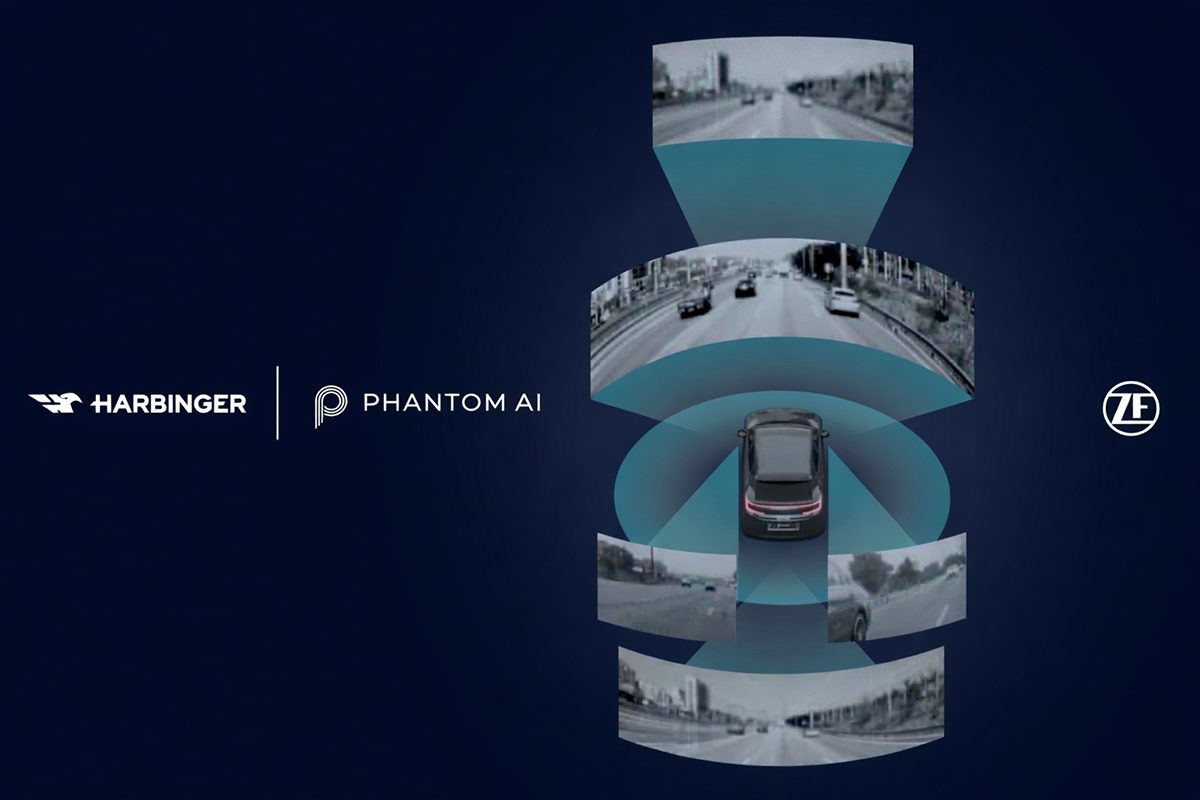
Harbinger recently acquired autonomous driving software company Phantom AI and secured a licensing agreement with ZF, a move aimed at accelerating the integration of advanced driver assistance and autonomous capabilities into its vehicle platform.
The acquisition brings Phantom AI’s full self-driving software stack and engineering team under Harbinger’s control. Phantom AI has developed camera-based advanced driver assistance systems (ADAS) and autonomous driving software designed for automotive applications. By bringing the technology in-house, Harbinger said it will be able to tightly integrate autonomous functionality with its purpose-built electric vehicle architecture.
As part of the transaction, Harbinger also secured a licensing agreement with ZF for key components that support the autonomous system, which will complement Phantom AI’s software with production-ready hardware and systems integration support, according to the company.
“Thanks to this acquisition, we are able to deliver a more comprehensive, technology-forward solution that includes robust ADAS capabilities and telematics to the medium-duty vehicle segment and beyond,” said Dr. Cho, co-founder and CEO of Phantom AI. “While these features are already expected in passenger vehicles, medium-duty fleets have historically been underserved.”
Phantom AI’s co-founders will join Harbinger as part of the transaction, and the engineering team will continue developing the autonomous stack within Harbinger’s operations. The company indicated that combining vehicle platform design with vertically integrated autonomous technology is expected to streamline development timelines and improve system optimization.
Harbinger framed the move as a strategic step toward embedding advanced driver assistance and autonomy directly into its vehicle offerings, positioning the company to compete in a commercial vehicle market increasingly focused on safety, automation and electrification.