
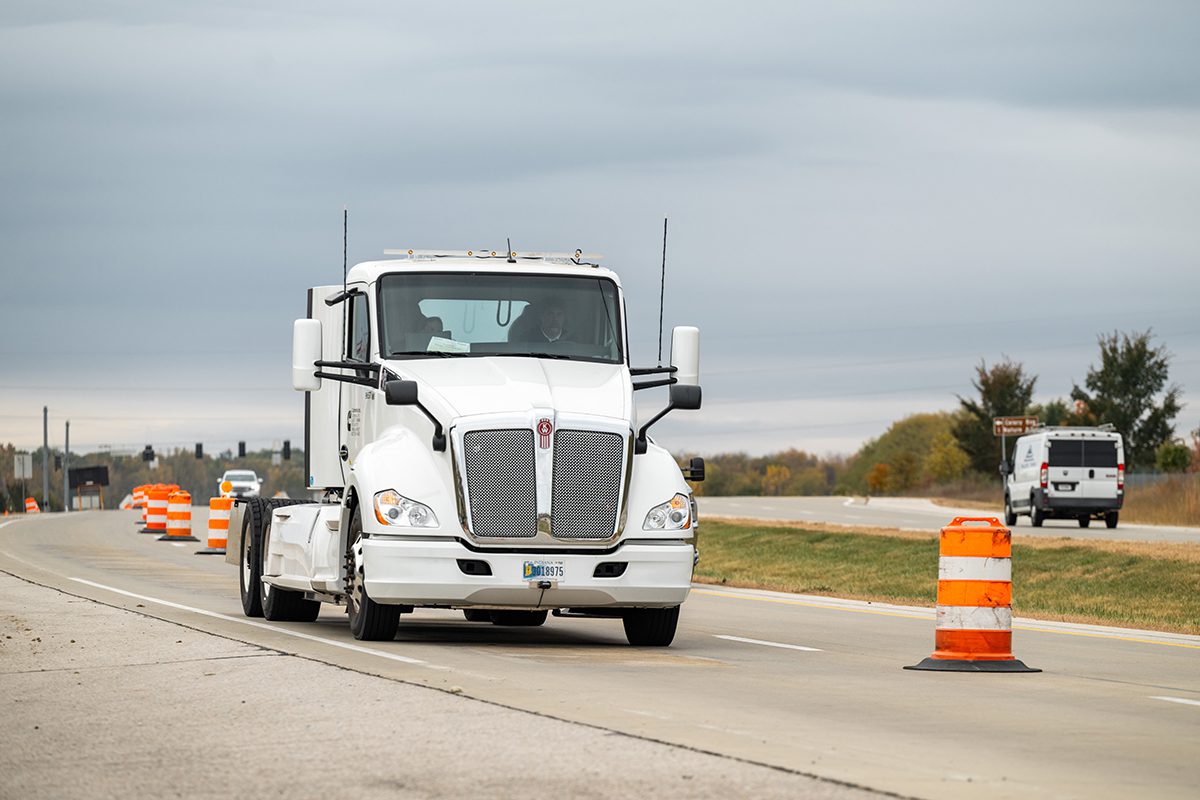
Purdue University’s dynamic wireless power transfer (DWPT) project is advancing a vision of electrified highways that could fundamentally change how Class 7–8 trucks are designed, powered, and operated.
The initiative includes a highway segment in Indiana capable of wirelessly charging an electric heavy-duty truck while it is driving. The work is being carried out through the ASPIRE NSF Research Center, led by Utah State University, with Purdue as a founding partner. According to Steve Pekarek, a Purdue professor of electrical and computer engineering and member of the research team, the long-term goal is clear: significantly reduce onboard battery size while eliminating the need for trucks to stop to charge.
For truck OEMs evaluating future vehicle platforms, compatibility with dynamic wireless charging would require several core hardware changes. Pekarek explained that a receiver coil must be placed on the underside of the vehicle, along with an AC-DC converter to convert the alternating current voltage from the receiver into the direct current voltage used by the battery and propulsion system.
“We envision that using dynamic wireless charging, the size of the battery can be greatly reduced. Indeed that is a fundamental goal,” Pekarek said in a recent ACT News interview.
That reduction in battery size could have major implications for fleet economics. From a fleet manager’s perspective, Pekarek said the objective is to “significantly reduce battery size while also eliminating the need to stop to charge,” resulting in a meaningful reduction in total cost of ownership and increased productivity.
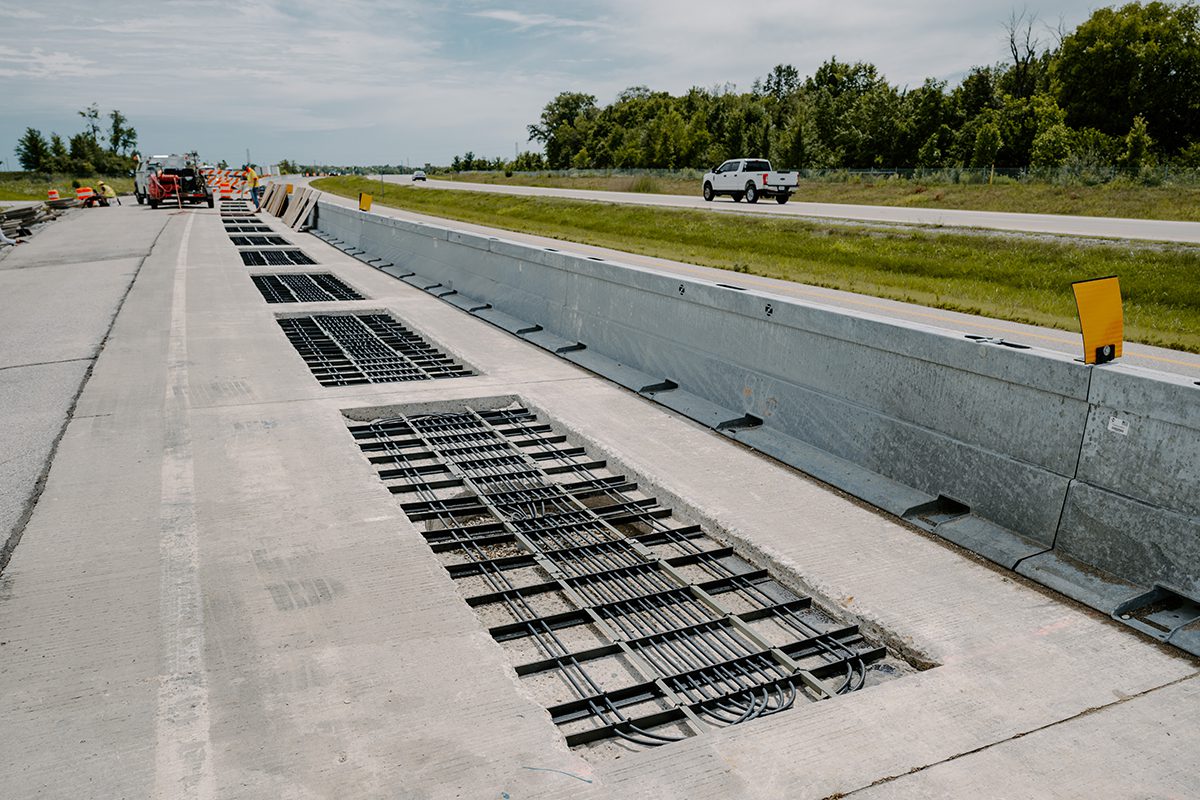
Image: Purdue University/Kelsey Lefever
Existing Class 8 battery-electric trucks can carry battery packs weighing between 10,000 and 15,000 pounds or more, representing a substantial share of allowable gross vehicle weight. Pekarek said adoption of DWPT could eventually lower stored energy weight by 70–80%, bringing it closer to the weight of diesel fuel in conventional trucks.
“Yes, that is the target,” he said when asked whether the technology could reduce vehicle weight. He added that DWPT is expected to increase payload capacity and revenue per mile by allowing smaller onboard batteries, freeing weight for cargo, and reducing charging downtime. The magnitude of those benefits, he noted, would depend on system coverage, density of electrified roadways, and vehicle designs optimized for DWPT.
The current demonstration system has been tested to a peak power delivery level of 190 kilowatts, with an average of approximately 170 kilowatts, at a roadway surface-to-receiver clearance of eight inches. The transmitter coils are buried 2.5 inches below the pavement surface. According to Pekarek, the power delivered is sufficient to maintain the battery state of charge for a fully loaded 80,000-pound vehicle traveling at 65 miles per hour.
If certain freight corridors were equipped with dynamic charging, fleets would need to rethink battery sizing and operations. While Pekarek noted he is not a route-planning expert, he said a corridor equipped with DWPT would enable operators to use smaller batteries and avoid charging downtime, effectively allowing continuous operation without scheduled charging stops.
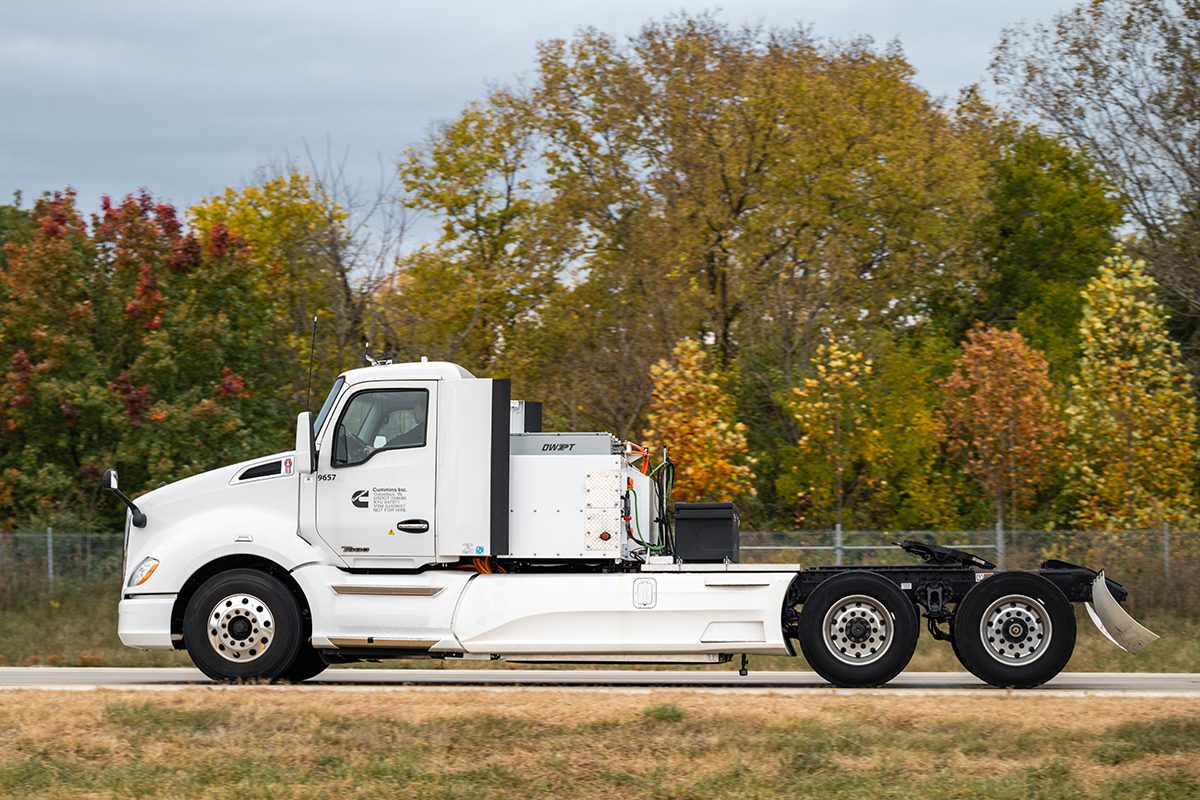
Image: Purdue University/Kelsey Lefever
Infrastructure cost remains a central question for large-scale deployment. Pekarek said the team is targeting an infrastructure cost of $4 million to $5 million per mile for DWPT-equipped roadway. He did not provide a direct comparison to high-capacity depot or public megawatt charging stations.
Interoperability will be critical if multiple OEMs are to use the same electrified roadway. Pekarek said specifications are currently being developed by several organizations, including SAE, which is supporting standard development efforts.
Durability under sustained Class 8 traffic is also under active study. Research conducted at the Indiana Department of Transportation’s Accelerated Pavement Test Facility showed that coil integration did not degrade pavement performance. However, Pekarek said longer-term, in-situ studies are needed to fully evaluate durability. That research is ongoing under ASPIRE.
Utilities will also play a role in supporting electrified roadways. Pekarek said utilities will need to provide service to the roadways, and ASPIRE is developing models to predict load demand growth based on electrified vehicle adoption curves and expected traffic on electrified corridors.
Looking ahead, the commercialization timeline remains staged. Within ASPIRE, researchers have set a target of 1,000 miles of electrified roadway by 2040, which Pekarek acknowledged is ambitious. He said deployment is likely to begin in phases, with port deployments potentially occurring within the next five to eight years, followed by the build-out of 50- to 100-mile freight corridors within 10 to 15 years.
For fleets and OEMs evaluating long-term electrification strategies, DWPT presents a potential shift away from maximizing onboard battery capacity toward optimizing vehicles for in-motion energy transfer. As Pekarek emphasized, the ultimate aim is not simply range extension, but a structural redesign of electric trucking economics built around smaller batteries, higher utilization, and freight corridors that supply energy as trucks move.