
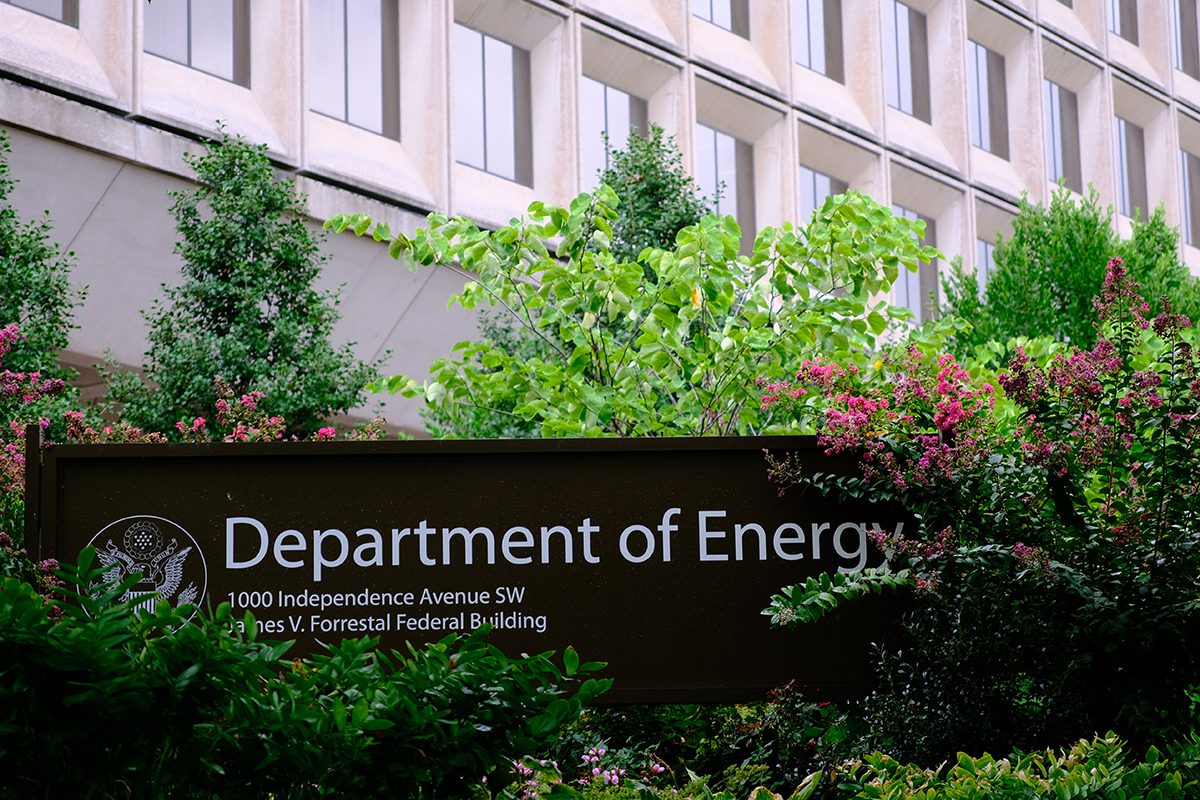
The U.S. Department of Energy has released a major internal reorganization that removes or renames several of its primary clean energy offices, including the Office of Energy Efficiency and Renewable Energy (EERE) and the Office of Clean Energy Demonstrations (OCED). The updated organizational chart marks one of the most significant structural changes to the agency in years and immediately raised questions about how ongoing clean energy programs will be managed.
EERE, long one of DOE’s largest program offices, previously oversaw federal research, development, and deployment activities for solar, wind, geothermal, hydropower, bioenergy, advanced batteries, and energy-efficient transportation technologies. It also played a central role in technical assistance for states and local governments and in grant programs supporting emerging clean-energy markets. The office was not included in the department’s new structure, and DOE has not yet provided detail on where those responsibilities will be reassigned.
OCED, established in 2021 to manage large demonstration-scale projects funded by recent federal infrastructure and climate legislation, is also absent from the revised chart. The office has been responsible for major multi-year efforts including regional hydrogen hubs, long-duration energy storage pilots, advanced geothermal demonstrations, and next-generation industrial decarbonization projects. Many of these awards are in negotiation or early stages of project development. DOE has not yet clarified how those projects will be administered under the new organizational layout.
In place of the previous clean-energy offices, the department introduced several newly named or consolidated units, including a new Office of Hydrocarbons and Geothermal Energy, a renamed Office of Fusion, and a rebranded Loan Programs Office now listed as the Office of Energy Dominance Financing. DOE described the overall restructuring as an effort to streamline operations and align its mission with national goals for reliable and affordable energy, but it has not released additional guidance regarding transitions for existing programs.
The absence of EERE creates immediate operational questions for organizations that work closely with the office, including clean-energy manufacturers, national laboratories, university research programs, utilities, and transportation and fleet-technology stakeholders. EERE previously housed the Vehicle Technologies Office, which supported electric-vehicle battery research, charging infrastructure initiatives, and fleet electrification partnerships with U.S. trucking and logistics companies. DOE has not yet indicated how these activities will be continued.
Similar questions surround OCED’s portfolio. The office has played a central role in moving first-of-a-kind demonstration projects toward commercial scale, overseeing multi-billion-dollar federal investments in technologies aimed at reducing emissions from power generation, transportation fuels, and industrial processes. With no replacement office identified, award recipients and applicants are awaiting information on contract administration and project oversight.
The updated organizational chart does not include details on staffing, budget changes, or program transfers. DOE is expected to issue further information in the coming weeks outlining how responsibilities previously held by EERE and OCED will be reassigned and how ongoing programs will proceed.