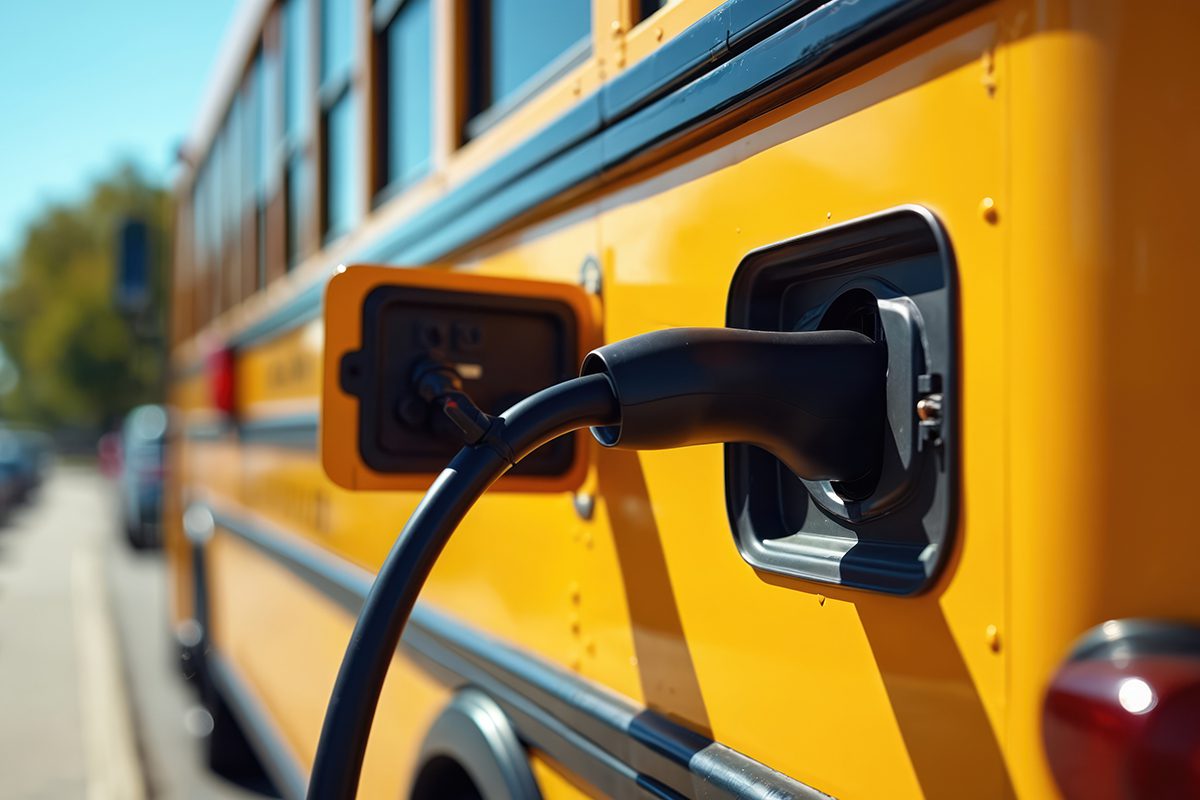

Connecticut state law requires the full transition to electric school buses in select school districts by the year 2030 and across all state districts by 2040. As the school districts and their transportation providers navigate the requirements and specific considerations of this technology, there is a looming question as to whether the state utilities and electrical grid can handle the anticipated additional power loads to charge these vehicles at their existing school bus depots.
Clean Transportation Communities of Southern CT (CTC) set out to answer this question by researching their affiliated school districts. Throughout 2025 CTC surveyed the school bus depot operators across New Haven, New London and Middlesex Counties to determine if there is enough electrical capacity at each specific bus yard for charging all electric school busses.
The CTC team analyzed data from each school district, including bus fleet mileage, bus depot locations and quantity of buses, to understand the power needed and the “dwell” time when buses were available for charging. This data was matched to each location’s electrical power supply, gleaned by using utility capacity maps and personnel interviews to gather information about each substation. This combined supply and demand information enabled the CTC to determine which depot locations had sufficient power to charge all of their potential electric buses and which fell short.
The research revealed that 1,252 (93.2%) of the districts’ buses could be electrified without requiring any supply increases from the electric utility. And, an overwhelming majority of the districts were ready for full electrification, and, the few districts with low capacity could still charge a significant portion of their bus fleets.
CTC found that of 40 districts who completed the survey, 90% (36 bus depots) of them had sufficient capacity to charge all of their buses if electrified. These sites would not require additional electrical capacity to support the transition, although certain depots might require equipment upgrades such as transformer or service line updates. The other 10% (4 depots) of those surveyed would require some utility capacity upgrades to increase the electrical supply and support charging on every bus, every night. These districts could still support the electrification of a significant portion of their buses without supply upgrades, but not a complete fleet transition to electric.
For depots lacking the circuit capacity to charge all buses, additional strategies could be deployed to enable all districts to electrify their bus fleets.
- Creative Scheduling: load balancing and scheduled charging to optimize the charging sequences and meet individual bus route requirements. This includes utilizing all available dwell times (i.e. weekends and mid-day charging) to extend the number of charging hours available, and balancing the bus routes. “Smart grid” energy management technology could be deployed to manage a depot’s multiple electrical sources, including battery storage and energy generation.
- Distributed charging: installing charging stations at or near schools, or other locations, so that buses can use utility capacity at locations outside the bus depot.
- Energy storage: using static battery backup systems, which charge while buses are in service, provides additional charging capacity when buses return to the depot, effectively expanding the capacity at the depot.
- Energy generation: generating energy on-site, through solar PV arrays, wind turbines or other technologies, providing additional power sources beyond the grid. Certain utilities offer vehicle-to-grid (V2G) programs that could provide depots with financial incentives to utilize the bus batteries for storage, as a means to smooth out the utility power sources. In Connecticut, GridEdge Networks has deployed a pilot V2G program.
Electrification Lessons and Recommendations
The CTC study offers numerous lessons learned and recommendations for any school district seeking to electrify its bus fleet. Understanding anticipated electrical demand and available capacity, for example, is critical for school bus electrification. School districts can employ numerous strategies to transition to an electrified bus fleet.
- Peak Demand Analysis: conduct a demand analysis to determine a depot’s current peak electricity demand, considering both bus operations and other site equipment or facilities consuming power. This analysis would consider the bus fleet size, route history, and dwell time. Understanding whether the utility imposes demand charges, which are a surcharge for excessive electrical consumption, is important. If the depot shares a site with other facilities, the overall electrical demand should be considered to ensure electric buses will not strain the site operations.
- Future Proof: forecast the increased demand for electricity as buses are electrified, taking into account fleet expansion and charging schedules.
- Utility Engagement: the electric utility must be a partner to electrification, and early engagement will enable an optimal bus fleet conversion.
- Notify the utility long before installing new charging equipment. This enables the utility to assess the location’s power supply, including the transformer capacity, circuit breakers, and overall grid infrastructure, and allows you to develop an informal transition plan.
- Work with the utility to identify timing and costs, in case local grid upgrades are needed. The effort and cost associated with upgrades is site specific, and utilities typically require a project proposal prior to performing this type of engineering assessment. Costs can be significant. Anticipate potential delays in utility infrastructure upgrades and their impact on the electrification timeline.
- Determine whether the bus depot would qualify for vehicle-to-grid (V2G) programs and assess the V2G revenue potential, which can lower the total cost of ownership (TCO) for bus electrification.
For more information, please visit the CTC website (CleanTransportationCT.org) or contact Dan Ciarcia (ciarcia@nhcleancities.org)