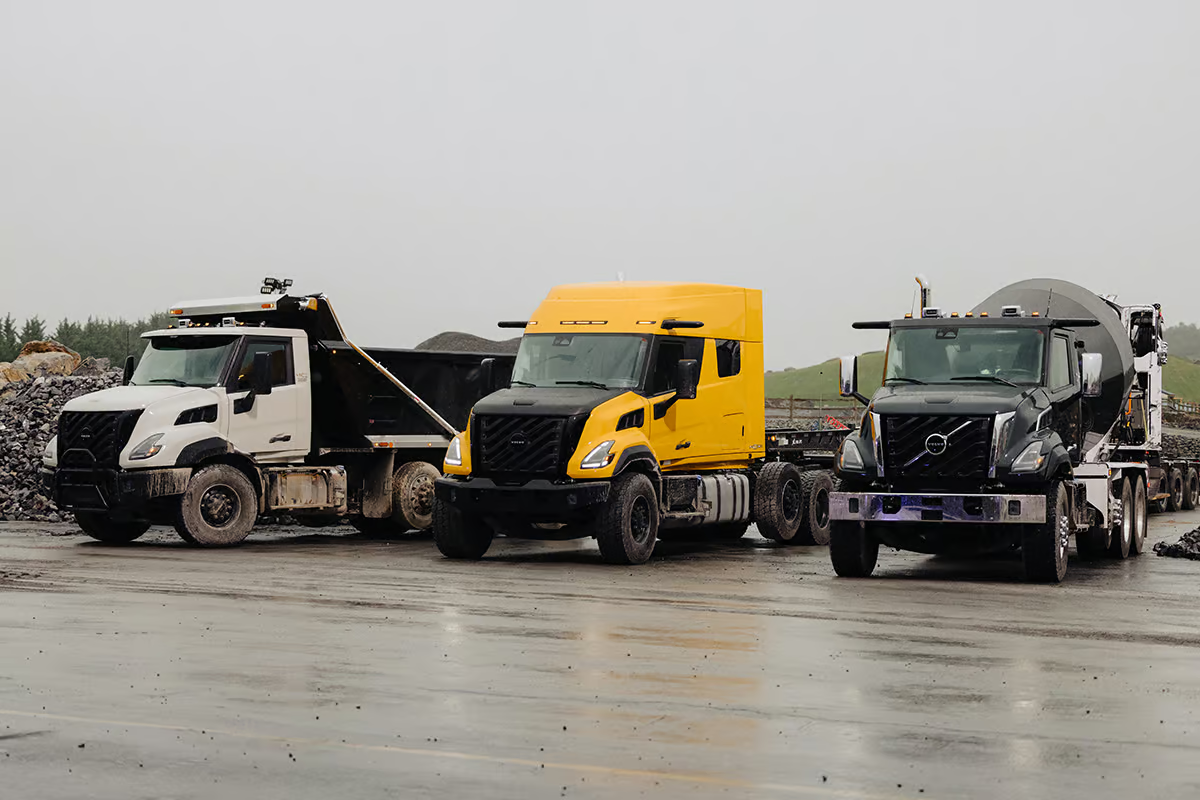
The California Energy Commission has approved a $95.2 million Clean Transportation Program investment plan, allocating $30.2 million to medium- and heavy-duty zero-emission vehicle infrastructure for freight, port, public fleet, and school bus applications.
The remaining funds are divided among $48 million for light-duty EV charging, focused on direct current fast charging and at-home or near-home charging; $15 million for hydrogen refueling; and $2 million for ZEV workforce training and development. The plan covers the current fiscal year and includes projected allocations through 2028-29.
The medium- and heavy-duty allocation is roughly double the $15 million the CEC set aside for that category in fiscal year 2025-26, an increase the previous investment plan had signaled it intended to make. Hydrogen refueling moves in the other direction, from $22 million in the prior fiscal year to $15 million.
Both figures are small against the program’s recent history in the segment. The 2025-26 plan reported that recent funding had focused heavily on medium- and heavy-duty ZEV infrastructure, with roughly $950 million allocated to those projects, and that the CEC had multiple open solicitations for medium- and heavy-duty infrastructure totaling up to $120 million as of the third quarter of 2025.
Program funding was reauthorized in 2023 under Assembly Bill 126, which provides an estimated $95.2 million a year and $285.6 million across fiscal years 2026-27 through 2028-29. This is the eighteenth investment plan in the program’s history.
At least 50% of program funds must go toward projects that benefit or serve low-income Californians and residents of low-income and disadvantaged communities. As of March 2026, more than 62% of Clean Transportation Program and supplemental funds had gone to projects in those communities.
Since 2008, the program has made grant investments totaling more than $2.7 billion. Since the first investment plan in 2009, it has installed or planned more than 52,000 charging ports, including about 41,000 lower-power ports and more than 11,000 DC fast charging ports, funded more than 40 manufacturing projects and more than 30 workforce training projects, and allocated funding toward more than 100 hydrogen stations serving light-, medium-, and heavy-duty fuel cell vehicles.
CEC Commissioner Nancy Skinner said building out the infrastructure faster means “the quicker we can clean the air and improve public health.”
Two related documents are scheduled for release later this year: the third Electric Vehicle Charging Infrastructure Assessment required under Assembly Bill 2127, which evaluates the state’s infrastructure needs against projected demand, and the first EV charging reliability report required under the state’s EV Charger Reliability Reporting and Standards Regulations. That reliability report arrives while the CEC is separately considering whether to exempt Megawatt Charging System equipment from those same reporting requirements, with written comments on the proposal due September 22 and a hearing scheduled for September 24.