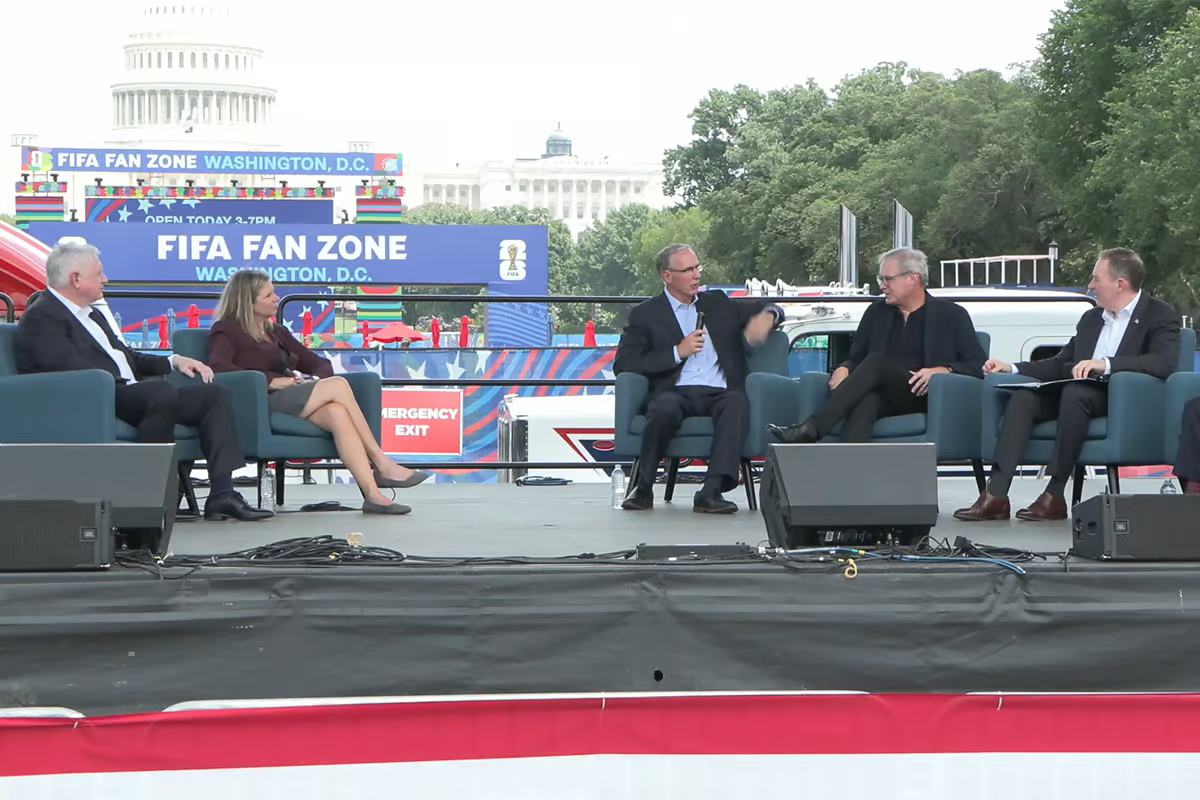
With two heavy-duty trucks parked behind him on the National Mall, EPA Administrator Lee Zeldin announced proposed changes to the model year 2027 heavy-duty engine emissions program that could affect truck costs, warranty coverage, product timing, and how future DEF-related issues are handled in the field.
Speaking during a trucking panel at the Great American State Fair on the National Mall, Zeldin was joined by Jennifer Rumsey, chair and CEO of Cummins; Chris Spear, president and CEO of the American Trucking Associations; Preston Feight, CEO of PACCAR; and John O’Leary, president and CEO of Daimler Truck North America. Zeldin introduced the panel as leaders representing “the people who build the engines and move the freight this country runs on.”
The proposal applies to model year 2027 and later heavy-duty highway engines and would revise parts of the compliance framework tied to EPA’s 2023 heavy-duty engine and vehicle standards rule. According to the EPA, the proposal would maintain the underlying emissions standards while changing certain compliance requirements, including warranty, useful life, nonconformance penalty, testing, and selective catalytic reduction system inducement provisions.
The proposal is estimated to save American truckers $12 billion, with potential savings of up to $6,000 per vehicle on new truck purchases if finalized.
“Americans depend on reliable trucks to move essential goods across the country. If finalized, these changes will help manufacturers keep improving their vehicles without being forced to rush products to market before they’re ready,” said Zeldin in an announcement released the day of the event.
According to Zeldin, the proposal is intended to address concerns raised by manufacturers, suppliers, fleets, dealers, and drivers about the timing and cost of the 2027 requirements.
“They warned that the new requirements couldn’t be met in time, that it would drive up costs, that it would force companies to rush products to market before they were ready,” said Zeldin at the event.
A central piece of the proposal is EPA’s plan to scale back emissions warranty requirements. EPA said the warranty requirement added the largest single cost to the trucking industry under the 2023 rule. Zeldin said the agency is proposing to roll back that requirement while keeping the underlying emissions standards in place and achieving “nearly 90% of the reductions in nitrogen oxide.”
Cummins’ CEO said the proposed warranty change could provide fleets and other truck buyers with more flexibility in how they manage equipment costs.
“This emissions warranty change that you talked about is a really big deal because we’re no longer going to require that everybody buy upfront an emissions warranty over the whole life of the product,” said Rumsey. “They have choice. Some choose to do that. That’s a part of their business model. But it gives them the flexibility and choice.”
EPA is also proposing additional lead time before longer useful life requirements take effect. Zeldin described useful life as the period of miles and years an engine must continue meeting emissions standards, saying more lead time would allow manufacturers to validate new technology under real-world conditions before broader deployment.
PACCAR CEO Feight pointed out how fleets want trucks that can perform efficiently, reliably, and durably in the specific applications they serve. He said customers are not opposed to technology, but they need confidence that new equipment can handle business-critical freight operations.
“They want to move forward, but they want to do it in a way that makes sense,” said Feight, adding that customers want sufficient time to try new products and confirm they are durable and reliable before making larger buying decisions.
The EPA is also proposing nonconformance penalties for certain heavy-duty diesel engines that temporarily cannot meet new NOx standards. The penalties would provide manufacturers compliance flexibility while allowing sales to continue, helping avoid supply disruptions during the transition to new technologies.
The proposal also includes changes to DEF-related derates. EPA said it would remove deratements and vehicle speed restrictions for newly manufactured highway engines and vehicles, as well as new nonroad engines and equipment, including agricultural equipment. Under the proposal, operators would receive visible and/or audible alerts when a DEF system issue occurs, allowing them to continue operating until they can safely address the problem.
“Instead of your truck or tractor lurching to a halt when the DEF system fails, you get a warning, a light, or a sound telling you something needs attention, and you keep going until you can safely pull over and get it fixed,” said Zeldin.
Spear described DEF-related derates as a safety issue for drivers, particularly in harsh operating environments, adding that drivers delivering freight year-round in places with difficult weather conditions need flexibility when DEF issues occur.
Daimler Truck North America CEO O’Leary explained that environmental compliance requirements need to reflect how trucks are built, maintained, and operated. While the industry is not opposed to cleaner technology, O’Leary believes everyone wants regulations that are predictable, practical, and aligned with customer needs.
“There’s no objection to that at all. None. But it’s how you go about it,” he said. “Do you do it in a way that makes sense, that doesn’t bankrupt businesses, that is predictable, that takes into account demand that customers have and the needs of their businesses?”
The EPA is also taking public comment on whether guidance should be developed to allow manufacturers to implement the derate change for in-use on-road and nonroad engines and equipment. The agency said it will hold a 45-day public comment period and a public hearing.