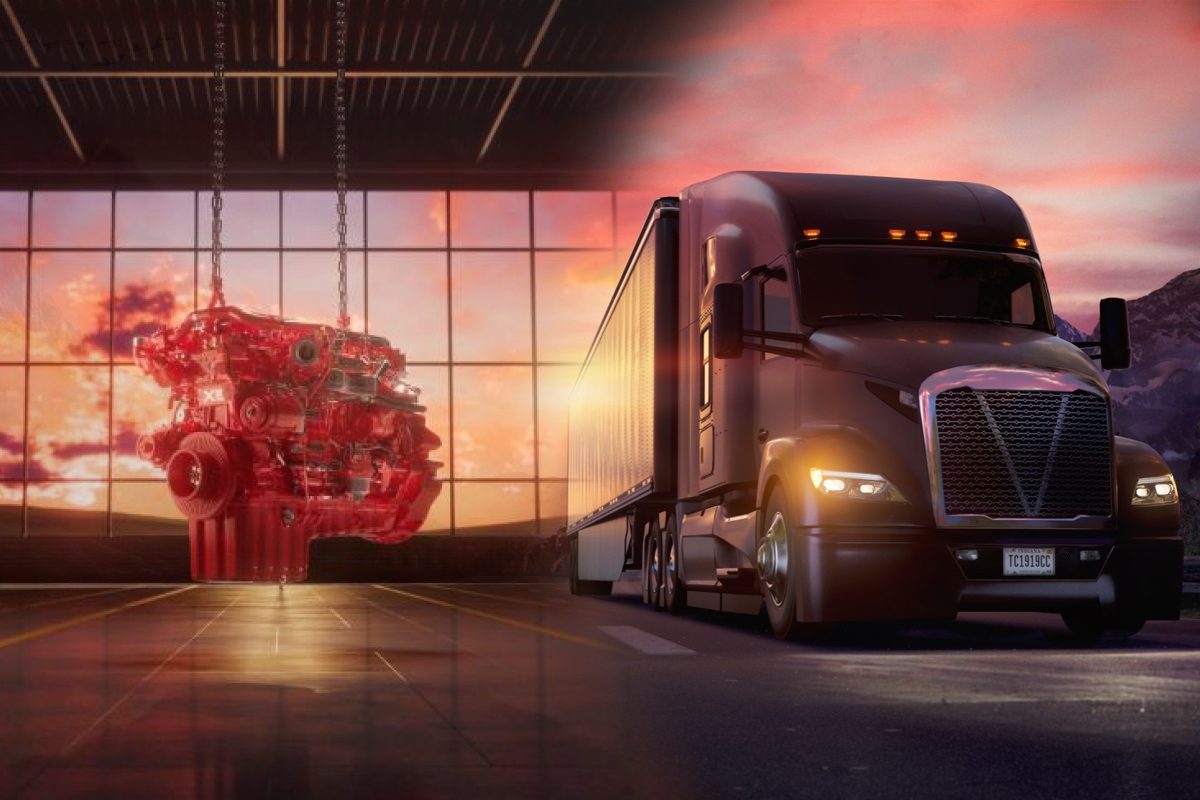
Natural gas has long been strongest in operations where the limits were manageable — refuse, transit and regional haul, where predictable routes and centralized fueling could offset compromises on power and range. Cummins and Hexagon Agility now argue the equation is shifting. With a 15-liter engine finally pushing natural gas deeper into diesel territory, and with newer tank systems extending range while trimming weight, they see a clearer path for RNG-powered trucks in mainstream heavy-duty freight.
“The X15N is a significant upgrade in performance,” said Dave King, X15N product manager at Cummins. That jump matters because it “opens up much more of the HD on-highway market” that had been difficult to reach with the 12-liter platform. King said the launch drew early orders in 2024, even if the freight recession tempered truck demand across the board. Still, he added, “interest from shippers and carriers continues to remain high.”
For fleets, the real unlock may be that Cummins is no longer asking them to trade away too much performance in exchange for lower emissions. King called diesel-like performance “one of the key attributes” driving fleets to give natural gas a more serious look. The earlier 12-liter engine, he said, left some fleets dealing with “longer trip times, driver preference for diesel, limitations on GCW.” With the X15N, “the power, torque, and performance” are now there for “some of the most demanding duty cycles.”
That argument is starting to get validated in the field. King pointed to NACFE’s Run on Less event in September 2025, where UPS, Wegmans and Kleysen ran trucks powered by the X15N in real operations. For Cummins, that was a chance to show that natural gas can now deliver the “range and fast fill capability fleets need without adjusting their operation.”
If the engine is what reopens the door, RNG is what strengthens the business case. “RNG is really the key element” in making the carbon-reduction argument for CNG trucks, King said, because fleets can lower their carbon footprint while still running equipment with comparable performance and total cost of ownership to diesel. He also argued that CNG’s history of lower and more stable fuel pricing remains especially attractive for fleets with high mileage, heavy loads and high fuel consumption.
Hexagon Agility makes a similar case from the fuel-system side. RNG gives fleets “a practical pathway to significantly reduce lifecycle carbon emissions while using proven engine technology and existing fueling infrastructure,” said Ian MacDonald, senior vice president of sales for the Americas. In his view, that matters because fleets can pursue sustainability goals and operating-cost savings “without waiting for future technologies to mature.” He added that, from the engine’s perspective, there is “no difference between CNG and RNG,” since renewable natural gas can be used interchangeably in the same engines and fueling systems.
The infrastructure discussion has evolved as well. King said publicly available heavy-duty CNG fueling has expanded, giving fleets a way to test natural gas without first taking on the cost of building a private station. “This increased public fueling is good news for HD fleets looking to enter into the NG truck space,” he said, especially because fleets can prove out the economics before deciding whether to move to a private-fueling model for tighter control over costs.
Range, of course, has always been one of the hardest objections to overcome. MacDonald said the X15N has been “a major catalyst for natural gas adoption in heavy-duty trucking” because it gives fleets diesel-like power while newer fuel systems extend how far trucks can go between fills. He said Hexagon is seeing strong interest in configurations that can deliver “800-mile day cab range and over 1,200 miles in sleeper trucks.”
Those gains, he said, come from both lighter materials and better packaging. Hexagon’s Type 4 composite cylinders are designed to maximize capacity while minimizing weight, helping fleets carry more fuel “without sacrificing payload.” MacDonald said newer behind-the-cab and side-mount layouts are also giving fleets more flexibility to spec trucks around actual routes and operations, rather than around the old constraints of CNG packaging. Today, he said, fleets are evaluating “the entire operational equation: range, weight, fuel system configuration, payload impact, fueling infrastructure, and total cost of ownership.”
That is why both companies keep coming back to integration. “OEM integration is critical,” MacDonald said. “Fuel systems must be engineered as part of the vehicle platform — not simply added afterward.” In his telling, tighter integration improves durability, serviceability and uptime, while also making natural gas trucks easier to buy and support through traditional dealer channels. Cummins is making a parallel argument. King said the link between Cummins, the truck OEM and the fuel-delivery system is crucial not just for packaging fuel capacity, but also for electronics, diagnostics and driver-facing features such as range to empty. That integration, he said, is what gives fleets confidence the truck “will do the job they need.”
The economics are still part of the debate, and Cummins is not pretending the upfront cost disappears. “The Capex cost of an X15N powered vehicle is higher than a comparable diesel,” King said, “but Opex cost is very comparable,” and the truck becomes “very competitive” when fleets can capture the right fuel spread. That is one reason the early demand has clustered in private carriers, freight and logistics fleets, and for-hire carriers, which Cummins says account for about 75% of X15N orders so far.
MacDonald said fleets are often surprised by how normal the transition feels once the truck is properly specified. “Today’s natural gas trucks deliver strong power, quiet operation, and fast refueling,” he said. In many cases, the shift is less about retraining the operation and more about matching the right routes, fuel access and tank configuration to the truck.
Neither company is presenting natural gas as the only path forward. Cummins continues to talk about a market where fleets will adopt a mix of technologies, from battery-electric to hydrogen to renewable fuels, depending on duty cycle and economics. But King made clear where he thinks natural gas fits in that transition: the X15N and L9N are “available today and are operating at scale in the marketplace,” giving fleets a way to start cutting emissions now rather than waiting for every future technology to mature.
What that leaves is a much different conversation than the one natural gas faced a few years ago. The questions have not disappeared, but they are less about whether the technology can work and more about where it works best, how quickly fleets can scale it and whether RNG can keep strengthening the emissions case. For Cummins and Hexagon Agility, that is the real significance of the X15N: not that it settles the transition, but that it puts natural gas back into the serious part of the Class 8 discussion.